FORT WORTH, TX / ACCESS Newswire / November 24, 2026 / Vadzo Imaging, a provider of embedded vision camera products for OEMs and system integrators, today launches the Armor-234MGS-GMSL2, a 2.3MP Monochrome GMSL2 Camera featuring the Onsemi AR0234 sensor. Part of Vadzo's SerDes camera portfolio, it combines global shutter accuracy, 1920 x 1200 grayscale detail, strong near-infrared response, and high frame rate capture with a GMSL2 link, a single-cable design, and multi-camera synchronization. Vadzo presents an AR0234 Global Shutter GMSL2 Camera and a 2.3MP Global Shutter GMSL2 Camera for robots, aircraft, vehicles, and machines, with guidance on frame rate, synchronization, and wiring.
Why a 2.3MP Monochrome GMSL2 Camera Needs a Global Shutter on Moving Platforms
Most image sensors read the picture one row at a time. While the sensor reads, the platform keeps moving, so each row records the scene from a slightly different position. Vertical lines lean, wheels become ovals, and fast objects stretch or compress. For a human viewer, this is a curiosity. For software that measures, such as a tracker that follows features, a stereo pair that computes depth, or a monitor that follows a head, it is an error that cannot be corrected afterward, because the software does not know how the platform moved during the readout.
A global shutter removes the error at its source. All pixels are exposed and held at the same instant and then read out, so the frame is a true snapshot, and moving objects keep their shape. The price is a more complex pixel, which is why global shutter sensors have fewer pixels than rolling shutter ones of the same size. Many machine tasks do not need more than about two million pixels, and they gain far more from truthful geometry and from larger pixels that collect more light in the short exposures that motion demands.
Time is the second problem. A system that tracks fast targets wants many frames per second, because the shift between frames shrinks as the frame rate rises, and trackers work better with small shifts. Systems with several camera units also want their frames to be taken at the same moment. A stereo pair, a surround view, and a multi-camera tracker all combine images, and images taken at different times show a moving world from inconsistent viewpoints. Both needs, speed and synchronization, travel over the link between the camera and the computer.
Distance and environment are the third. The platforms in question, robots, aircraft, tractors, and vehicle cabins, put the camera where the view is and the computer where it is protected, with vibration, dust, heat, and electrical noise between them. A serial link over coaxial cable suits that, and a single cable that also carries control and power reduces wiring and failures. Teams that choose a camera for one of these needs and discover the others later must redesign after the hardware is built, and a clear view of all of them at the start saves that work.
How a 2.3MP Monochrome GMSL2 Camera Keeps Geometry True at High Frame Rates
The Armor-234MGS-GMSL2 is built on the Onsemi AR0234, a 2.3MP (1920 x 1200) global shutter sensor with a 1/2.6 inch optical format and 3.0 micron pixels, in a monochrome configuration. A global shutter exposes all pixels at once, so the frame has no skew, and the 3.0-micron pixels are large enough to collect a useful amount of light in a short exposure. With no color filter array, more light reaches each pixel, and the sensor responds to near-infrared illumination, since a color filter array would only reduce the signal. Features, edges, and corners show up with high contrast in the grayscale image, which suits the detectors that run on embedded platforms.
A short calculation shows the data rate. A full 1920 x 1200 frame at 8 bits per pixel is about 18.4 million bits, so 120 frames per second needs about 2.2 gigabits per second, and at 10 bits about 2.8 gigabits per second. Both fit within the nominal forward rate of up to 6 gigabits per second of one GMSL2 link, which is a much easier case than a 20MP sensor. Two units of a stereo pair at 8 bits and 120 frames per second would bring about 4.4 gigabits per second into the host, and four units about 8.8, which many host interfaces cannot take, so a design with several units may choose a lower frame rate or a smaller mode. The brief states that the camera supports up to 120 frames per second, and sensors of this family often reach their highest rates at reduced resolutions, so teams should confirm which resolution reaches 120 frames per second.
Frame rate also sets how far features move between frames. A robot moving at 3 meters per second travels 2.5 centimeters in the 8.3 milliseconds between frames at 120 frames per second, against 10 centimeters at 30 frames per second. Smaller shifts mean smaller search windows for a tracker, quicker matching, and fewer mistakes. Frame time also sets the floor for latency. At 120 frames per second, a frame takes 8.3 milliseconds to expose and read, so the delay from the scene to the host can be shorter than at lower rates, and the direct serial transfer adds very little, since the stream is not compressed. Teams should measure the whole chain, for example by filming a running timer on a display.
Synchronization is where a multi-camera system succeeds or fails, and a worked stereo example shows why. Suppose two units sit 120 millimeters apart, each with a lens of 4 millimeters, which, with 3.0-micron pixels, equals about 1,333 pixels of focal length. For a point 5 meters away, a disparity error of half a pixel causes a depth error of about 8 centimeters. Now suppose the target moves sideways at 5 meters per second. If the two frames are taken 1 millisecond apart, the target moves 5 millimeters between them, which at 5 meters equals about 1.3 pixels, more than the half-pixel error budget. To keep the timing error below half a pixel, the two frames must be taken within about 0.4 milliseconds of each other. A multi-port GMSL2 deserializer and a shared frame synchronization signal, carried on the control channel of the link, can start the units together. The figures are illustrative, and teams should confirm the synchronization accuracy of their own chain.
The single cable design carries video, control data, and power on one coaxial cable. Power over a long cable loses voltage in proportion to the current. For example, a run with 1 ohm of round-trip resistance drops about 0.15 volts at 0.15 amperes, and the camera and the supply must tolerate that drop, so teams should confirm the power budget and the voltage range for their cable length. The rugged build is designed to withstand vibration and demanding conditions in industrial and outdoor use, and teams should confirm the environmental ratings, secure the connector against vibration, and test the module on the real platform. Near infrared work needs a note of its own. An illuminator at 940 nanometers is invisible to people and less affected by sunlight than one at 850 nanometers, which suits a vehicle cabin, though the signal is weaker, and an 850 nanometer source gives more signal and shows a faint red glow. Teams should confirm the response at their illuminator wavelengths.
Lens choice completes the optical picture. The 1920 pixels across the sensor, at 3.0 microns each, span 5.76 millimeters. A lens of 4 millimeters gives a horizontal field of view of about 71 degrees, which at a distance of 5 meters covers a width of about 7.2 meters, a good match for a mobile robot looking ahead. A longer lens narrows the view and extends the range, and a wider lens shows more of the surroundings at the cost of stronger distortion. For a stereo pair, the camera units must be calibrated together, so that the software knows the exact distance between them, the angle between their axes, and the distortion of each lens, and the mount must hold that geometry under vibration and temperature changes, since a shift of a fraction of a pixel in the mount appears as a depth error. A rigid bracket, locked lenses, and a recalibration routine are as important as the sensor.
Exposure and lighting deserve a worked example, since they decide how much of the global shutter's promise is kept. A robot moving at 3 meters per second travels 1.5 millimeters during an exposure of 500 microseconds, which is small against most features, and 15 millimeters during 5 milliseconds, which is not. Short exposures need light, and the 3.0-micron pixels help, as does a lens with a wide aperture. Pulsed illumination helps further. Because a global shutter exposes all pixels together, a pulsed infrared illuminator timed to the exposure lights every row at once and wastes no light between frames, which saves power and heat, and teams should confirm whether the camera offers a signal that marks the exposure. Without one, the illuminator can be driven from the same synchronization source as the camera units.
A short evaluation plan helps teams avoid surprises. They should mount the camera on the real platform with the real cable, record in the darkest and brightest conditions the system will meet, and measure the frame rate, the delay, and the voltage at the camera in each mode. For multi-camera systems, they should check the timing between units with a flashing light, and repeat the check with the full number of units, since the load on the host grows with each one. They should leave the system running for a long period to see how the link and the module behave as they warm up. Problems with connectors, cable bends, and power usually show up in such a test long before they show up on a bench, and Vadzo can review the results with a customer during evaluation.
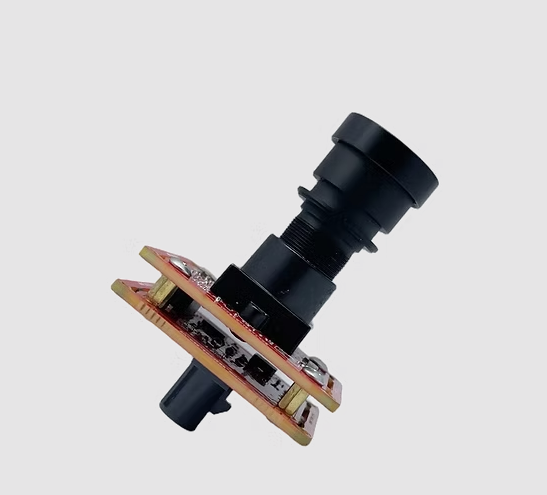
Product Overview: 2.3MP Monochrome GMSL2 Camera for Embedded Imaging Platforms
The Armor-234MGS-GMSL2 is a 2.3MP monochrome GMSL2 module built on the Onsemi AR0234 sensor. As an AR0234 Mono GS GMSL2 Camera, it records every pixel at the same instant, and as a 2.3MP Global Shutter Capture GMSL2 Camera, it captures fast motion without skew. The module also serves as an AR0234 Monochrome GMSL2 Camera, a 2.3MP Mono GMSL2 Camera, an AR0234 Mono GMSL2 Camera, a 2.3MP GS GMSL2 Camera, a 2.3MP Mono GS GMSL2 Camera, a 2.3MP Full HD GMSL2 Camera, an AR0234 Full HD GMSL2 Camera, a 2.3MP Motion Accurate GMSL2 Camera, and an AR0234 GMSL2 Camera Module for designs that need a long, robust link. It is also an Embedded Imaging Platform GMSL2 Camera, an Embedded Platform GMSL2 Camera, an Embedded Capture GMSL2 Camera, a Fast Motion Embedded GMSL2 Camera, and an Embedded Imaging Systems GMSL2 Camera for engineers who build embedded vision systems.
Key specs: 2.3MP (1920 x 1200) Max Resolution | Onsemi AR0234 1/2.6 inch Sensor Format | 3.0 micron Pixel | Monochrome with Global Shutter | GMSL2 SerDes Interface | Lens per Module Configuration
Key Capabilities of the 2.3MP Monochrome GMSL2 Camera
Global Shutter Accuracy
The global shutter freezes fast motion with no skew or distortion from line-by-line readout, because every pixel is exposed at the same instant. Straight lines stay straight, and wheels stay round. A global shutter does not remove blur from a long exposure, so short exposures remain important, and lens distortion still needs calibration.
2.3MP Monochrome Detail
The sensor delivers 1920 x 1200 grayscale output with high contrast for edge and feature detection. With no color filter array, more light reaches each pixel, and no interpolation softens corners, which helps trackers and detectors. Teams that need color for a task can add a color module from the same family.
Strong Near Infrared Response
Large 3.0 micron pixels with no color filter capture usable images under infrared lighting, which suits night operation and vehicle cabins. An 850 nanometer illuminator gives more signal and a faint red glow, and a 940 nanometer illuminator is invisible and less affected by sunlight. Illuminators have limited reach, so range should be tested.
High Frame Rate Capture
The camera supports up to 120 frames per second for smooth tracking of fast targets. A higher rate shrinks the shift between frames, so a robot at 3 meters per second moves 2.5 centimeters between frames at 120 frames per second. Teams should confirm which resolution reaches the highest rate, and the data rate for the modes they plan to use.
Long Reach GMSL2 Link
GMSL2 transfers high-speed video over coaxial cable across long distances between the module and the host, with a nominal forward rate of up to 6 gigabits per second. A full frame at 8 bits and 120 frames per second needs about 2.2 gigabits per second, which fits. Teams should confirm the output format and the cable length for their design.
Single Cable Design
Video, control, and power share one cable, which reduces wiring effort and installation time. A long cable drops voltage as current flows, so the power budget should be checked for the real run. As an AR0234 Mono GMSL2 Camera Supplier, Vadzo supports deserializer selection, cable planning, and enclosure design for volume programs.
Low Latency Streaming
Direct SerDes transfer keeps delay minimal for real-time decisions on moving platforms, since the stream is not compressed. At 120 frames per second, a frame takes 8.3 milliseconds, so the whole chain can respond quickly, and teams should measure it, since the host processing usually adds more than the link.
Synchronized Multi Camera Setup
The module works with multi-port GMSL2 deserializers for stereo and surround view systems, so several units can capture at the same moment. In the illustrative example, a stereo pair tracking a target at 5 meters per second needs its frames within about 0.4 milliseconds. The total bandwidth must fit the inputs of the host, and teams should confirm the synchronization accuracy of their chain.
Rugged Armor Build
The module is designed to withstand vibration and demanding conditions for industrial and outdoor use. Teams should confirm the environmental ratings in the product documentation, secure the connector with the right cable and strain relief, and test the module on the real platform.
"Fast motion is easy to see and hard to measure. A rolling shutter bends it, and a pair of camera units that do not fire together disagree about where it is. The Armor-234MGS-GMSL2 combines a global shutter, up to 120 frames per second, and synchronized multi-camera sets over one coaxial cable that also carries control and power. We are plain about the limits. A global shutter does not cure blur from a long exposure, the highest frame rate may apply to a reduced resolution, and the synchronization of a real system must be measured on the real chain. We help customers plan the lens, the link, and the host." - Alwin Vincent, Product Manager, Vadzo Imaging.
Applications for Fast Motion Capture on Embedded Platforms
Automation and Robotics
Robots, aircraft, and farm machines carry camera units on moving parts, far from their compute modules. The Armor-234MGS-GMSL2 works as an Autonomous mobile robot GMSL2 Camera for navigation and obstacle tracking, where a stereo pair gives depth, and as a Drone navigation GMSL2 Camera that feeds a visual tracker with skew-free frames on a thin coaxial cable. Teams should check weight, vibration limits, and connector retention.
Farm vehicles cross rough ground at speed and meet dust, glare, and uneven light. The module serves as an Agricultural Vehicle guidance GMSL2 Camera that follows crop rows and field edges, where a global shutter keeps the rows straight despite vibration and a coaxial cable survives the harsh environment. Teams should plan lenses and covers that keep dust off the optics. A short calculation shows the value of speed. A tractor at 8 kilometers per hour moves about 2.2 meters per second. With a lens of 6 millimeters at a height of 2 meters, each pixel covers about 1 millimeter, so the 1920 pixels span about 1.9 meters, and the crop rows move about 74 pixels between frames at 30 frames per second and about 18 at 120. The figures are illustrative.
Telematics and Fleet Management
A vehicle cabin is a hard place for a camera, with bright sun through the windows and dark shadows inside. The camera works as an Occupant Monitoring GMSL2 Camera with an infrared illuminator, where a global shutter keeps a turning head undistorted, and a monochrome sensor responds to infrared light. A 940 nanometer illuminator is invisible to the occupant, and teams should confirm the response and the privacy rules that apply to monitoring people. A head that turns at 1 meter per second moves 1 millimeter during a 1 millisecond exposure, and the global shutter keeps the face undistorted. Some regions require driver monitoring in new vehicles, and the vehicle maker remains responsible for meeting those rules. An infrared bandpass filter that matches the illuminator reduces the effect of sunlight, and the illuminator must stay within eye safety limits.
Frequently Asked Questions
Q: Why does a global shutter matter for a camera on a moving machine?
A: Vadzo Imaging explains that most sensors read the picture row by row, and a moving machine records each row from a slightly different position, so vertical lines lean and shapes bend. A global shutter exposes every pixel at the same instant, so the frame is a true snapshot. Trackers, stereo pairs, and head monitors need that truth, because software cannot undo the bend afterward.
Q: How much data does 120 frames per second need?
A: A full 1920 x 1200 frame at 8 bits per pixel is about 18.4 million bits, so 120 frames per second needs about 2.2 gigabits per second, and at 10 bits about 2.8. Both fit within the nominal 6 gigabits per second of one GMSL2 link. Several units add up at the host, so two units need about 4.4 gigabits per second at 8 bits. Vadzo Imaging recommends confirming which resolution reaches the highest frame rate.
Q: How closely must two camera units be synchronized for stereo depth?
A: It depends on the speed of the scene and the geometry. For example, with two units 120 millimeters apart and 1,333 pixels of focal length, a target 5 meters away moving sideways at 5 meters per second shifts about 1.3 pixels in 1 millisecond, more than the half-pixel error that depth accuracy allows. The frames must therefore be taken within about 0.4 milliseconds. Vadzo Imaging recommends measuring the real synchronization of the chain.
Q: Why use infrared light for monitoring people in a vehicle?
A: Infrared light at 940 nanometers is invisible to the occupant, so an illuminator at that wavelength lights the cabin without distraction, and it is less affected by sunlight than 850 nanometers. The sensor must respond at the wavelength, and a monochrome sensor with no color filter does. Monitoring people carries privacy duties that belong to the operator. Vadzo Imaging suggests testing the illuminator and the camera together in the cabin.
Q: Why should integrators choose Vadzo Imaging as their 2.3MP mono GMSL2 camera supplier?
A: Vadzo Imaging offers more than a camera module built around a capable sensor. Integrators receive a global shutter module with a single-cable design, low-latency streaming, and multi-camera synchronization, with candid guidance on frame rate, synchronization, wiring, and the details to confirm in the documentation, plus engineering support for deserializer selection, lens selection, firmware customization, and enclosure design. Vadzo Imaging maintains evaluation kits with no minimum order requirement, so teams can test on their own platform before committing to volume production.
Availability
The Armor-234MGS-GMSL2 2.3MP Monochrome GMSL2 Camera, built on the Onsemi AR0234 sensor, is available now for evaluation and production orders. Evaluation kits include the camera module, a cable, a deserializer board, and platform documentation, with no minimum order requirement. Integration teams can measure frame rates against their own link, check stereo synchronization on their own chain, and measure voltage drop on their own cable before committing to a production bill of materials, which tells them more than a datasheet comparison alone. Teams that need a different lens, cable length, or deserializer configuration can ask Vadzo to review the setup. Browse the full range of camera options at Vadzo's website or discuss OEM integration requirements.
About Vadzo Imaging
Vadzo Imaging is a global provider of embedded vision solutions and delivers high-performance camera technologies and imaging platforms for applications in robotics, industrial automation, UAVs, edge AI, and medical systems. Its products are designed for seamless integration with leading embedded platforms including NVIDIA Jetson, Rockchip, Raspberry Pi, and NXP i.MX. Vadzo supports customers through hardware customization, firmware development, and module-level drivers, enabling faster development and deployment of vision based systems across MIPI, USB, GigE, Wi-Fi, GMSL2, and SerDes camera interfaces.
Media Contact
Alwin Vincent
Vadzo Imaging
Email: alwin@vadzoimaging.com
LinkedIn: Vadzo Imaging
YouTube: Vadzo Imaging
X: Vadzo Imaging
SOURCE: Vadzo Imaging
View the original press release on ACCESS Newswire