Digital analytics platform Amplitude (NASDAQ: AMPL) reported Q3 2026 results topping the market’s revenue expectations, with revenue up 24.9% year on year to $110.6 million. Revenue guidance for next quarter was $112 million at the midpoint, 3% above analysts’ consensus estimates. Its non-GAAP profit of $0.04 per share was $0.01 above analysts’ consensus estimates.
For more on Amplitude, read our free full research report.
Amplitude (AMPL) Q3 2026 highlights:
- Revenue $110.6 million vs S&P analysts’ consensus estimates of $107 million (24.9% year-on-year growth, 3.4% beat)
- Adjusted EPS $0.04 vs S&P analysts’ consensus estimates of $0.03 ($0.01 beat)
- Adjusted operating income $5.65 million vs analysts’ consensus estimates of $3.75 million (5.1% margin, 50.7% beat)
- Revenue guidance $112 million at the midpoint for Q4 2026, above analysts’ consensus estimates of $108.8 million
- Adjusted EPS guidance Management raised its full-year adjusted EPS guidance to $0.08 at the midpoint, a 14.3% increase
- Operating margin -22.3%, up from -29% in the same quarter last year
- Free cash flow margin 5.3%, down from 23.5% in the previous quarter
- Customers 5,100, down from 5,200 in the previous quarter
- Net revenue retention rate 104%, down from 105% in the previous quarter
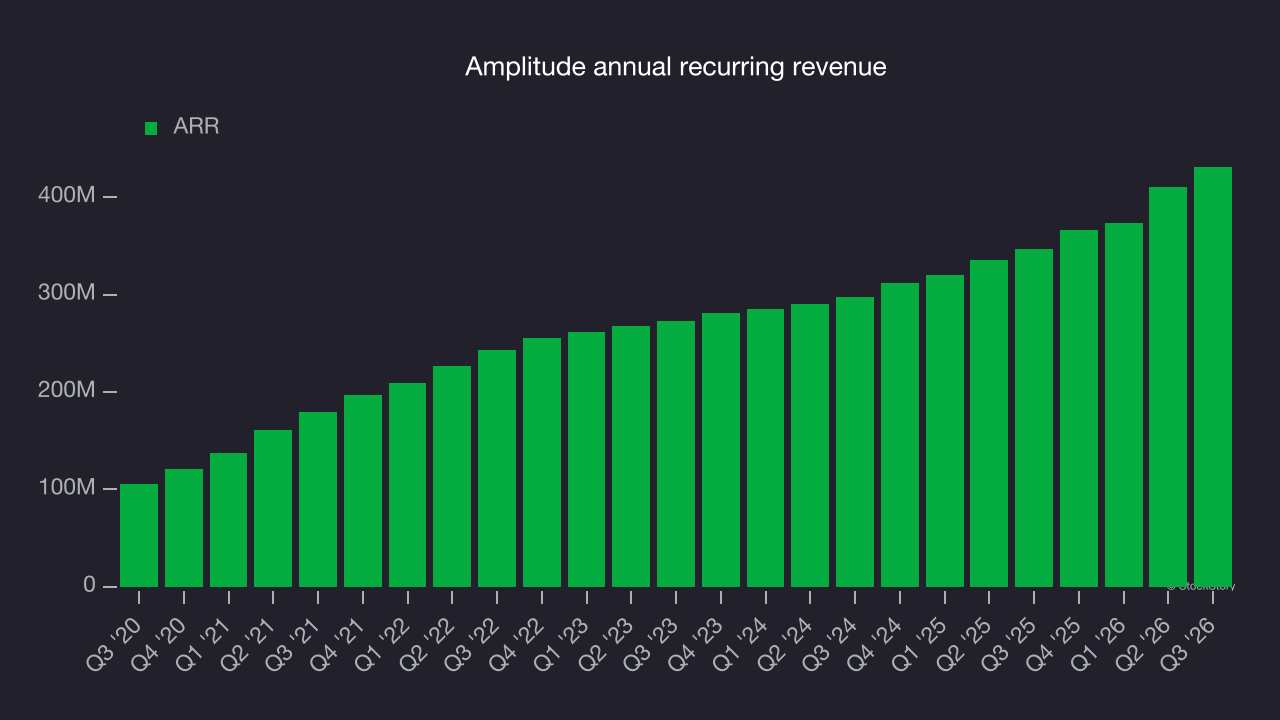
- Annual recurring revenue $431 million (24.2% year-on-year growth, beat)
- Market capitalization $2.10 billion
"We continue to innovate on the bleeding edge and help our customers transform themselves into AI-powered product builders." -Spenser Skates, CEO of AmplitudeShare
Revenue growth
Examining a company’s long-term performance can provide clues about its quality. Any business can experience short-term success, but top-performing ones sustain growth for years. Over the last five years, Amplitude grew its revenue at a decent 21.8% compounded annual growth rate. Its growth was slightly above the average software company and shows its offerings resonate with customers.
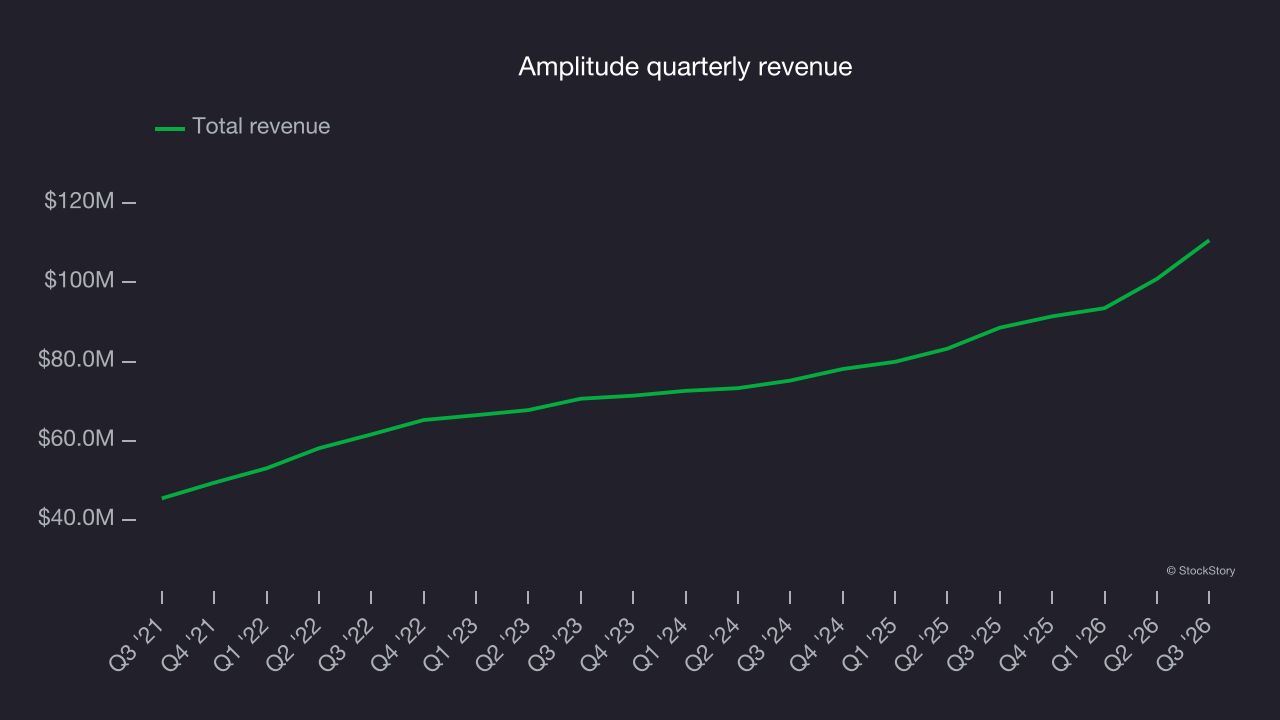
Long-term growth matters most, but within software, a half-decade historical view may miss new innovations or demand cycles. Amplitude’s annualized revenue growth of 16.4% over the last two years is below its five-year trend, but the results were still respectable.
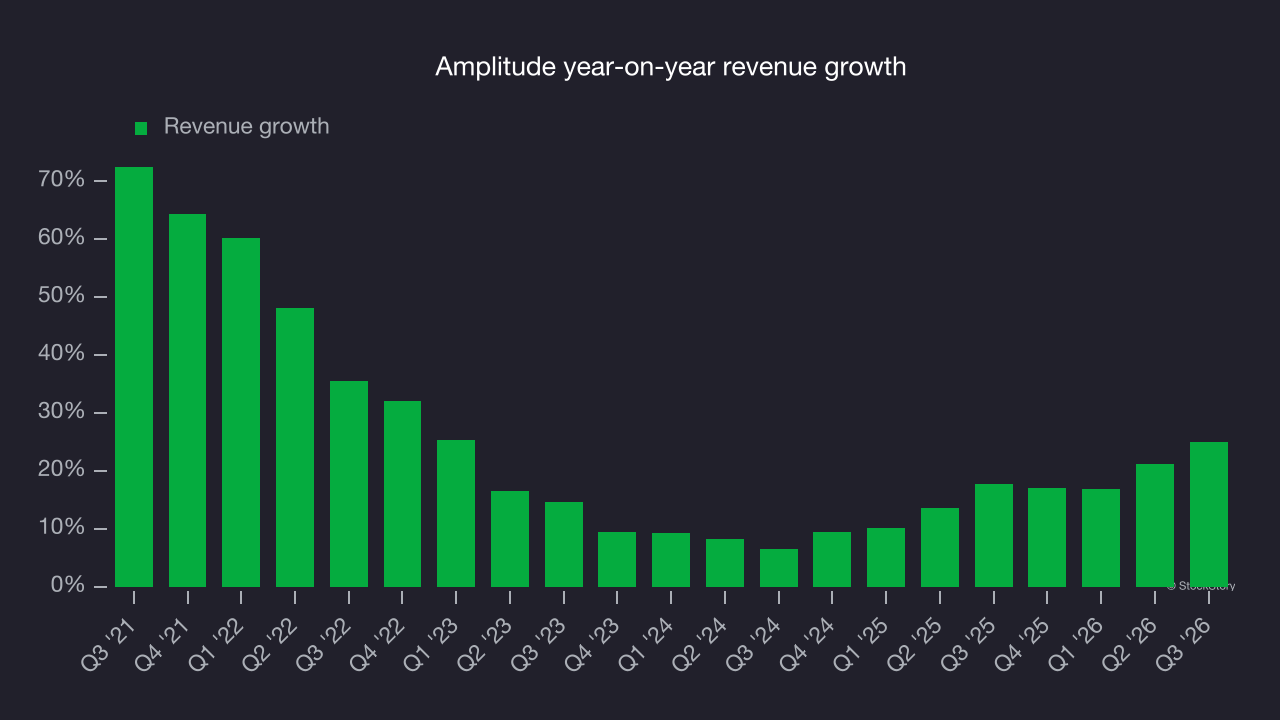
This quarter, Amplitude reported strong year-on-year revenue growth of 24.9%, and its $110.6 million in revenue topped Wall Street’s consensus estimates by 3.4%. Management is guiding for a 22.5% year-on-year increase in revenue next quarter.
Looking further ahead, sell-side analysts expect revenue to grow 15.6% over the next 12 months, according to S&P, similar to its two-year rate. This projection is above average for the sector and implies its newer products and services will help support its recent top-line performance.
Annual recurring revenue
While reported revenue for a software company can include low-margin items like implementation fees, annual recurring revenue, or ARR, is the sum of the next 12 months of contracted revenue purely from software subscriptions, or the high-margin, predictable revenue streams that make software-as-a-service businesses valuable.
Amplitude’s ARR totaled $431 million in Q3, and over the last four quarters, its growth was impressive as it averaged 20.2% year-on-year increases. This performance aligned with its total revenue growth and shows that customers are willing to make multiyear commitments to the company’s technology. Its growth also makes Amplitude a more predictable business, a tailwind for its valuation as investors typically prefer businesses with recurring revenue.
Customer retention
A key advantage of software-as-a-service businesses, and one reason they trade at high valuation multiples, is that customers typically spend more on their products and services over time.
Amplitude’s net revenue retention rate, a key performance metric measuring how much money existing customers from a year ago are spending today, was 104% in Q3. This means Amplitude would’ve grown its revenue by 4% even if it didn’t win any new customers over the last 12 months.
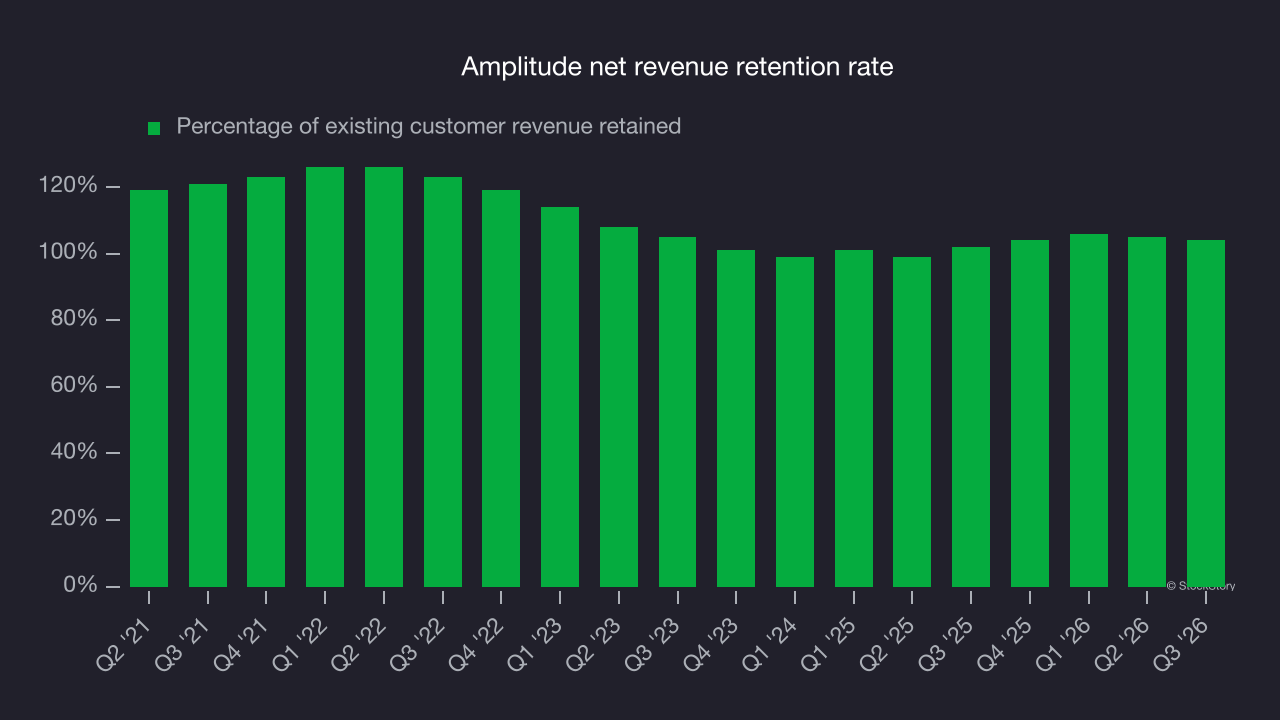
Amplitude has an adequate net retention rate, showing that it generally keeps customers but lags behind the best software-as-a-service businesses, which routinely post net retention rates of 120% or more.
Key takeaways from Amplitude’s Q3 results
Amplitude’s Q3 results had some key positives: Adjusted operating income beat analysts’ consensus estimates by a wide margin, and full-year EPS guidance also topped Wall Street’s consensus. On the other hand, next-quarter EPS guidance missed expectations. Shares rose 3.1% to $17.75 immediately after the results.
Amplitude reported solid earnings, but one quarter doesn’t necessarily make the stock a buy. The latest quarter is only one piece of the longer-term business quality puzzle. Quality, when combined with valuation, can help determine if the stock is a buy. For more on Amplitude, read the full research report here (it’s free).