As the craze of earnings season draws to a close, here’s a look back at some of the most exciting (and some less so) results from Q4. Today, we are looking at patient monitoring stocks, starting with ResMed (NYSE: RMD).
Patient monitoring companies within the healthcare equipment industry offer devices and technologies that track chronic conditions and support real-time health management, such as continuous glucose monitors (CGMs) and sleep apnea machines. These businesses benefit from recurring revenue from consumables and software subscriptions tied to device sales (razor, razor blade model). The rising prevalence of chronic diseases like diabetes and respiratory disorders due to an aging population as well as growing adoption of digitization are good for the industry. However, these companies face challenges from high R&D costs and reliance on regulatory approvals. Looking ahead, the sector is positioned for growth due to tailwinds like the rising burden of chronic diseases from an aging population, the shift toward value-based care, and increased adoption of digital health solutions. Innovations in AI and machine learning are expected to enhance device accuracy and functionality, improving patient outcomes and driving demand. However, there are headwinds such as pricing pressures as healthcare costs are a key focus, especially in the US. An evolving regulatory landscape and competition from more tech-forward new entrants could present additional challenges.
The 4 patient monitoring stocks we track reported a strong Q4. As a group, revenues beat analysts’ consensus estimates by 1.9% while next quarter’s revenue guidance was 1.9% below.
Amidst this news, share prices of the companies have had a rough stretch. On average, they are down 11.4% since the latest earnings results.
ResMed (NYSE: RMD)
Founded in 1989 to address the then-underdiagnosed condition of sleep apnea, ResMed (NYSE: RMD) develops cloud-connected medical devices and software solutions that treat sleep apnea, COPD, and other respiratory disorders for home and clinical use.
ResMed reported revenues of $1.42 billion, up 11% year on year. This print exceeded analysts’ expectations by 1.6%. Overall, it was a strong quarter for the company with a decent beat of analysts’ revenue estimates and a beat of analysts’ EPS estimates.
“Our second quarter results demonstrate the strength and resilience of our global business as we continue advancing our mission to help people sleep better, breathe better, and live longer and healthier lives in the comfort of their own home,” said Resmed’s Chairman and CEO, Mick Farrell.
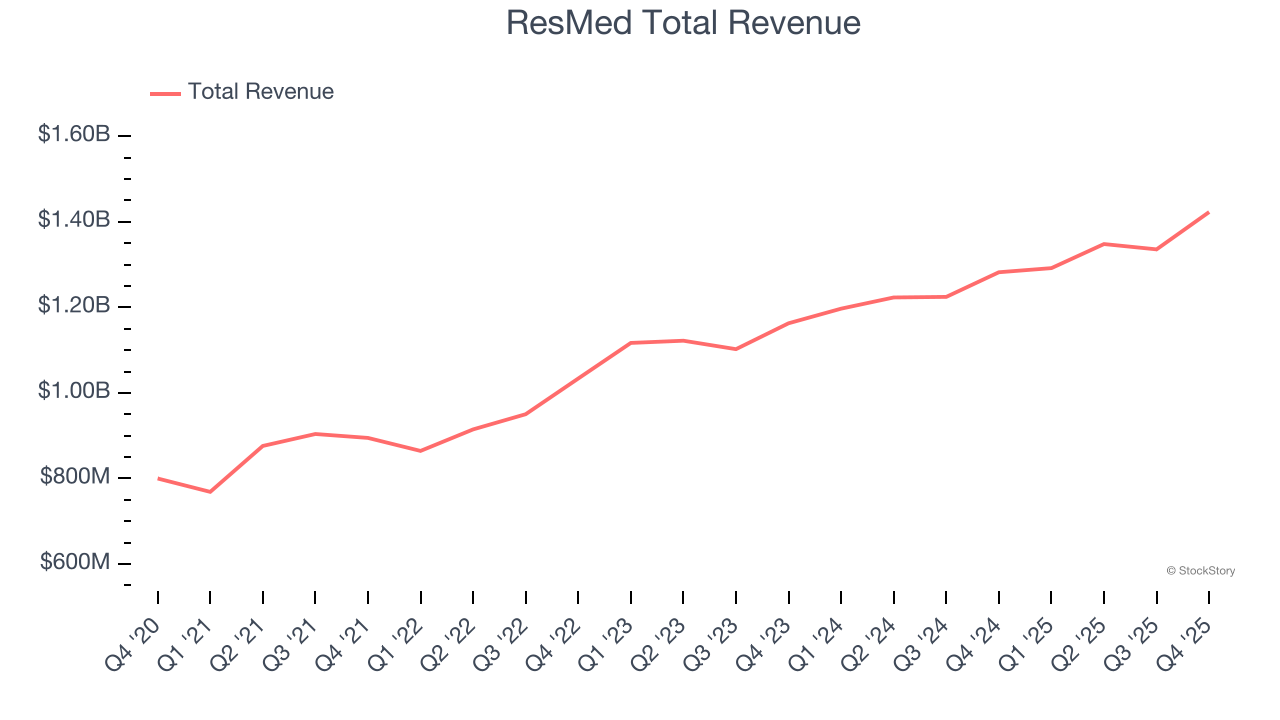
ResMed delivered the slowest revenue growth of the whole group. Unsurprisingly, the stock is down 12.1% since reporting and currently trades at $226.50.
We think ResMed is a good business, but is it a buy today? Read our full report here, it’s free.
Best Q4: iRhythm (NASDAQ: IRTC)
Pioneering the shift from bulky, short-term heart monitors to sleek, wire-free patches, iRhythm Technologies (NASDAQ: IRTC) provides wearable cardiac monitoring devices and AI-powered analysis services that help physicians detect and diagnose heart rhythm disorders.
iRhythm reported revenues of $208.9 million, up 27.1% year on year, outperforming analysts’ expectations by 3.4%. The business had a very strong quarter with a beat of analysts’ EPS estimates and an impressive beat of analysts’ revenue estimates.
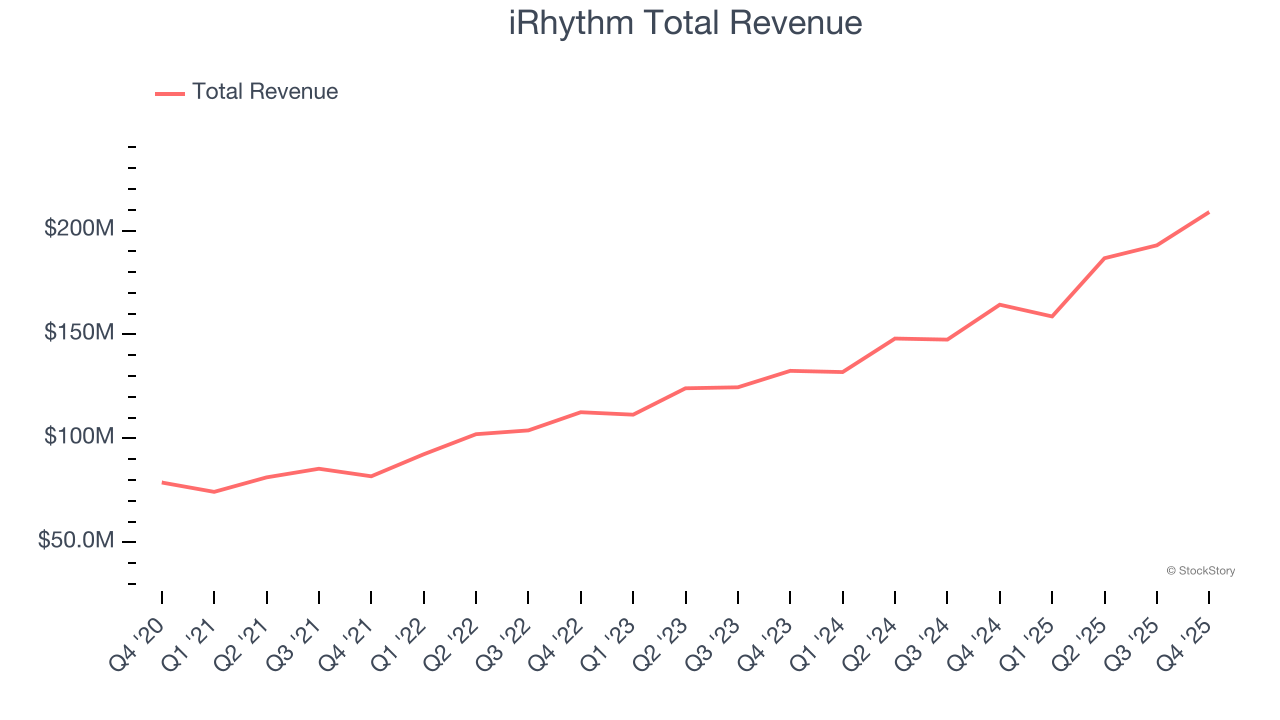
iRhythm achieved the biggest analyst estimates beat and highest full-year guidance raise among its peers. Although it had a fine quarter compared its peers, the market seems unhappy with the results as the stock is down 23.3% since reporting. It currently trades at $121.81.
Is now the time to buy iRhythm? Access our full analysis of the earnings results here, it’s free.
DexCom (NASDAQ: DXCM)
Founded in 1999 and receiving its first FDA approval in 2006, DexCom (NASDAQ: DXCM) develops and sells continuous glucose monitoring systems that allow people with diabetes to track their blood sugar levels without repeated finger pricks.
DexCom reported revenues of $1.26 billion, up 13.1% year on year, exceeding analysts’ expectations by 0.8%. Still, it was a mixed quarter as it posted full-year revenue guidance meeting analysts’ expectations.
DexCom delivered the weakest performance against analyst estimates and weakest full-year guidance update in the group. Interestingly, the stock is up 3% since the results and currently trades at $67.04.
Read our full analysis of DexCom’s results here.
Insulet (NASDAQ: PODD)
Revolutionizing diabetes care with its tubeless "Pod" technology, Insulet (NASDAQ: PODD) develops and manufactures innovative insulin delivery systems for people with diabetes, primarily through its Omnipod product line.
Insulet reported revenues of $783.8 million, up 31.2% year on year. This print topped analysts’ expectations by 2%. Overall, it was a strong quarter as it also produced a solid beat of analysts’ revenue estimates and a beat of analysts’ EPS estimates.
Insulet pulled off the fastest revenue growth among its peers. The stock is down 13.1% since reporting and currently trades at $214.07.
Read our full, actionable report on Insulet here, it’s free.
Market Update
Late in 2025 into early 2026, there was hand wringing around artificial intelligence. For software companies, the fear was that AI would erode pricing power and compress margins as new tools made it easier to replicate what once required expensive enterprise platforms. Crypto investors had their own version of the same anxiety: if AI agents could trade, allocate capital, and manage wallets autonomously, what exactly was the long-term value of today’s crypto infrastructure?
These concerns triggered a noticeable rotation away from these sectors and into safer havens. But markets rarely dwell on one narrative for long. Spring 2026 came, and the focus shifted abruptly from technological disruption to geopolitical risk. The US’ conflict with Iran became the dominant driver of market psychology, and when geopolitics takes center stage, the script changes quickly. Investors stop debating growth rates and start worrying about oil supply, inflation, and global stability.
Want to invest in winners with rock-solid fundamentals? Check out our Top 5 Quality Compounder Stocks and add them to your watchlist. These companies are poised for growth regardless of the political or macroeconomic climate.
StockStory’s analyst team — all seasoned professional investors — uses quantitative analysis and automation to deliver market-beating insights faster and with higher quality.