The landscape of artificial intelligence underwent a fundamental shift throughout 2025, moving away from the "instant gratification" of next-token prediction toward a more deliberative, human-like cognitive process. At the heart of this transformation was OpenAI’s "o-series" of models—specifically the flagship o3 and its highly efficient sibling, o3-mini. Released in full during the first quarter of 2025, these models popularized the concept of "System 2" thinking in AI, allowing machines to pause, reflect, and self-correct before providing answers to the world’s most difficult STEM and coding challenges.
As we look back from January 2026, the launch of o3-mini in February 2025 stands as a watershed moment. It was the point at which high-level reasoning transitioned from a costly research curiosity into a scalable, affordable commodity for developers and enterprises. By leveraging "Inference-Time Scaling"—the ability to trade compute time for increased intelligence—OpenAI and its partner Microsoft (NASDAQ: MSFT) fundamentally altered the trajectory of the AI arms race, forcing every major player to rethink their underlying architectures.
The Architecture of Deliberation: Chain of Thought and Inference Scaling
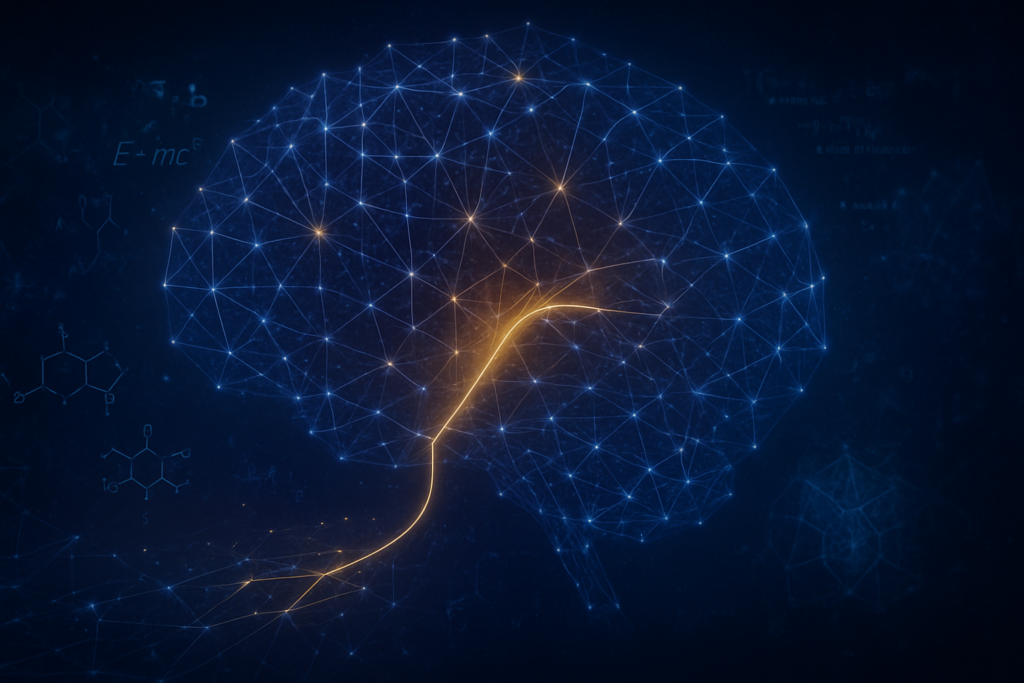
The technical breakthrough behind the o1 and o3 models lies in a process known as "Chain of Thought" (CoT) processing. Unlike traditional large language models (LLMs) like GPT-4, which generate responses nearly instantaneously, the o-series is trained via large-scale reinforcement learning to "think" before it speaks. During this hidden phase, the model explores various strategies, breaks complex problems into manageable steps, and identifies its own errors. While OpenAI maintains a layer of "hidden" reasoning tokens for safety and competitive reasons, the results are visible in the unprecedented accuracy of the final output.
This shift introduced the industry to the "Inference Scaling Law." Previously, AI performance was largely dictated by the size of the model and the amount of data used during training. The o3 series proved that a model’s intelligence could be dynamically scaled at the moment of use. By allowing o3 to spend more time—and more compute—on a single problem, its performance on benchmarks like the ARC-AGI (Abstraction and Reasoning Corpus) skyrocketed to a record-breaking 88%, a feat previously thought to be years away. This necessitated a massive demand for high-throughput inference hardware, further cementing the dominance of NVIDIA (NASDAQ: NVDA) in the data center.
The February 2025 release of o3-mini was particularly significant because it brought this "thinking" capability to a much smaller, faster, and cheaper model. It introduced an "Adaptive Thinking" feature, allowing users to select between Low, Medium, and High reasoning effort. This gave developers the flexibility to use deep reasoning for complex logic or scientific discovery while maintaining lower latency for simpler tasks. Technically, o3-mini achieved parity with or surpassed the original o1 model in coding and math while being nearly 15 times more cost-efficient, effectively democratizing PhD-level reasoning.
Market Disruption and the Competitive "Reasoning Wars"
The rise of the o3 series sent shockwaves through the tech industry, particularly affecting how companies like Alphabet Inc. (NASDAQ: GOOGL) and Meta Platforms (NASDAQ: META) approached their model development. For years, the goal was to make models faster and more "chatty." OpenAI’s pivot to reasoning forced a strategic realignment. Google quickly responded by integrating advanced reasoning capabilities into its Gemini 2.0 suite, while Meta accelerated its work on "Llama-V" reasoning models to prevent OpenAI from monopolizing the high-end STEM and coding markets.
The competitive pressure reached a boiling point in early 2025 with the arrival of DeepSeek R1 from China and Claude 3.7 Sonnet from Anthropic. DeepSeek R1 demonstrated that reasoning could be achieved with significantly less training compute than previously thought, briefly challenging the "moat" OpenAI had built around its o-series. However, OpenAI’s o3-mini maintained a strategic advantage due to its deep integration with the Microsoft (NASDAQ: MSFT) Azure ecosystem and its superior reliability in production-grade software engineering tasks.
For startups, the "Reasoning Revolution" was a double-edged sword. On one hand, the availability of o3-mini through an API allowed small teams to build sophisticated agents capable of autonomous coding and scientific research. On the other hand, many "wrapper" companies that had built simple tools around GPT-4 found their products obsolete as o3-mini could now handle complex multi-step workflows natively. The market began to value "agentic" capabilities—where the AI can use tools and reason through long-horizon tasks—over simple text generation.
Beyond the Benchmarks: STEM, Coding, and the ARC-AGI Milestone
The real-world implications of the o3 series were most visible in the fields of mathematics and science. In early 2025, o3-mini set new records on the AIME (American Invitational Mathematics Examination), achieving an ~87% accuracy rate. This wasn't just about solving homework; it was about the model's ability to tackle novel problems it hadn't seen in its training data. In coding, the o3-mini model reached an Elo rating of over 2100 on Codeforces, placing it in the top tier of human competitive programmers.
Perhaps the most discussed milestone was the performance on the ARC-AGI benchmark. Designed to measure "fluid intelligence"—the ability to learn new concepts on the fly—ARC-AGI had long been a wall for AI. By scaling inference time, the flagship o3 model demonstrated that AI could move beyond mere pattern matching and toward genuine problem-solving. This breakthrough sparked intense debate among researchers about how close we are to Artificial General Intelligence (AGI), with many experts noting that the "reasoning gap" between humans and machines was closing faster than anticipated.
However, this revolution also brought new concerns. The "hidden" nature of the reasoning tokens led to calls for more transparency, as researchers argued that understanding how an AI reaches a conclusion is just as important as the conclusion itself. Furthermore, the massive energy requirements of "thinking" models—which consume significantly more power per query than traditional models—intensified the focus on sustainable AI infrastructure and the need for more efficient chips from the likes of NVIDIA (NASDAQ: NVDA) and emerging competitors.
The Horizon: From Reasoning to Autonomous Agents
Looking forward from the start of 2026, the reasoning capabilities pioneered by o3 and o3-mini have become the foundation for the next generation of AI: Autonomous Agents. We are moving away from models that you "talk to" and toward systems that you "give goals to." With the release of the GPT-5 series and o4-mini in late 2025, the ability to reason over multimodal inputs—such as video, audio, and complex schematics—is now a standard feature.
The next major challenge lies in "Long-Horizon Reasoning," where models can plan and execute tasks that take days or weeks to complete, such as conducting a full scientific experiment or managing a complex software project from start to finish. Experts predict that the next iteration of these models will incorporate "on-the-fly" learning, allowing them to remember and adapt their reasoning strategies based on the specific context of a long-term project.
A New Era of Artificial Intelligence
The "Reasoning Revolution" led by OpenAI’s o1 and o3 models has fundamentally changed our relationship with technology. We have transitioned from an era where AI was a fast-talking assistant to one where it is a deliberate, methodical partner in solving the world’s most complex problems. The launch of o3-mini in February 2025 was the catalyst that made this power accessible to the masses, proving that intelligence is not just about the size of the brain, but the time spent in thought.
As we move further into 2026, the significance of this development in AI history is clear: it was the year the "black box" began to think. While challenges regarding transparency, energy consumption, and safety remain, the trajectory is undeniable. The focus for the coming months will be on how these reasoning agents integrate into our daily workflows and whether they can begin to solve the grand challenges of medicine, climate change, and physics that have long eluded human experts.
This content is intended for informational purposes only and represents analysis of current AI developments.
TokenRing AI delivers enterprise-grade solutions for multi-agent AI workflow orchestration, AI-powered development tools, and seamless remote collaboration platforms.
For more information, visit https://www.tokenring.ai/.