The global energy market is on a knife-edge this week as geopolitical tensions between the United States and Iran reached a fever pitch, sending crude oil prices to their highest levels in months. As of February 19, 2026, Brent crude has breached the $71 per barrel mark, while West Texas Intermediate (WTI) is trading near $66 per barrel. The sudden spike follows reports that the Trump administration is actively weighing military strikes against Iran’s nuclear infrastructure following a total breakdown in diplomatic negotiations.
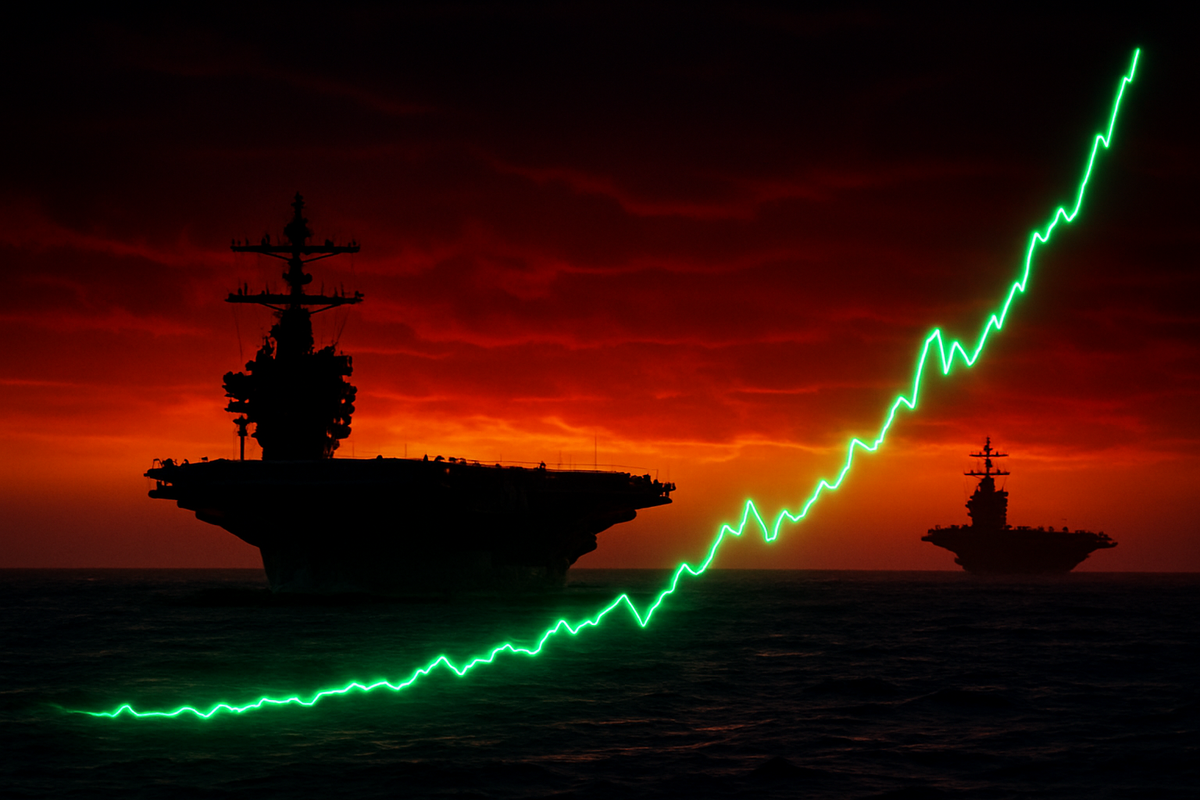
The market’s reaction has been swift and unforgiving. The Energy Select Sector SPDR Fund (NYSE Arca: XLE), which tracks the performance of the largest U.S. energy companies, has seen significant volatility, climbing over 21% year-to-date as investors bake in a "geopolitical risk premium." With two U.S. carrier strike groups—the USS Gerald Ford and the USS Abraham Lincoln—now positioned in the Persian Gulf, the specter of a wider Middle Eastern conflict looms large over global supply chains and the American economy.
A Failed Diplomacy and a Looming Deadline
The current crisis traces back to a series of stalled negotiations in Geneva and Muscat earlier this year. President Trump has demanded a comprehensive dismantling of Iran’s nuclear capabilities and strict limits on its ballistic missile program—a "Maximum Pressure 2.0" strategy designed to force Tehran into a corner. However, Iranian officials have remained recalcitrant, offering only vague promises of future discussions while continuing to enrich uranium beyond civilian needs. This diplomatic deadlock reached a breaking point this week when the White House issued an unofficial deadline, signaling that the window for a "peaceful resolution" is closing.
The timeline of escalation has been rapid. In early February, intelligence reports suggested Iran had significantly shortened its "breakout time" to a nuclear weapon. By mid-month, the U.S. began repositioning naval assets, and by February 19, the rhetoric from Washington turned decidedly kinetic. Reports indicate that the military is prepared for targeted strikes as early as the upcoming weekend. The involvement of regional allies has further complicated the situation, with Israel reportedly pushing for a more expansive campaign aimed at permanent regime change, rather than limited tactical strikes.
Market Winners and Losers in a High-Stakes Standoff
The immediate beneficiaries of the rising tensions are the U.S. oil majors. ExxonMobil (NYSE: XOM) has seen its stock price surge over 25% since the start of 2026, recently trading near $152. Investors view Exxon as a premier "safe haven" due to its massive production base in the Permian Basin and Guyana, which shields it from the immediate physical risks of the Persian Gulf while allowing it to reap the rewards of higher global crude prices. Similarly, Chevron (NYSE: CVX) has rallied to approximately $184, bolstered by a "fortress balance sheet" and its 39th consecutive year of dividend hikes, making it a favorite for defensive income seekers.
On the other side of the ledger, energy-intensive industries are feeling the squeeze. Major carriers such as Delta Air Lines (NYSE: DAL) and United Airlines (NASDAQ: UAL) have faced selling pressure as jet fuel costs—the largest variable expense for airlines—threaten to eat into 2026 profit margins. Additionally, the broader consumer discretionary sector faces headwinds as rising gas prices threaten to dampen domestic spending. If oil continues its climb toward the $90 range, the inflationary pressure could force the Federal Reserve to reconsider its interest rate path, creating a secondary wave of market disruption.
The Geopolitical Risk Premium vs. Fundamental Surplus
The current price action represents a classic "tug-of-war" between bearish market fundamentals and extreme geopolitical risk. Prior to this escalation, energy analysts were projecting a global oil surplus of nearly 3 million barrels per day for the first half of 2026. Under normal circumstances, such a surplus would keep prices depressed. However, the threat of a blockade in the Strait of Hormuz—where roughly 20% of the world’s oil supply passes daily—has completely overridden the supply-and-demand narrative.
This event mirrors the tensions of 2019 and 2020, but with a more volatile domestic political landscape in the U.S. and a more advanced Iranian nuclear program. The strategic significance of the Strait cannot be overstated; any disruption there would cause an immediate global supply shock that even record U.S. production could not fully offset. Furthermore, the regulatory environment in the U.S. remains focused on "energy dominance," with the current administration incentivizing domestic drilling to insulate the North American market from Middle Eastern shocks. This policy shift has made U.S. energy stocks more resilient than their international counterparts.
Strategic Pivots and the Path to Escalation
In the short term, all eyes are on the Persian Gulf for any sign of kinetic activity. If the U.S. moves forward with military action, the primary concern will be the scale of Iran’s retaliation. Analysts are watching for potential "asymmetric" responses, such as cyberattacks on Western financial infrastructure or the deployment of sea mines in shipping lanes. Such scenarios would likely send oil prices soaring toward $100 per barrel, forcing a strategic pivot for global logistics companies and potentially triggering an emergency release from the U.S. Strategic Petroleum Reserve (SPR).
Longer-term, the outcome of this standoff will redefine the energy landscape for the remainder of the decade. A successful neutralization of the nuclear threat could lead to a period of "enforced stability," but a prolonged regional war would likely accelerate the transition toward alternative energy sources as nations scramble to reduce their reliance on Middle Eastern crude. For energy companies like SLB (NYSE: SLB), formerly known as Schlumberger, this volatility creates a surge in demand for short-cycle production technologies as operators race to bring more North American oil online.
Investor Outlook: Navigating the Fog of War
The takeaway for investors is one of cautious positioning. While the energy sector (XLE) currently offers a hedge against geopolitical catastrophe, the high level of "fear premium" in the market makes it vulnerable to a sharp correction if a diplomatic "off-ramp" is suddenly found. The current $71 Brent price is built on the assumption of conflict; should tensions de-escalate, the underlying supply surplus could lead to a rapid $10–$15 per barrel retreat.
As we move toward the end of February, the critical factors to watch are the movements of the carrier strike groups and any official statements from Tehran regarding the "final" nuclear concessions. Investors should monitor the performance of integrated majors like ExxonMobil and Chevron as bellwethers for the market's confidence in the U.S. energy shield. For now, the "war drums" are the loudest sound on Wall Street, and the energy market remains the primary theater of operation.
This content is intended for informational purposes only and is not financial advice.