As of December 29, 2025, Apple Inc. (NASDAQ: AAPL) remains the quintessential benchmark for the intersection of technology, luxury, and capital markets. While the tech industry spent much of the early 2020s in a feverish race to define the "Generative AI" era, Apple has spent 2025 proving that the ultimate winner is the company that can best integrate these tools into the pockets of billions. With a market capitalization flirting with the $4 trillion mark and a newly matured "Apple Intelligence" ecosystem, the Cupertino giant is navigating a transition point as profound as the shift from the iPod to the iPhone. Yet, this dominance is being tested by unprecedented regulatory scrutiny and the looming question of leadership succession.
Historical Background
Founded in a California garage in 1976 by Steve Jobs, Steve Wozniak, and Ronald Wayne, Apple’s journey is one of the most storied in corporate history. From the revolutionary Apple II and the original Macintosh in 1984 to the company's near-collapse in the late 1990s, the narrative has always been one of "thinking different."
The return of Steve Jobs in 1997 sparked an era of unparalleled innovation, producing the iMac, iPod, and eventually the 2007 iPhone, which redefined the modern smartphone. Since Tim Cook took the helm in 2011, the company has transformed from a hardware-centric innovator into a diversified services powerhouse. The late 2010s and early 2020s saw Apple successfully transition its Mac lineup to in-house silicon (M-series) and build a services business larger than most Fortune 500 companies. By late 2025, the company has officially entered its "AI and Spatial" era, attempting to repeat its historical success with the Vision Pro and Apple Intelligence.
Business Model
Apple’s business model is built on a "virtuous cycle" of hardware, software, and services. The core strategy is to control the entire stack, ensuring a seamless user experience that fosters deep brand loyalty and high switching costs—often referred to as the "Walled Garden."
- iPhone: Remains the primary revenue driver, contributing roughly 50% of total sales.
- Services: Includes the App Store, Apple Music, iCloud, Apple Pay, and Apple TV+. This segment is critical for margin expansion, as it carries significantly higher gross margins (~75%) than hardware.
- Wearables, Home, and Accessories: Features the Apple Watch and AirPods, which dominate their respective categories.
- Mac and iPad: Specialized productivity segments that have seen renewed growth following the transition to Apple Silicon.
Apple’s customer base is increasingly global, with a massive focus on emerging markets like India, which has become both a critical manufacturing hub and a top-five market for the company by late 2025.
Stock Performance Overview
Apple has historically been a cornerstone of institutional and retail portfolios. Over the last decade, the stock has delivered exceptional returns, largely outperforming the S&P 500.
- 10-Year Performance: AAPL has seen a total return exceeding 850%, driven by massive share buybacks and the expansion of the Services segment.
- 5-Year Performance: The stock roughly tripled during this period, weathering the 2022 tech sell-off and surging in late 2024 and 2025 as the "AI Supercycle" took hold.
- 1-Year Performance (2025): The stock has risen approximately 28% in 2025, largely due to the successful launch of the iPhone 17 Air and the stabilization of Apple Intelligence features.
Financial Performance
For the fiscal year ending September 2025, Apple reported blockbuster results that silenced many critics of its early-year AI rollout.
- Revenue: Reached an all-time high of $416.16 billion (up 6.43% year-over-year).
- Net Income: Stood at $112.01 billion, a nearly 20% jump from 2024, reflecting improved operational efficiencies and a shift toward high-margin Pro models.
- Margins: Gross margin held steady at 46.2%, a testament to Apple’s pricing power despite inflationary pressures.
- Cash Flow & Buybacks: Apple generated over $110 billion in free cash flow in 2025 and continued its aggressive capital return program, maintaining its status as one of the world's largest purchasers of its own stock.
Leadership and Management
Tim Cook’s tenure as CEO is widely regarded as one of the most successful in business history. However, as of late 2025, succession chatter has reached a fever pitch. Cook, now 65, has hinted at a future beyond Apple, and the Board of Directors has reportedly identified John Ternus, Senior Vice President of Hardware Engineering, as the likely successor.
Ternus has become the face of the "new Apple," leading the development of the M-series chips and the sleek iPhone 17 Air. Other key leaders include Jeff Williams (COO), who oversees Apple Watch and health initiatives, and Luca Maestri (CFO), who has masterfully managed Apple’s balance sheet. The leadership team is known for its discipline and "steady hand" approach, which remains a key draw for long-term investors.
Products, Services, and Innovations
Innovation in 2025 is dominated by Apple Intelligence. Unlike the cloud-first AI models of rivals, Apple’s "Private Cloud Compute" ensures that Siri 2.0 can handle complex, personal tasks while maintaining user privacy. By late 2025, Siri has evolved into an "agentic" assistant, capable of cross-app task execution.
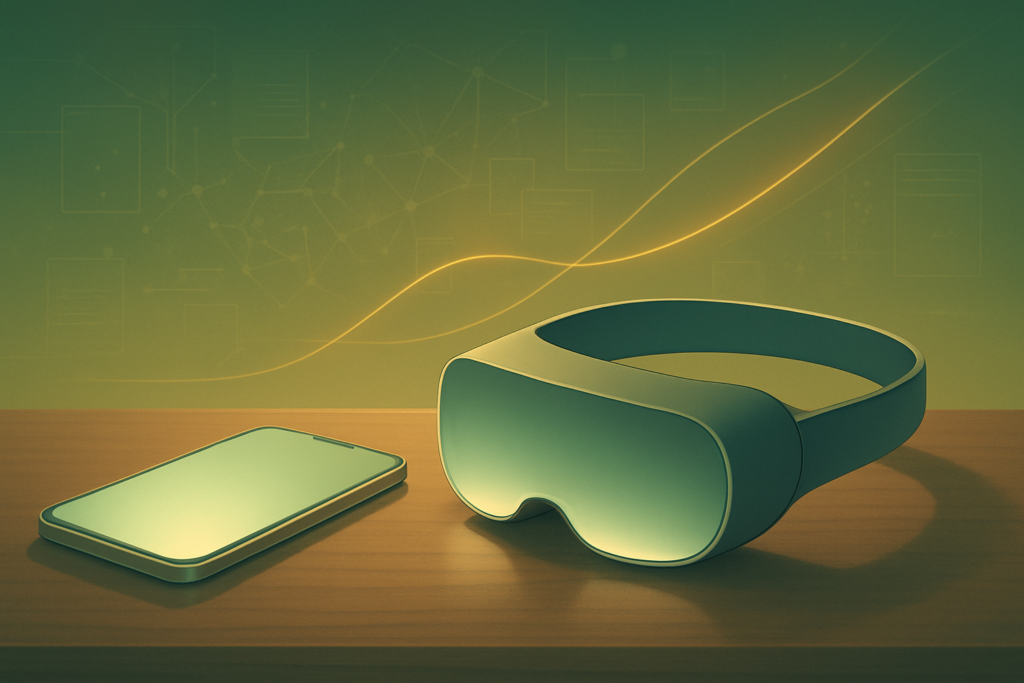
The hardware highlight of the year was the iPhone 17 Air, an ultra-thin (5.6mm) device that successfully replaced the "Plus" model. While the Vision Pro remains a high-end niche product (shipping roughly 420,000 units in 2025), it serves as a platform for "Spatial Intelligence," where Apple is building the foundation for the next decade of computing.
Competitive Landscape
Apple faces fierce competition across all segments:
- Samsung Electronics (KOSPI: 005930): Remains the primary rival in the premium smartphone space, particularly with its foldable lineup.
- Microsoft (NASDAQ: MSFT) and Google (NASDAQ: GOOGL): Both are ahead in pure Generative AI capabilities, forcing Apple to play catch-up with its ecosystem-integrated AI.
- Huawei: Re-emerged as a major threat in China, capturing significant market share in the premium segment and challenging Apple’s growth in the region.
- Meta Platforms (NASDAQ: META): A direct competitor in the VR/AR (Spatial Computing) space with its more affordable Quest lineup.
Apple’s primary competitive edge remains its integrated ecosystem and the "stickiness" of iMessage, iCloud, and the Apple Watch.
Industry and Market Trends
The consumer electronics industry in late 2025 is defined by the "AI Supercycle." Consumers are no longer upgrading for better cameras alone; they are upgrading for hardware capable of running on-device large language models (LLMs). Additionally, the trend of "de-globalization" has forced Apple to diversify its supply chain, moving significant production capacity from China to India and Vietnam to mitigate geopolitical risks.
Risks and Challenges
- Regulatory Scrutiny: Apple is currently embroiled in a massive antitrust lawsuit with the US Department of Justice (DOJ), which reached a critical discovery phase in mid-2025.
- EU Compliance: The Digital Markets Act (DMA) has forced Apple to open iOS to third-party app stores and payment systems in Europe, potentially eroding its lucrative 30% commission (the "Apple Tax").
- Innovation Saturation: The Vision Pro has yet to find a mass-market use case, leading to concerns that Apple’s "next big thing" may be years away from contributing to the bottom line.
- China Dependency: Despite diversification efforts, China remains both a vital manufacturing hub and a top-three market, leaving Apple vulnerable to US-China trade tensions.
Opportunities and Catalysts
- India Expansion: Apple is on track to manufacture 25% of all iPhones in India by 2026, while retail expansion in the country offers a massive demographic tailwind.
- Health Tech: Rumors of non-invasive glucose monitoring in the 2026/2027 Apple Watch could revolutionize the healthcare sector.
- AI Monetization: While Apple Intelligence is currently free for users, analysts anticipate a "Siri Premium" or "AI+ Service" subscription model by late 2026.
- Automotive/Car Play: The "Apple Car" project may be dead, but the next-generation CarPlay (deeply integrated into vehicle systems) offers a new path into the lucrative automotive software market.
Investor Sentiment and Analyst Coverage
Wall Street sentiment remains largely "Bullish" toward Apple. Analysts emphasize that Apple’s massive installed base (over 2.2 billion active devices) provides a floor for the stock.
- Average Price Target: $288.62.
- Institutional Holdings: Apple remains the top holding for many of the world's largest ETFs and pension funds.
- Retail Sentiment: Remains high, though some "value" investors point to Apple’s Forward P/E ratio of ~31x as being historically stretched.
Regulatory, Policy, and Geopolitical Factors
The geopolitical landscape is perhaps Apple's greatest external threat. The ongoing US-China "Chip War" limits Apple’s ability to utilize certain advanced manufacturing technologies in China. Meanwhile, the EU’s aggressive stance on "gatekeeper" platforms continues to force Apple to dismantle pieces of its walled garden. In late 2025, the company has had to allow third-party wearables (like Samsung and Garmin watches) to have better interoperability with the iPhone to satisfy EU regulators.
Conclusion
Apple Inc. enters 2026 as a titan that has successfully pivoted to the AI era without sacrificing its core values of privacy and design. The success of the iPhone 17 Air and the steady rollout of Apple Intelligence have provided a robust growth catalyst that justified its premium valuation throughout 2025.
However, the "Walled Garden" is under siege from regulators in both Washington and Brussels. Investors should watch three key things in the coming year: the outcome of the DOJ antitrust case, the potential announcement of a Tim Cook succession timeline, and the first signs of meaningful consumer adoption of spatial computing (Vision Pro). Apple’s ability to navigate these hurdles while maintaining its unmatched cash-generation capabilities will determine if it can sustain its position at the pinnacle of the global economy.
This content is intended for informational purposes only and is not financial advice.