Semiconductor maker Himax Technologies (NASDAQ: HIMX) beat Wall Street’s revenue expectations in Q2 CY2026, with sales up 5.9% year on year to $227.4 million. Its GAAP profit of $0.11 per share was in line with analysts’ consensus estimates.
Is now the time to buy Himax? Find out by accessing our full research report, it’s free.
Himax (HIMX) Q2 CY2026 Highlights:
- Revenue: $227.4 million vs analyst estimates of $223 million (5.9% year-on-year growth, 2% beat)
- EPS (GAAP): $0.11 vs analyst estimates of $0.11 (in line)
- Operating Margin: 10.8%, up from 8.4% in the same quarter last year
- Free Cash Flow Margin: 5.1%, down from 26% in the same quarter last year
- Inventory Days Outstanding: 91, down from 100 in the previous quarter
- Market Capitalization: $2.33 billion
“Notwithstanding industry-wide supply constraints, we remain optimistic about the long-term growth prospects of our automotive display IC business. We continue to view automotive as one of the industry's most attractive secular growth markets, driven by rapid advancements in smart vehicle interiors, characterized by a growing number of displays per vehicle, along with larger, higher-resolution displays and more diverse vehicle cabin configurations. Himax is well positioned to capitalize on these industry trends through our comprehensive automotive display portfolio spanning both LCD and OLED technologies, a broad and diversified global customer base, and a robust design-win pipeline. The industry's ongoing pursuit of richer human-machine interfaces, immersive infotainment, and enhanced in-cabin user experiences is driving the adoption of a broader range of our display technologies. This not only increases Himax's dollar content per vehicle but also creates multiple long-term growth opportunities,” said Mr. Jordan Wu, President and Chief Executive Officer of Himax.
Company Overview
Taiwan-based Himax Technologies (NASDAQ: HIMX) is a leading manufacturer of display driver chips and timing controllers used in TVs, laptops, and mobile phones.
Revenue Growth
A company’s long-term performance is an indicator of its overall quality. Even a bad business can shine for one or two quarters, but a top-tier one grows for years. Over the last five years, Himax’s demand was weak and its revenue declined by 7% per year. This wasn’t a great result and is a sign of poor business quality. Semiconductors are a cyclical industry, and long-term investors should be prepared for periods of high growth followed by periods of revenue contractions.
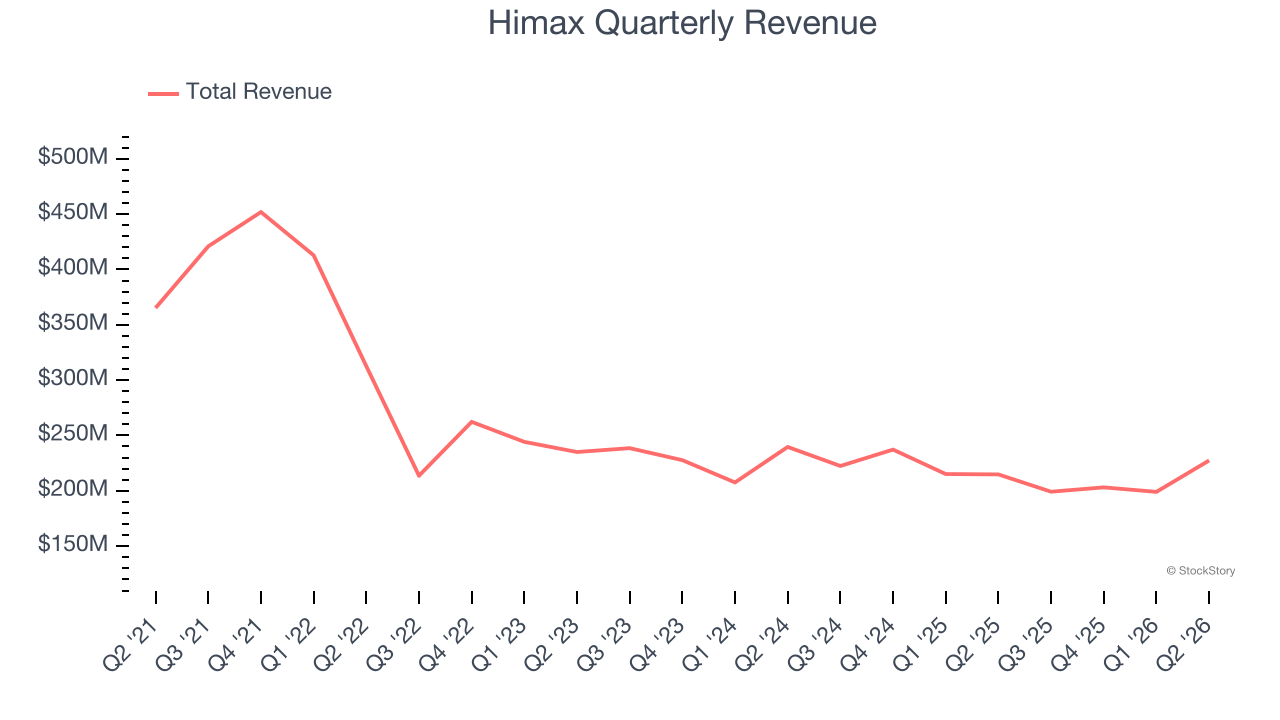
Long-term growth is the most important, but short-term results matter for semiconductors because the rapid pace of technological innovation (Moore’s Law) could make yesterday’s hit product obsolete today. Himax’s annualized revenue declines of 4.8% over the last two years suggest its demand continued shrinking. 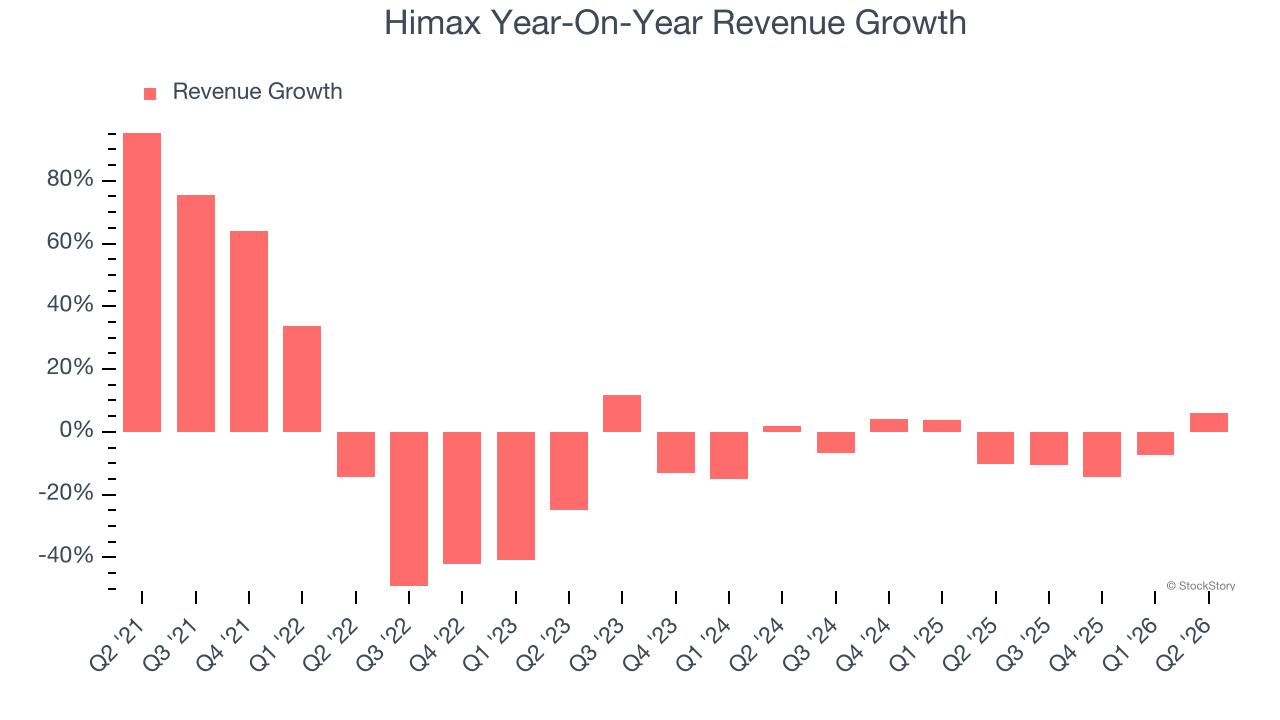
This quarter, Himax reported year-on-year revenue growth of 5.9%, and its $227.4 million of revenue exceeded Wall Street’s estimates by 2%. Adding to the positive news, Himax’s growth inflected positively this quarter, news that will likely give some shareholders hope.
Looking ahead, sell-side analysts expect revenue to grow 24.5% over the next 12 months. Although this projection implies its newer products and services will catalyze better top-line performance, it is still below the sector average.
ALSO WORTH WATCHING: Nvidia’s Quiet Partner. Nvidia’s chips cost a hundred grand. The connectors that make them work cost even more. One company makes them all.
Every AI server needs specialized infrastructure the chip companies don’t make. High-speed cables. Power connectors. Thermal sensors. This 90-year-old company built a monopoly on it. The AI boom just started. This stock is still flying under the radar. Claim The Stock Ticker Here for FREE.
Product Demand & Outstanding Inventory
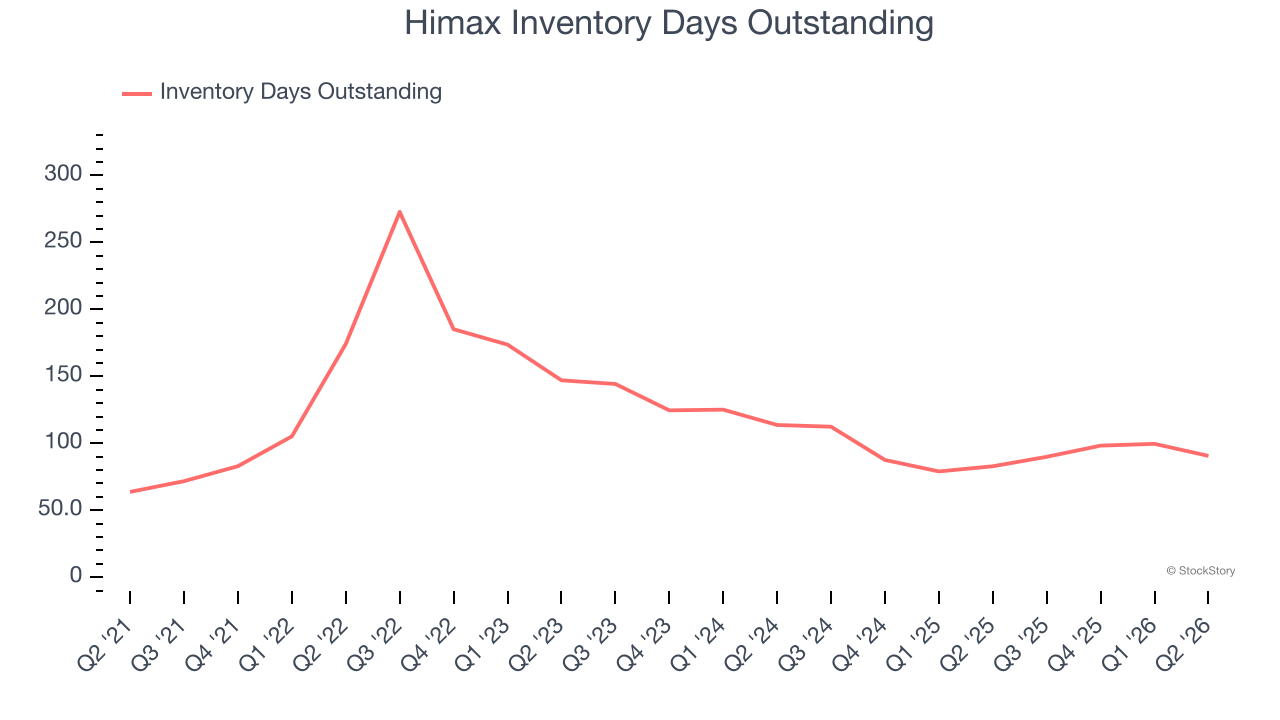
Days Inventory Outstanding (DIO) is an important metric for chipmakers, as it reflects a business’s capital intensity and the cyclical nature of semiconductor supply and demand. In a tight supply environment, inventories tend to be stable, allowing chipmakers to exert pricing power. Steadily increasing DIO can be a warning sign that demand is weak, and if inventories continue to rise, the company may have to downsize production.
This quarter, Himax’s DIO came in at 91, which is 32 days below its five-year average. At the moment, these numbers show no indication of an excessive inventory buildup.
Key Takeaways from Himax’s Q2 Results
We were impressed by Himax’s strong improvement in inventory levels. We were also glad its EPS was in line with Wall Street’s estimates. Overall, we think this was a decent quarter with some key metrics above expectations. The stock traded up 9.8% to $14.65 immediately after reporting.
Himax may have had a good quarter, but does that mean you should invest right now? The latest quarter does matter, but not nearly as much as longer-term fundamentals and valuation, when deciding if the stock is a buy. We cover that in our actionable full research report which you can read here (it’s free).