Wrapping up Q2 earnings, we look at the numbers and key takeaways for the data infrastructure stocks, including Elastic (NYSE: ESTC) and its peers.
Generating insights from system level data is an increasing priority for most businesses, but to do so requires connecting and analyzing piles of data stored and siloed in separate databases. This is the demand driver for cloud based data infrastructure software providers, who can more readily integrate, distribute and process information vs. legacy on-premise software providers.
The 4 data infrastructure stocks we track reported a satisfactory Q2. As a group, revenues beat analysts’ consensus estimates by 1.7% while next quarter’s revenue guidance was 2.3% below.
Amidst this news, share prices of the companies have had a rough stretch. On average, they are down 5.6% since the latest earnings results.
Elastic (NYSE: ESTC)
Built on the powerful open-source Elasticsearch technology that powers search functionality for thousands of websites worldwide, Elastic (NYSE: ESTC) provides a search and AI platform that helps organizations find insights from their data, monitor applications, and protect against security threats.
Elastic reported revenues of $478.1 million, up 15.1% year on year. This print exceeded analysts’ expectations by 1.7%. Despite the top-line beat, it was still a mixed quarter for the company with an impressive beat of analysts’ adjusted operating income estimates but a significant miss of analysts’ billings estimates.
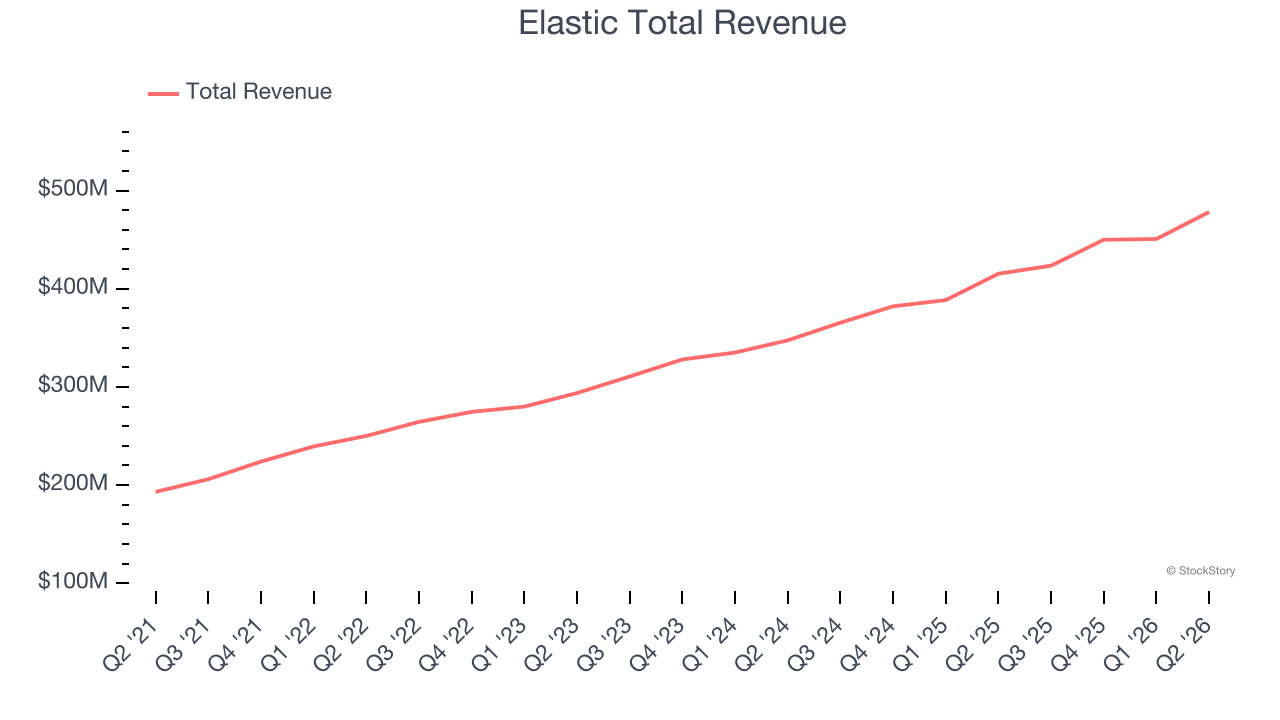
Elastic scored the highest guidance raise in the group. The results were likely priced in, however, and the stock is flat since reporting. It currently trades at $83.50.
Is now the time to buy Elastic? Access our full analysis of the earnings results here, it’s free.
Best Q2: Oracle (NYSE: ORCL)
Starting as a database company in 1977 and now powering mission-critical systems across the globe, Oracle (NYSE: ORCL) provides enterprise software and hardware products and services that help businesses manage their information technology needs.
Oracle reported revenues of $19.35 billion, up 29.6% year on year, outperforming analysts’ expectations by 1.3%. The business had a strong quarter with a solid beat of analysts’ billings and adjusted operating income estimates.
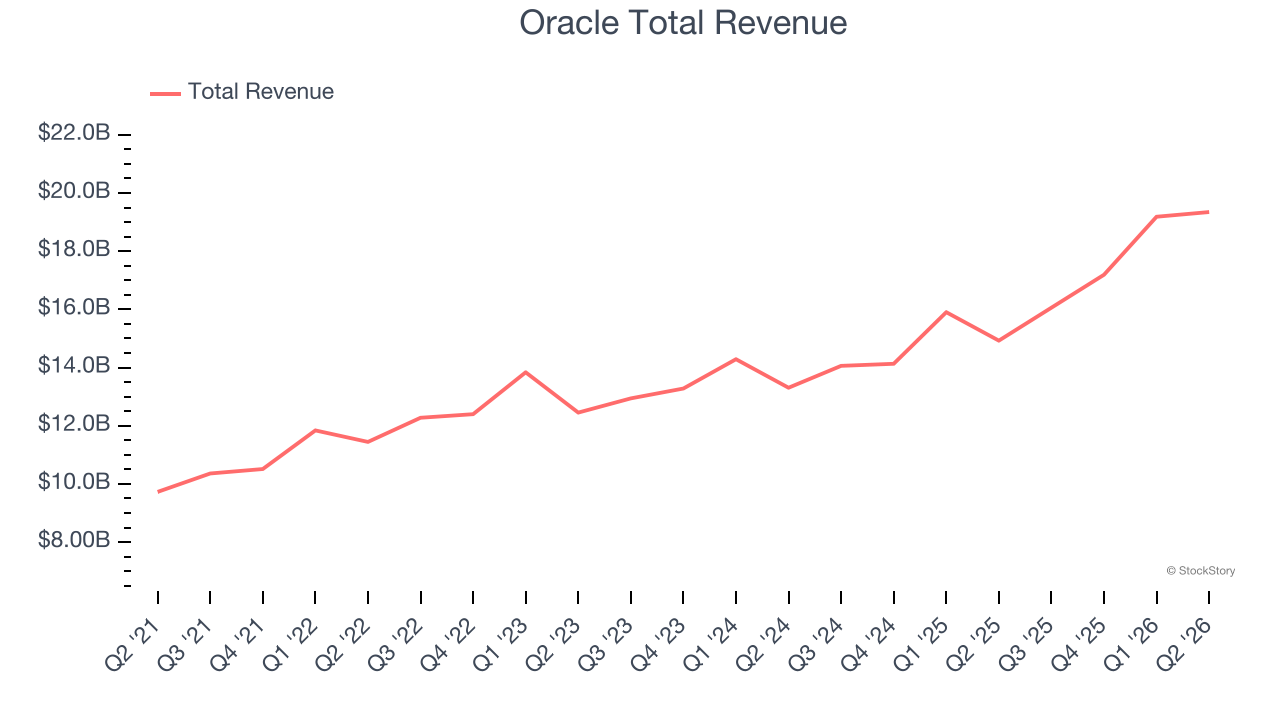
Oracle pulled off the fastest revenue growth and highest full-year guidance raise of the whole group. Although it had a fine quarter compared to its peers, the market seems unhappy with the results as the stock is down 3.7% since reporting. It currently trades at $147.81.
Is now the time to buy Oracle? Access our full analysis of the earnings results here, it’s free.
Weakest Q2: Teradata (NYSE: TDC)
Pioneering data warehousing technology in the 1980s before "big data" was a common term, Teradata (NYSE: TDC) provides cloud-based data analytics and AI platforms that help large enterprises integrate, analyze, and leverage their data across multiple environments.
Teradata reported revenues of $410 million, flat year on year, exceeding analysts’ expectations by 3.5%. Still, it was a slower quarter as it posted revenue guidance for next quarter missing analysts’ expectations.
As expected, the stock is down 18.5% since the results and currently trades at $28.04.
Read our full analysis of Teradata’s results here.
C3.ai (NYSE: AI)
Named after the three Cs of its original focus—carbon, cloud computing, and customer relationship management—C3.ai (NYSE: AI) provides enterprise AI software that helps organizations develop, deploy, and operate large-scale artificial intelligence applications across various industries.
C3.ai reported revenues of $52.38 million, down 25.5% year on year. This result met analysts’ expectations. It was a strong quarter as it also recorded an impressive beat of analysts’ billings and adjusted operating income estimates.
C3.ai had the weakest performance against analyst estimates, weakest guidance update, and slowest revenue growth among its peers. The stock is flat since reporting and currently trades at $10.51.
Read our full, actionable report on C3.ai here, it’s free.
Market Update
Over the past year, investors have been forced to repeatedly answer the same question: what is the market’s biggest risk? The answer has changed several times, and each shift has reshaped market leadership.
Late in 2025 and early 2026, artificial intelligence became the market’s primary uncertainty. Investors questioned whether AI would erode software pricing power and weaken competitive moats as AI made it easier to replicate once-differentiated products.
By the spring, technology took a back seat to geopolitics. The U.S. conflict with Iran briefly became the market’s dominant narrative, raising concerns about oil prices, inflation, and global growth. But as energy markets remained orderly and fears of a prolonged supply disruption faded, investors quickly turned their focus back to fundamentals.
Want to invest in winners with rock-solid fundamentals? Check out our Hidden Gem Stocks and add them to your watchlist. These companies are poised for growth regardless of the political or macroeconomic climate.