As the craze of earnings season draws to a close, here’s a look back at some of the most exciting (and some less so) results from Q2. Today, we are looking at vertical software stocks, starting with Toast (NYSE: TOST).
Software is eating the world, and while a large number of solutions such as project management or video conferencing software can be useful to a wide array of industries, some have very specific needs. As a result, vertical software, which addresses industry-specific workflows, is growing and fueled by the pressures to improve productivity, whether it be for a life sciences, education, or banking company.
The 14 vertical software stocks we track reported a satisfactory Q2. As a group, revenues beat analysts’ consensus estimates by 1.6% while next quarter’s revenue guidance was 1.5% above.
While some vertical software stocks have fared somewhat better than others, they have collectively declined. On average, share prices are down 2.5% since the latest earnings results.
Toast (NYSE: TOST)
Born from the frustrations of three friends waiting too long for their restaurant bill, Toast (NYSE: TOST) provides a cloud-based digital technology platform with software, payment processing, and hardware solutions built specifically for restaurants.
Toast reported revenues of $1.91 billion, up 23.1% year on year. This print exceeded analysts’ expectations by 1.8%. Overall, it was a satisfactory quarter for the company with a decent beat of analysts’ billings estimates but EBITDA guidance for next quarter slightly missing analysts’ expectations.
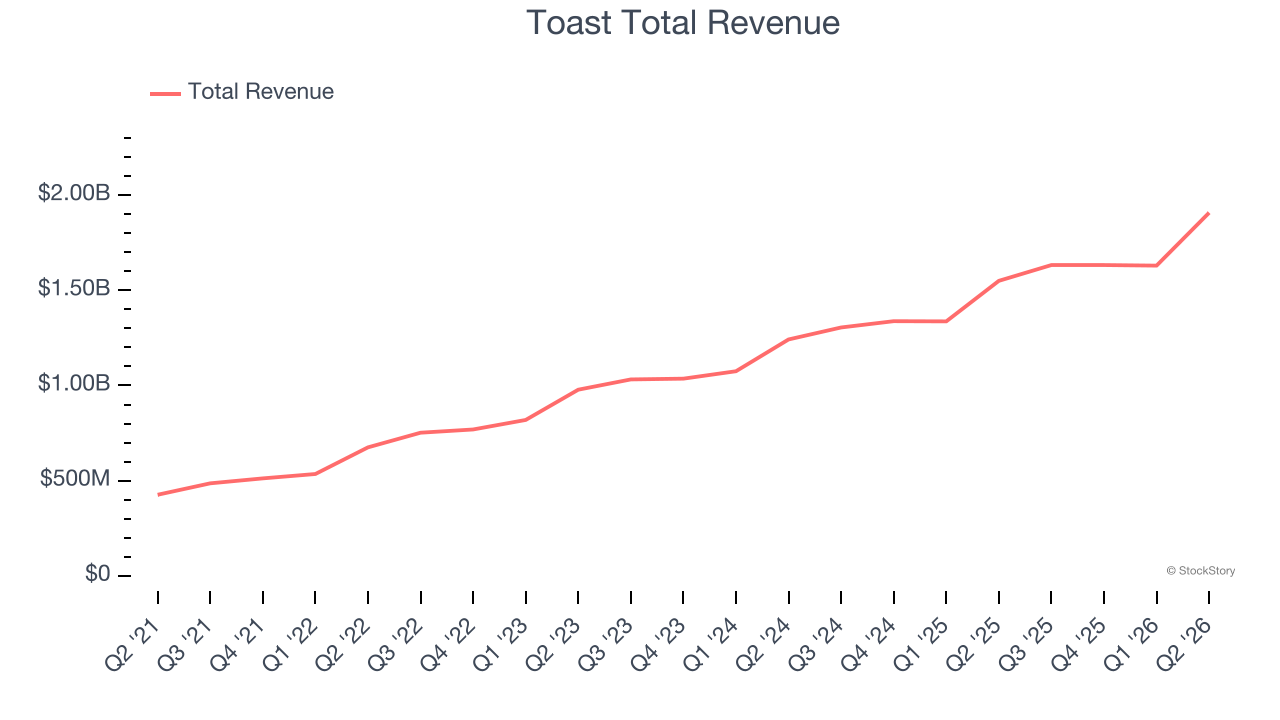
Even though it had a relatively good quarter, the market seems discontent with the results. The stock is down 9.6% since reporting and currently trades at $30.58.
Is now the time to buy Toast? Access our full analysis of the earnings results here, it’s free.
Best Q2: Unity (NYSE: U)
Powering over half of the world's mobile games and expanding into industries from automotive to architecture, Unity (NYSE: U) provides software tools and services that allow developers to create, run, and monetize interactive 2D and 3D content across multiple platforms.
Unity reported revenues of $546.5 million, up 23.9% year on year, outperforming analysts’ expectations by 6.1%. The business had a stunning quarter with an impressive beat of analysts’ billings estimates and EBITDA guidance for next quarter exceeding analysts’ expectations.
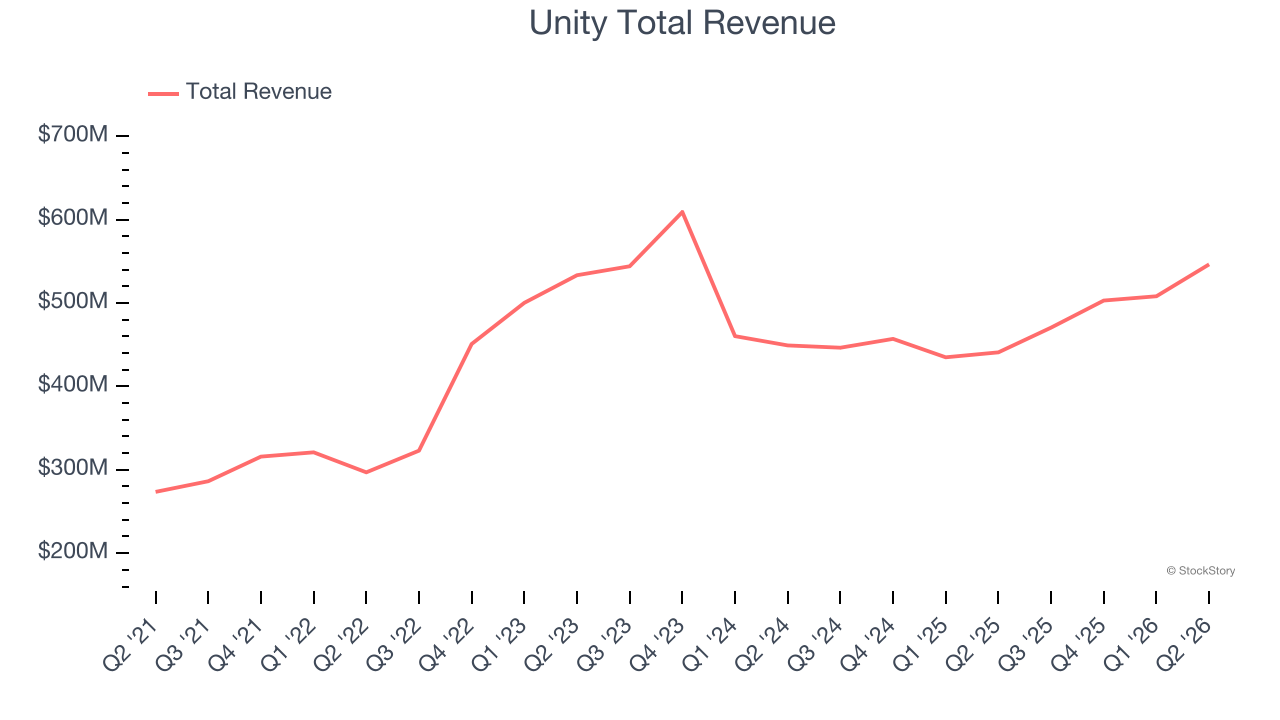
Unity scored the biggest analyst estimate beat among its peers. The market seems happy with the results as the stock is up 11.7% since reporting. It currently trades at $39.63.
Is now the time to buy Unity? Access our full analysis of the earnings results here, it’s free.
Weakest Q2: Upstart (NASDAQ: UPST)
Using over 2,500 data variables and trained on nearly 82 million repayment events, Upstart (NASDAQ: UPST) is an AI-powered lending platform that uses machine learning to help banks and credit unions more accurately assess borrower risk for personal loans, auto loans, and home equity lines of credit.
Upstart reported revenues of $364.7 million, up 41.7% year on year, exceeding analysts’ expectations by 2.3%. Still, it was a slower quarter as it posted full-year revenue guidance missing analysts’ expectations significantly.
Upstart delivered the fastest revenue growth but had the weakest full-year guidance update in the group. As expected, the stock is down 23.3% since the results and currently trades at $23.25.
Read our full analysis of Upstart’s results here.
Cadence Design Systems (NASDAQ: CDNS)
Powering the chips behind everything from smartphones to AI accelerators for over 35 years, Cadence Design Systems (NASDAQ: CDNS) provides essential computational software, hardware, and intellectual property used by engineers to design and verify advanced electronic systems and semiconductors.
Cadence Design Systems reported revenues of $1.58 billion, up 24.2% year on year. This result topped analysts’ expectations by 0.5%. Overall, it was a very strong quarter as it also produced an impressive beat of analysts’ billings estimates and EPS guidance for next quarter exceeding analysts’ expectations.
Cadence Design Systems pulled off the highest full-year guidance raise in the group. The stock is down 4.2% since reporting and currently trades at $324.30.
Read our full, actionable report on Cadence Design Systems here, it’s free.
Doximity (NYSE: DOCS)
With over 80% of U.S. physicians as members of its digital community, Doximity (NYSE: DOCS) operates a digital platform that enables physicians and other healthcare professionals to collaborate, stay current with medical news, manage their careers, and conduct virtual patient visits.
Doximity reported revenues of $156.6 million, up 7.3% year on year. This number beat analysts’ expectations by 3.5%. Aside from that, it was a slower quarter as it recorded full-year EBITDA guidance missing analysts’ expectations significantly and EBITDA guidance for next quarter missing analysts’ expectations significantly.
The stock is up 25.9% since reporting and currently trades at $26.00.
Read our full, actionable report on Doximity here, it’s free.
Market Update
Over the past year, investors have been forced to repeatedly answer the same question: what is the market’s biggest risk? The answer has changed several times, and each shift has reshaped market leadership.
Late in 2025 and early 2026, artificial intelligence became the market’s primary uncertainty. Investors questioned whether AI would erode software pricing power and weaken competitive moats as AI made it easier to replicate once-differentiated products.
By the spring, technology took a back seat to geopolitics. The U.S. conflict with Iran briefly became the market’s dominant narrative, raising concerns about oil prices, inflation, and global growth. But as energy markets remained orderly and fears of a prolonged supply disruption faded, investors quickly turned their focus back to fundamentals.
Want to invest in winners with rock-solid fundamentals? Check out our Top 5 Growth Stocks and add them to your watchlist. These companies are poised for growth regardless of the political or macroeconomic climate.