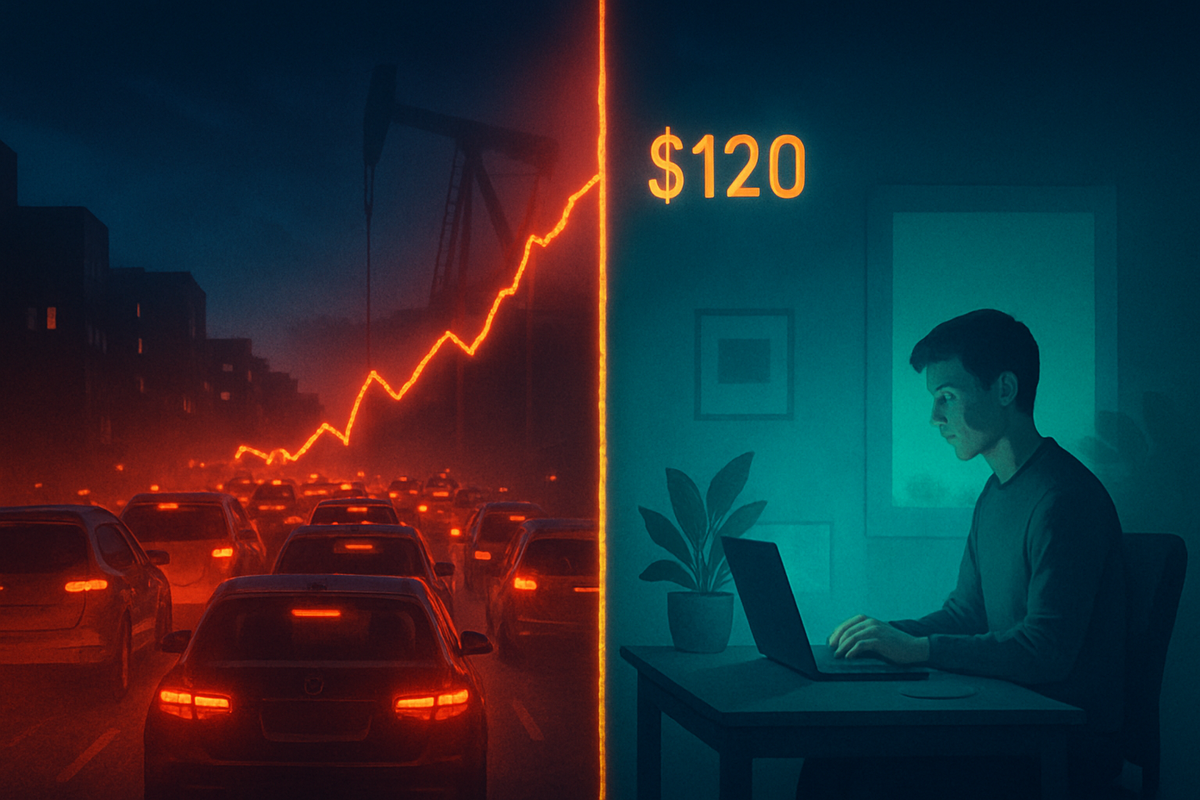
PARIS – In a move reminiscent of the most severe energy crises of the 20th century, the International Energy Agency (IEA) on March 20, 2026, issued an emergency 10-point plan titled "Sheltering from Oil Shocks." The mandate, which calls for immediate, drastic reductions in global oil consumption, arrives as Brent Crude benchmarks flirt with $120 per barrel following the outbreak of the U.S.-Israel-Iran war and the subsequent near-total closure of the Strait of Hormuz. With approximately 20% of the world's daily oil supply currently trapped behind the geopolitical chokepoint, the IEA is pivoting from supply management to aggressive demand-side intervention, urging a return to large-scale remote work and carpooling to stave off a global economic collapse.
The implications of the IEA’s directive are immediate and far-reaching, setting the stage for a dramatic policy collision between national energy security and the corporate "Return-to-Office" (RTO) mandates that have dominated the labor market over the past two years. By recommending that employers implement a three-day-per-week work-from-home (WFH) minimum, the IEA estimates that road transport oil consumption could drop by as much as 6% globally within months. This shift, combined with proposed speed limit reductions and flight curbs, represents the most significant attempt to alter consumer behavior since the 1973 oil embargo, signaling a period of high volatility for energy, tech, and transportation equities.
A "Strait of Hormuz Crisis" Demands Radical Shifts
The timeline leading to this emergency intervention began on February 28, 2026, with the sudden escalation of regional conflict in the Middle East. Within three weeks, Brent Crude prices surged by nearly 50%, reaching an intraday high of $119 per barrel before the IEA’s announcement. While the agency has already coordinated the release of 400 million barrels from emergency reserves—the largest release in its 52-year history—the supply-side response has proven insufficient to offset the estimated 8 million barrels per day (bpd) supply plunge caused by the regional shutdown. Executive Director of the IEA, Fatih Birol, stated today that "supply-side measures alone cannot fix a hole this deep; we must now look to the steering wheel and the office desk to preserve our economic stability."
The "Sheltering from Oil Shocks" plan outlines ten specific measures designed to cut demand by 2.7 million bpd within four months. Chief among these is a call for a mandatory reduction in highway speed limits by at least 10 km/h (approximately 6 mph), a move the IEA claims can improve fuel efficiency by up to 10% for individual drivers. Additionally, the plan advocates for "Car-free Sundays" in major metropolitan areas, alternating private car access based on license plate numbers, and a 40% reduction in non-essential business air travel, favoring virtual communication tools over jet-kerosene-heavy commutes.
Market reactions have been swift but divided. While energy-heavy indices saw a temporary cooling as the demand-reduction targets were announced, the reality of $120 oil remains a primary driver of global inflation. Initial industry feedback from logistics and manufacturing sectors suggests that while the mandates are technically feasible, the enforcement of speed limits and WFH protocols will require unprecedented cooperation between governments and the private sector. The IEA has urged G7 and G20 nations to adopt these measures as "legislated mandates" rather than mere suggestions to ensure a level playing field across developed economies.
Corporate Winners and Losers in the Demand-Reduction Era
The sudden revival of remote work as a tool for "Energy Security" has created an unexpected second wind for communication technology firms. Zoom Video Communications, Inc. (NASDAQ: ZM), which had seen its stock languish as corporations pushed for RTO, saw an upward inflection in its share price as analysts reclassified the platform as a "utility for energy security." Similarly, Microsoft Corp (NASDAQ: MSFT) faces a complex internal challenge: while its Microsoft Teams platform stands to benefit from increased remote usage, the company must reconcile this with its own 2026 onsite work mandates. Analysts at Mizuho suggest that if governments formally adopt the IEA’s 3-day WFH recommendation, tech giants like Microsoft and Salesforce Inc (NYSE: CRM) will see a permanent floor in their enterprise seat counts, providing a hedge against an energy-driven recession.
In the energy sector, the landscape is fraught with regulatory risk despite high commodity prices. Exxon Mobil Corp (NYSE: XOM) and Chevron Corp (NYSE: CVX) have seen strong gains as hedges against the Iran War, with XOM outperforming the S&P 500 by over 4% in early March. However, the IEA's plan also encourages governments to pivot from fuel VAT cuts toward "windfall taxes" on energy giants to fund consumer relief programs. This looming fiscal intervention has caused some institutional investors to trim positions in traditional oil majors in favor of renewable energy infrastructure and battery storage plays like Tesla Inc (NASDAQ: TSLA). While Tesla's auto segment faces headwinds from a slowing global economy, its energy storage division recently secured a $4.3 billion grid-storage deal, positioning it as a key player in the IEA’s call for increased grid resilience.
The transportation sector, particularly aviation, is perhaps the most vulnerable to the IEA’s "fly less" proposal. Delta Air Lines, Inc. (NYSE: DAL) and United Airlines Holdings (NASDAQ: UAL) are currently grappling with a $400 million-plus increase in quarterly fuel costs. While Delta recently reported strong consumer demand that has allowed it to pass costs onto affluent travelers, the IEA’s specific targeting of business travel could cripple the high-margin corporate segments that airlines rely on for profitability. If the "Strait of Hormuz Crisis" persists into the summer of 2026, the aviation industry may be forced into another round of consolidation or government-backed "green bailouts."
The Wider Significance: A Permanent Pivot?
The current crisis fits into a broader industry trend toward "Energy Realism," where the transition to green energy is no longer just a climate goal but a matter of national defense. The IEA’s 10-point plan echoes the 1970s oil shocks, yet it operates in a modern digital economy where WFH is a viable pressure-relief valve that didn't exist fifty years ago. This creates a historical precedent where digital infrastructure is being leveraged as a strategic petroleum reserve. The ripple effects will likely lead to a permanent restructuring of urban planning and commercial real estate; if the IEA's "Car-free Sundays" and urban restrictions become recurring policies, the value of suburban commercial assets may plummet while micro-mobility and public transit investment see a massive regulatory tailwind.
Furthermore, the IEA’s recommendations carry significant policy implications regarding the "Windfall Conflict." By suggesting that governments use windfall taxes to fund energy transitions, the IEA is effectively endorsing a more interventionist fiscal policy. This could lead to a decoupling of energy prices from free-market dynamics in favor of a "managed demand" model. For competitors in the EV and heat pump sectors, this regulatory shift provides the strongest incentive for adoption in decades, potentially accelerating the peak-oil timeline by several years despite the current supply shortage.
Looking Ahead: Strategic Pivots and Scenarios
In the short term, investors should prepare for extreme volatility in the energy and tech sectors as the "Strait of Hormuz Crisis" develops. If the conflict de-escalates by Q3 2026, we may see a rapid reversal of these demand-side mandates. However, a long-term closure of the Strait would require a permanent strategic pivot from global corporations. Companies will likely need to redesign their supply chains to be "energy-agnostic," prioritizing local sourcing and digital workflows to minimize the impact of future fuel spikes.
The market opportunity for the coming months lies in "Efficiency Tech"—software and hardware that reduce the energy intensity of every dollar of GDP. This includes everything from AI-driven logistics optimization to advanced building management systems. Conversely, the challenge will be for traditional retail and hospitality sectors that rely on physical foot traffic and affordable travel. If the IEA’s carpooling and travel-reduction plans take hold, we may see a permanent shift in consumer spending toward the "Digital Home" economy.
Summary and Investor Outlook
The IEA’s March 20, 2026, announcement marks a turning point in the global response to the "Strait of Hormuz Crisis." By prioritizing demand-side reductions like working from home and carpooling, the agency has provided a blueprint for navigating a world where $120 oil is a persistent threat. The key takeaway for investors is that the "Return-to-Office" trend is now officially at odds with national energy security, and the companies that facilitate a decentralized, low-energy-intensity economy are best positioned to weather the storm.
Moving forward, the market will be defined by the "Two-Speed Macroeconomy": a thriving energy and efficiency sector contrasted with a struggling, high-cost transportation and manufacturing base. Investors should watch for the actual legislative adoption of the IEA’s plan in major economies like the U.S., Germany, and Japan. If "Car-free Sundays" and WFH mandates transition from recommendations to law, the structural shift in oil demand may become the most lasting legacy of the 2026 energy crisis.
This content is intended for informational purposes only and is not financial advice.