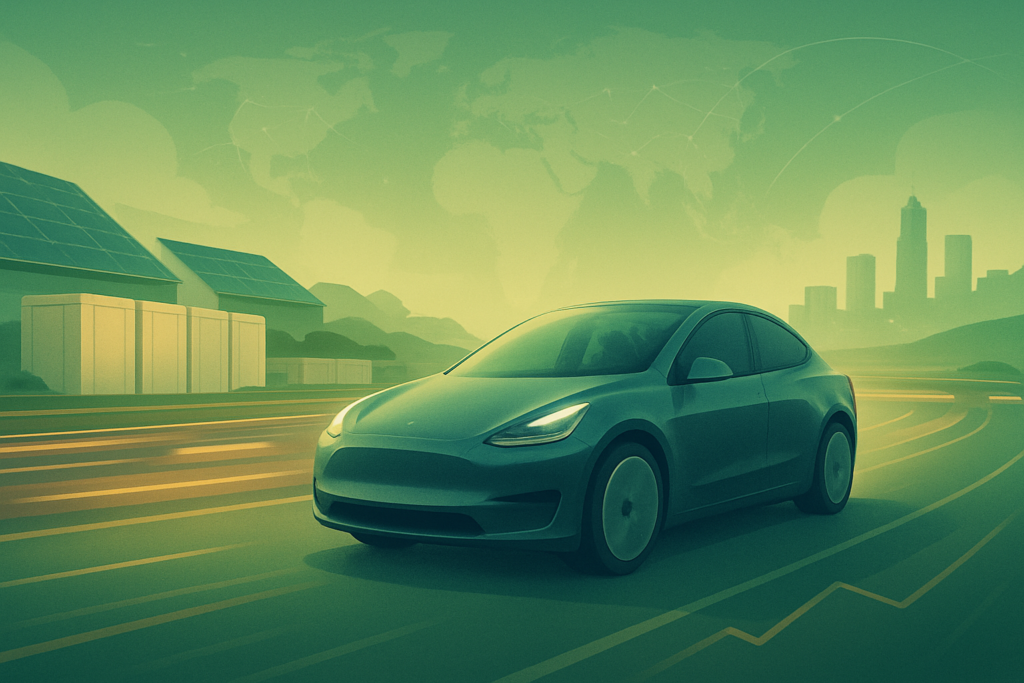
As of December 8, 2025, Tesla, Inc. (NASDAQ: TSLA) remains a highly prominent and often polarizing company in the global financial landscape. Its multifaceted business, ambitious future projects, and the significant influence of CEO Elon Musk consistently place it under intense scrutiny for financial researchers. Headquartered in Austin, Texas, Tesla’s mission is to accelerate the world's transition to sustainable energy.
Tesla’s core business segments include Electric Vehicles (EVs) such as the Model S, Model 3, Model X, Model Y, Cybertruck, and Tesla Semi. The company is also a significant player in Energy Generation and Storage, offering Powerwall, Powerpack, and Megapack solutions, alongside solar panels and solar roofs. Furthermore, Tesla is heavily invested in Artificial Intelligence (AI) and Robotics, with its Full Self-Driving (FSD) technology, ambitious robotaxi (Cybercab) plans, and the humanoid robot Optimus. The Supercharging Network and various software and services also contribute to its ecosystem.
Tesla is currently in focus due to a confluence of factors: volatile stock performance (surging over 7% year-to-date by December 2, but experiencing a nearly 50% drop earlier in the year), declining profitability amidst revenue growth (Q1 2025 revenue decreased by 9% year-over-year, and Q3 2025 net income plunged by 36.82%), and intensifying competition from both established automakers and aggressive Chinese EV players like BYD. Strategic initiatives like robotaxis, Optimus, and more affordable EVs are key future bets. Elon Musk's unparalleled influence, including the controversial approval of his $1 trillion stock-based pay package in November 2025, also keeps the company in the spotlight, fueling debates on valuation, corporate governance, and the justification of its "AI premium."
For financial researchers, Tesla in December 2025 offers a rich case study into market disruption, valuation methodologies in the face of speculative growth, and the complexities of leadership in a rapidly evolving technological landscape.
2. Historical Background
Tesla, Inc. (TSLA) has transformed from a visionary startup into a global leader in sustainable energy and advanced technology. The company was incorporated on July 1, 2003, by Martin Eberhard and Marc Tarpenning, with a mission to build a technology-driven car manufacturer focused on batteries, software, and proprietary motors. Elon Musk joined as the largest shareholder and chairman in February 2004, eventually becoming CEO in October 2008.
Early milestones include the unveiling of the high-performance electric Roadster prototype in 2006, with production starting in 2008, establishing the viability of electric sports cars. Tesla went public on NASDAQ in June 2010, raising $226 million. The acquisition of the former NUMMI plant in Fremont, California, in 2010 became its first large-scale production facility. In 2012, Tesla launched the critically acclaimed Model S luxury sedan and began deploying its Supercharger network. The company posted its first quarterly profit and joined the NASDAQ-100 in 2013. Autopilot was introduced in 2014, and plans for Gigafactory Nevada were announced. In 2015, Tesla diversified into energy storage with Powerwall and Powerpack, and launched the Model X SUV.
Key transformations over time include:
- Diversification from Niche to Mass Market: From the high-priced Roadster, Tesla moved to more accessible vehicles like the Model 3 (2017) and Model Y (2020), broadening its customer base. The Tesla Semi (2022) and Cybertruck (2023) further diversified its product line.
- Expansion into Clean Energy: The acquisition of SolarCity in 2016 and the rebranding to "Tesla, Inc." in 2017 reflected its broader focus on solar panels, solar roofs, and energy storage solutions.
- Global Manufacturing Scale-Up: A network of Gigafactories (Nevada, New York, Shanghai, Texas, Berlin) became crucial for scaling production and reducing costs.
- Technological Leadership in AI and Autonomy: Continuous investment in battery innovation, AI, and Full Self-Driving (FSD) software underscores its long-term ambition for autonomous vehicles and robotaxis.
- Vertical Integration: Tesla maintains significant control over its design, manufacturing, and distribution, allowing for rapid iteration.
- Headquarters Relocation: In 2021, Tesla moved its corporate headquarters to Austin, Texas.
As of late 2025, Tesla continues to push boundaries, solidifying its position as a transformative force in the automotive, energy, and AI sectors.
3. Business Model
Tesla, Inc. (TSLA) operates a vertically integrated business model centered on accelerating the world's transition to sustainable energy. Its diversified revenue streams, product lines, and services target a distinct, yet evolving, customer base.
Revenue Sources
- Automotive Sales: The primary revenue driver, encompassing the sale and leasing of electric vehicles, non-warranty after-sales services, used vehicle sales, merchandise, and crucially, the sale of automotive regulatory credits. In FY2024, this segment accounted for approximately 78.89% of total revenue and is projected to be 74% in FY2025.
- Energy Generation and Storage: Includes the design, manufacture, installation, sales, and leasing of solar energy systems (Solar Panels, Solar Roof) and energy storage products (Powerwall, Powerpack, Megapack). This segment grew by 67.13% in 2024 and accounted for 10.32% of total revenue. It's expected to grow by 45% to $15 billion in FY2025, making up 14% of total revenues.
- Services and Other: Covers revenue from the Supercharging network, vehicle maintenance, Full Self-Driving (FSD) subscription service, and Tesla Insurance. This segment generated $10.53 billion in revenue in FY2024 (10.78% of total) and is expected to grow by 17% to $12 billion in FY2025.
Product Lines
- Electric Vehicles (BEVs): Model S, Model 3 (including a new affordable Standard Rear-Wheel Drive variant at $36,990), Model X, Model Y (including a new Standard Rear-Wheel Drive at $39,990 and anticipated refreshed versions), Cybertruck, and Tesla Semi. Upcoming models include a "Model Q" (cheaper, mass-market EV) and a "Cybercab" (robotaxi).
- Energy Generation and Storage Products: Solar Panels, Solar Roof, Powerwall, Powerpack, and Megapack.
Services
- Charging Network: Global Supercharger network, a significant competitive advantage, now also a source of recurring revenue as other manufacturers adopt NACS.
- Vehicle Maintenance: Streamlined service needs due to electric powertrains, with recommended intervals for tire rotations and filter replacements.
- Software and Connectivity: Full Self-Driving (FSD) capability (purchase or subscription) and Premium Connectivity.
- Insurance: Tesla offers its own insurance, leveraging real-time driving data.
- Robotaxi Network (Future): Anticipated to generate significant recurring high-margin software revenue.
Segments
Tesla primarily reports through two segments: Automotive and Energy Generation and Storage. "Services and Other" is usually categorized within these for official reporting.
Customer Base
Historically, Tesla's customer base has been affluent, tech-savvy, environmentally conscious, white males (median age 48, average household income $144,341). While still predominantly male (74%), the introduction of more affordable models like the Model 3 and Model Y is broadening this demographic. Customers value performance, design, environmental benefits, and the innovative brand status. Geographically, Tesla has focused on urban/suburban regions in economically strong, environmentally conscious countries. The company is actively working to expand its reach beyond the niche luxury segment.
4. Stock Performance Overview
As of December 8, 2025, Tesla (TSLA) has demonstrated a highly dynamic and often volatile stock performance over the past decade, characterized by significant growth, strategic pivots, and the influence of both company-specific innovations and broader market forces.
1-Year Stock Performance (December 2024 – December 2025)
Over the last 12 months, TSLA delivered a total return of 23.14%, closing at approximately $455.00 on December 5, 2025. The 52-week high was $488.54 (Dec 18, 2024), and the low was $214.25 (April 7, 2025).
- Early 2025 Optimism: Surged over 100% in the 12 months leading to January 2025, driven by "Cybercab" and cheaper car model timelines.
- Q1 2025 Deliveries: Produced over 362,000 and delivered over 336,000 vehicles, leading to a 5%+ stock rebound despite a 9.2% year-over-year revenue drop.
- Mid-2025 Volatility: Lost a quarter of its value by July 2025 due to delivery concerns, political feuds, and EV subsidy curtailments.
- Q3 2025 Earnings Impact: Fell 5% after Q3 profit missed estimates, despite revenue growth, due to lower EV prices and higher operating costs (AI, R&D).
- Focus on AI and Diversification: Performance influenced by meeting production targets and advancements in AI (FSD, Optimus) and the strong growth of the energy storage segment.
5-Year Stock Performance (December 2020 – December 2025)
An investment in TSLA five years ago would have yielded a total return of 112.70%. The closing price from December 31, 2020, to December 5, 2025, increased by 88.6%.
- 2020 Surge and Stock Split: Extraordinary 743.44% return, fueled by EV demand, Model 3/Y scaling, and a 5-for-1 stock split (Aug 2020).
- Continued Growth and Second Stock Split: 49.76% return in 2021, driven by Gigafactory expansion and EV adoption. A 3-for-1 stock split occurred in August 2022.
- 2022 Correction: -65.03% return due to rising interest rates, macroeconomic uncertainty, competition, and concerns over Elon Musk's Twitter acquisition.
- 2023-2024 Rebound: Strong rebound (101.72% in 2023, 62.52% in 2024) driven by aggressive price cuts, production ramp-ups, and excitement over Cybertruck and the "next-generation vehicle platform."
10-Year Stock Performance (December 2015 – December 2025)
Over the past decade, TSLA has delivered an average annual return (CAGR) of 40.24%. $1,000 invested at IPO in 2010 would be worth $284,609 today (45.79% CAGR over 15 years).
- Model 3 Introduction: Pivotal for growth, overcoming initial "manufacturing hell."
- Global Expansion: Gigafactories in Nevada, Shanghai, Berlin, and Texas expanded capacity.
- Diversification into Energy: Powerwall, Powerpack, and Megapack provided diversified revenue.
- Technological Leadership: Advancements in FSD and AI (Optimus, Dojo) fueled long-term investor enthusiasm.
- Increased Competition: Tesla's market leadership attracted rivals, with BYD surpassing it in revenue and market share in 2024.
- Elon Musk's Influence: His statements and actions consistently drove stock volatility.
- Macroeconomic Environment: Interest rates, supply chain issues, and consumer trends played a role.
In summary, Tesla's stock performance reflects immense growth and disruptive innovation, but also periods of significant correction due to headwinds, competition, and the inherent volatility of a high-growth company led by a charismatic CEO.
5. Financial Performance
As of December 8, 2025, Tesla (TSLA) has reported its Third Quarter (Q3) 2025 financial results, showcasing record revenue and free cash flow generation, despite a noticeable contraction in profitability margins.
Latest Earnings (Q3 2025)
- GAAP EPS: $0.39
- Non-GAAP EPS: $0.50 (missed analyst consensus of $0.54-$0.56)
- GAAP Net Income: $1.37 billion (37% year-over-year decline)
- Non-GAAP Net Income: $1.8 billion
Revenue Growth (Q3 2025)
- Total Revenues: Record $28.1 billion (12% increase year-over-year), surpassing analyst expectations.
- Automotive Segment: $21.2 billion (6% year-over-year growth).
- Energy Generation and Storage: $3.4 billion (44% year-over-year surge), driven by record deployments of 12.5 GWh.
- Services and Other: $3.5 billion (25% increase).
Margins (Q3 2025)
- Gross Margin: Declined to 18.0% from 19.8% in the prior-year period, attributed to lower fixed cost absorption, increased tariffs, and shifts in sales mix, partially offset by lower raw material costs.
- Automotive Regulatory Credit Revenue: Dropped significantly by 43.6% year-over-year to $417 million.
- Operating Margin: Decreased to 5.8% (40% decline year-over-year from 10.8% in Q3 2024), due to increased operating expenses (up 50% year-over-year to $3.43 billion) from investments in AI, R&D, and higher SG&A costs.
Debt (as of September 30, 2025)
- Long-term Debt: $5.778 billion (6.9% increase year-over-year).
- Total Debt: Peaked at $13.788 billion in September 2025.
Cash Flow (Q3 2025)
- Operating Cash Flow: $6.2 billion.
- Free Cash Flow: Record nearly $4.0 billion ($3.99 billion), a 46% increase from Q3 2024.
- Cash, Cash Equivalents, and Investments: $41.6 billion (up 24% year-over-year).
Valuation Metrics (as of December 5-8, 2025)
- Market Capitalization: Approximately $1.46 trillion to $1.513 trillion.
- P/E Ratio: 253.85 (near 3-year high), indicating high investor expectations.
- P/S Ratio: 16.55 (near historical highs).
- Analyst Target Price: $363.6, with a "hold" recommendation score of 2.6.
While sales grew through increased deliveries, much attention remains on future initiatives like Robotaxi, Cybercab, Optimus, and AI integration, which are seen as critical for justifying its premium valuation amidst declining profitability margins.
6. Leadership and Management
As of December 8, 2025, Tesla (TSLA) continues to be led by its high-profile CEO, Elon Musk, with an ambitious strategic direction centered on electric vehicles, artificial intelligence, robotics, and energy solutions. However, its corporate governance reputation remains a significant point of concern.
CEO: Elon Musk
Elon Musk, co-founder and CEO since October 2008, is the driving force behind Tesla's strategy and product development. He recently committed to remaining CEO for at least five more years. His compensation has been a recurring controversy; in November 2025, shareholders approved a new, potentially trillion-dollar pay package contingent on ambitious performance milestones, following a previous $56 billion package being nullified by a Delaware judge in 2024. Critics argue this raises questions about corporate governance and CEO power.
Leadership Team
Tesla's executive team is focused on accelerating the world's transition to sustainable energy. Key executives include:
- Vaibhav Taneja: CFO and Chief Accounting Officer.
- Tom Zhu: Senior Vice President, Automotive, overseeing global automotive operations.
- Andrew Baglino: Senior Vice President, Powertrain and Energy Engineering.
- Lars Moravy: Vice President, Vehicle Engineering.
- Laurie Shelby: Vice President, Environment, Health and Safety.
Other notable executives lead various engineering, finance, and supply chain functions.
Board of Directors
The Tesla Board is responsible for governance and strategy. Its independence has been under scrutiny. Current members include:
- Robyn M. Denholm: Chair of the Board and Independent Director.
- Elon Musk: CEO and Director.
- James Murdoch: Independent Director.
- Kimbal Musk: Director (Elon Musk's brother, not independent).
- Ira Ehrenpreis: Independent Director.
- Kathleen Wilson-Thompson: Independent Director.
- Joe Gebbia: Independent Director.
- JB Straubel: Director (former CTO, re-joined).
- Jack Hartung: Newest director (May 2025), whose son-in-law's employment at Tesla raises independence concerns.
Critics argue the board's independence is compromised due to close relationships with Elon Musk, hindering objective oversight.
Strategic Direction (as of 12/8/2025)
Tesla's strategy for 2025 and beyond involves a three-pronged growth approach:
- Affordable Electric Vehicles: Launching new, more affordable models (potentially "Model Q") in H1 2025, targeting under $30,000, to expand market reach and drive volume.
- Autonomous Driving and Robotics: Launching an unsupervised FSD service (Cybercab robotaxi) in Austin by June 2025, with other U.S. cities to follow. Aiming for mass production of Optimus humanoid robots by late 2025, with external deliveries.
- Energy Storage Expansion: Forecasting at least 50% growth in 2025, with the Shanghai Megapack factory ramping up to 20 GWh/year initially.
Overall, Tesla focuses on innovation, efficiency, and scalability across sustainable mobility, energy, AI, and robotics.
Corporate Governance Reputation
Tesla's corporate governance reputation faces significant challenges:
- Board Independence: Perceived lack of independence due to close personal and business ties between Musk and board members.
- Musk's Influence and Distractions: Concerns that Musk's numerous other ventures and political engagements divert his attention, potentially turning Tesla into a polarizing brand.
- Compensation Controversies: The approval of Musk's latest pay package, despite opposition, highlights ongoing governance concerns.
- Sales and Performance Impact: Some link governance weaknesses and Musk's external activities to declining sales and reduced consumer confidence.
While Tesla's leadership drives aggressive innovation, its governance structure remains under scrutiny, posing potential risks to financial performance and long-term shareholder value.
7. Products, Services, and Innovations
Tesla (TSLA) continues to be a dominant force in the electric vehicle (EV) and sustainable energy sectors, with its product and service offerings, innovation pipelines, R&D efforts, patents, and technological competitive edge evolving rapidly as of December 8, 2025.
Current Product and Service Offerings
- Vehicles: Model S, Model X, Model 3, Model Y, Tesla Semi, and Cybertruck. New affordable Standard Rear-Wheel Drive variants of the Model Y ($39,990) and Model 3 ($36,990) were introduced in late 2025. A refreshed Model Y Performance is reaching European buyers, and a six-seat, long-wheelbase Model Y L launched in China.
- Energy Products: Powerwall home battery storage and Megapack utility-scale battery storage systems, with the Shanghai Megapack Factory significantly ramping up production.
- Services: Advanced Autopilot and Full Self-Driving (FSD) software, proprietary Supercharger network, and Tesla Insurance (available in 12 U.S. states, with in-house underwriting in California).
Innovation Pipelines
- Next-Generation Vehicles: Development of a new, third mainstream EV platform (potentially "Model 2" or "Model Q"), expected to be more affordable (under $30,000), with production anticipated in H1/mid-2025 at Gigafactories in Texas, Berlin, and Mexico.
- Cybercab (Robotaxi): A two-passenger, battery-electric self-driving vehicle unveiled in October 2024, with production targeted for 2026, central to Tesla's robotaxi service vision.
- Unsupervised Full Self-Driving (FSD): Significant launch planned in Austin by June 2025, aiming for full autonomy and potential licensing to other automakers.
- Second-Generation Roadster: Redesigned, with an unveiling tentatively set for April 1, 2026, and production around mid-2027, touted as a "technology showcase."
- Robovan/Robus: Plans for future commercial and passenger vans.
- Optimus Robot: Rapidly advancing humanoid robot, with production ramp-up to 1,000 units/month in 2025 and external sales expected in 2026, targeting a consumer price as low as $20,000.
- Battery Technology: Continued focus on next-generation battery technology for longer range and faster charging, including four new 4680 battery versions by 2026 and small-batch pilot production of solid-state batteries for Model 2 in 2026.
- Manufacturing Innovations: The "Unboxed Process" aims to optimize production efficiency and reduce costs.
- AI Chip Technology: A new chip, reportedly 40 times faster, expected in 2026 to support FSD and Optimus.
Research and Development (R&D) Efforts
Tesla's R&D expenditure reached $5.904 billion for the twelve months ending September 30, 2025 (35.47% increase year-over-year), primarily supporting AI, autonomous driving, product roadmap, and the next-generation vehicle platform. R&D expenses are expected to continue increasing, with plans for an R&D center in India.
Patents
Tesla holds 4,060 patents globally (3,028 active), covering power management, solar energy, EV drive systems, battery technology, computer vision, AI, advanced materials, and autonomous vehicle systems. While Tesla famously open-sourced some patents in 2014, it continues to actively file new patents in AI, manufacturing, energy storage, and robotics, balancing collaboration with strategic protection.
Competitive Edge in Technology
- Battery Technology: Industry-leading energy density, range, and proprietary battery management systems, supported by Gigafactories for economies of scale.
- Autonomous Driving and AI: Autopilot and FSD software are defining differentiators, leveraging AI for advanced driver assistance and aiming for full autonomy.
- Integrated Ecosystem: Comprehensive energy ecosystem (solar, Powerwall, Megapack) positions Tesla as a holistic sustainable technology leader.
- Manufacturing Innovation: Continuous development in manufacturing processes (e.g., "Unboxed Process") reduces costs.
- Rapid Iteration and Software-Defined Vehicles: Over-the-air software updates allow for faster innovation.
- Brand and Design: Sleek, modern design and impressive performance continue to attract consumers.
While competition is increasing, particularly in software ecosystems, Tesla's advancements in FSD and its broad sustainable energy portfolio are critical to maintaining its technology leadership.
8. Competitive Landscape
As of December 8, 2025, Tesla (TSLA) faces a rapidly evolving competitive landscape across its key segments, marked by increasing pressure from both established automotive giants and aggressive new entrants, particularly from China.
Industry Rivals
- Premium and Performance EVs: BMW (i4 M50), Porsche (Taycan, Macan Electric), Lucid Motors (Air Sapphire), Mercedes-Benz (EQS).
- Mainstream and Affordable EVs: BYD (Seal, Seagull, Dolphin), Ford (Mustang Mach-E GT), Volkswagen (ID. series), Hyundai (Ioniq 5 N, Ioniq 6), Chevrolet (Equinox EV), Kia (EV9).
- Chinese EV Startups: NIO, Li Auto, Xpeng, and Xiaomi are rapidly expanding domestically and internationally.
Market Share Across Segments
- Global EV Market: From January to August 2025, BYD held nearly 20%, Geely 10.2%, and Tesla ranked third globally at 7.7% of deliveries. In Q3 2025, Tesla's global BEV market share was over 13%, with Model Y and Model 3 remaining top sellers.
- United States EV Market: Tesla's share, while still significant, declined from 48.5% in Q2 2025 to 38% in August 2025. Model Y was the best-selling EV (27.6% share) in H1 2025.
- European EV Market: Tesla's BEV market share dropped by 55% from January to July 2025 (from 16.8% to 7.7%), with Q1 2025 sales plummeting over 30%. In October 2025, EU sales slumped nearly 49% year-over-year due to Chinese competition and an outdated model lineup.
- Chinese EV Market: Tesla's China-made EV sales increased 9.9% year-over-year in November 2025, but its share of China's NEV market was 5.54%. In October 2025, Tesla's market share fell to a three-year low of 3%. BYD remains dominant.
- Energy Storage Market: Tesla Energy was the top global battery energy storage system (BESS) integrator in 2024 (15% share) and held a 39% share in North America.
Competitive Strengths
- Strong Brand Value: Unrivaled brand recognition and cult-like following.
- Vertical Integration and Technology: Deep integration from battery cells to software, offering cost advantages and superior performance.
- Supercharger Network: Extensive and reliable global charging network.
- Direct-to-Consumer Sales Model: Controls pricing and customer relationships.
- Innovation in AI and Autonomous Driving: Advanced Autopilot and FSD capabilities.
- Energy Business: Diversified portfolio with significant growth opportunities.
Competitive Weaknesses
- Declining Market Share and Sales Momentum: Global sales estimated down 10% in 2025, losing share in key regions.
- Intensifying Competition: Crowded EV market with compelling alternatives.
- Product Freshness and Limited Lineup: Some mainstream models lack major redesigns, relying heavily on Model 3 and Y.
- Brand Perception and CEO Influence: Elon Musk's polarizing statements and political activities have negatively impacted brand favorability.
- Affordability and Pricing Pressure: Products often perceived as high-end, facing pressure from cheaper competitors.
- Manufacturing Delays: History of overly optimistic targets and delays.
- Regulatory Headwinds: Impact of expiring tax credits and regulatory changes.
In conclusion, Tesla is at a crucial juncture, needing strategic adjustments to secure long-term dominance amidst intensified competition and challenges in maintaining market share and managing brand perception.
9. Industry and Market Trends
As of December 8, 2025, the electric vehicle (EV) and renewable energy industries are undergoing significant transformations, driven by evolving sector-level trends, macro drivers, dynamic supply chain shifts, and notable cyclical effects, all highly relevant to Tesla (TSLA).
Sector-Level Trends
- EV Market Maturation and Competition: The global EV market is transitioning to mainstream, with plug-in vehicle sales rising 25% in 2024 to 17.8 million units and projected to reach 22.1 million in 2025. China dominates, with EVs expected to reach over 51% of light-vehicle sales in 2025. Europe anticipates a 26.7% rise in EV sales in 2025. However, North America's EV share is projected to remain around 10% due to tariffs and tax credit eliminations. Tesla remains a leader, with Model Y being the best-selling vehicle globally in 2024, but faces intense competition.
- Renewable Energy Expansion and Storage: Renewable capacity is projected to increase by 4,600 GW between 2025-2030, with solar PV accounting for nearly 80%. Energy storage systems are critical, with Tesla Energy being a significant player. Tesla expects at least 50% year-over-year growth in energy deployments in 2025, driven by the Shanghai Megapack factory.
Macro Drivers
- Policy and Regulatory Shifts: The U.S. "One Big Beautiful Bill Act" (July 2025) eliminated federal EV tax credits after September 2025, potentially causing a notable decline in U.S. EV adoption. An additional 25% tariff on all automobiles and components impacts EV batteries. Europe's stricter CO2 targets and mandated charging points drive EV uptake. China continues to lead with competitive pricing and incentives.
- Economic Conditions: Persistently high interest rates in 2025 increase the cost of capital for clean energy projects, slowing pipelines. However, anticipated Federal Reserve interest rate cuts in 2025 are expected to support solar energy storage and development.
- Battery Cost Reduction & Affordability: Falling raw material prices have driven battery cell costs to historic lows, projected to reach $99/kWh by 2025 (40% decrease from 2022), making EVs more affordable and potentially achieving cost parity with ICE vehicles.
- Technological Advancements: Major transformations in battery technology, including commercial scaling of solid-state batteries, rise of sodium-ion batteries, and advancements in LFP and LMR chemistries. AI integration is transforming energy management and battery systems.
Supply Chain Dynamics
- Critical Raw Materials: Lithium market rebalanced, but production cuts and weak downstream buying create volatility. Cobalt faces oversupply and price pressure. LFP material prices are seeing proposed increases in late 2025 due to rising costs and supply constraints. Tesla actively secures ethical cobalt and moves towards cobalt reduction.
- Manufacturing and Regional Dominance: China maintains a near monopoly in LFP cell manufacturing and dominates the global EV battery market. North America and Europe face higher production costs. Tesla's supply chain is vulnerable to geopolitical risks due to reliance on China, prompting diversification efforts.
Cyclical Effects
- Economic Cycles and Investment: Capital-intensive renewable energy projects are sensitive to interest rate fluctuations. Anticipated rate cuts in 2025 are expected to reactivate stalled projects.
- Commodity Cycles: Volatility in prices of lithium, cobalt, and nickel directly impacts battery production costs and EV pricing.
- Investment and Market Sentiment: Influenced by policy certainty, economic growth, and technological breakthroughs. Tesla's stock performance reflects concerns about EV demand saturation and competition.
In conclusion, the EV and renewable energy sectors are navigating a complex landscape of continued growth, innovation, and geopolitical and economic pressures. Tesla remains at the forefront, adapting to these trends through strategic product development, energy storage expansion, and supply chain management.
10. Risks and Challenges
Tesla (TSLA) is navigating a complex landscape of operational, regulatory, controversial, and market risks as of December 8, 2025, posing significant challenges for the electric vehicle (EV) giant.
Operational Risks
- Supply Chain Vulnerability: Reliance on China for production and raw materials makes Tesla vulnerable to geopolitical tensions and trade policy fluctuations, impacting production goals and costs.
- Production Challenges and Quality Issues: The Cybertruck has faced commercial disappointment due to higher pricing and numerous quality issues (e.g., ten recalls since January 2024). Model 3/Y production dropped 16.2% in Q1 2025, highlighting a lack of innovation.
- Oversupply Risk: Approximately 10,799 vehicles are awaiting sale in the U.S. as of early December 2025, potentially necessitating production adjustments or incentives.
- Aging Designs: Core models' aging designs put pressure on sales, which are on track for a second consecutive annual decline.
Regulatory Risks
- FSD Scrutiny: The National Highway Traffic Safety Administration (NHTSA) is intensifying investigations into FSD, especially after Elon Musk confirmed that the 14.2.1 update allows drivers to text under certain conditions, raising safety concerns and clashing with laws.
- Robotaxi Challenges: Legal and regulatory hurdles, including lawsuits alleging overstatement of capabilities and concealed safety risks. Videos show vehicles violating traffic laws. European FSD approval by February 2026 remains uncertain.
- Political and Policy Changes: Potential EV subsidy cuts and relaxed fuel standards under a Trump administration could impact profits and regulatory credit revenue. Regulatory uncertainty in Europe is also affecting sales.
Controversies
- Elon Musk's Influence: His controversial actions and statements, including political interventions and inflammatory comments, have alienated customers and led to declining sales, particularly in Europe. Research suggests Musk's actions may have cost Tesla over a million vehicle sales.
- FSD Claims: Musk's claims about FSD 14.2.1 allowing texting have drawn backlash from law enforcement and safety advocates, continuing a pattern of overstating FSD's capabilities.
- Valuation Concerns: Investor Michael Burry and Morgan Stanley (downgraded TSLA to "Equal Weight" in December 2025) argue Tesla is "ridiculously overvalued," with Musk's large pay package potentially diluting shareholder value.
Market Risks
- Intensifying Competition: Tesla is losing market share in the U.S., Europe, and China to rivals like Ford, GM, and BYD, which offer cheaper models and increased presence.
- Softening Demand: Global deliveries fell in H1 2025, with November 2025 U.S. deliveries being the lowest monthly total for the year. The company's 20-30% vehicle growth goal for 2025 is deemed unlikely.
- High Valuation: TSLA's P/E ratio of 303.7 is significantly above the sector average, suggesting limited upside without substantial growth in EV sales or successful scaling of new products like Cybercab and Optimus. Analysts predict a "choppy trading environment" through 2026.
In summary, Tesla faces significant headwinds from operational inefficiencies, stringent regulatory oversight, brand damage from controversies, and a highly competitive market, all impacting its ability to justify its premium valuation.
11. Opportunities and Catalysts
As of December 8, 2025, Tesla (TSLA) is poised for significant strategic shifts and product introductions, aiming to reinforce its position as a leader in electric vehicles (EVs), sustainable energy, and artificial intelligence (AI).
Growth Levers
- Energy Storage (Megapack and Powerwall): Tesla's fastest-growing business, with 81% increase in deployments in Q3 2025, revenue of $3.415 billion, and projected at least 50% year-over-year growth in 2025. Gross margins often exceed automotive.
- Affordable Electric Vehicles: Introduction of "Model 2" or "Model Q" with deliveries anticipated in December 2025, and a new low-cost Model 3 variant in Europe (Q1 2026), aiming to expand market share.
- Full Self-Driving (FSD) and Robotaxi (Cybercab): FSD is a "crown jewel" for recurring software revenue. Robotaxi services aim for expansion in Austin by end of December 2025, with Cybercab production and rollout in 2026, projecting up to 4 million units annually long-term.
- Optimus Robot: Humanoid robot with mass production expected by end of 2026, potentially revolutionizing daily tasks and industrial applications.
- Advanced Battery Technology: Development of four new 4680 battery versions by 2026 and small-batch pilot production of solid-state batteries for the Model 2 platform in 2026.
- AI Chip Technology: A new chip, reportedly 40 times faster, expected in 2026 to support FSD and Optimus.
New Market Potential
- Geographical Expansion for FSD/Robotaxi: Critical regulatory approvals for FSD anticipated in Europe (Netherlands by February 2026) and China (early 2026), unlocking new markets.
- Humanoid Robotics: Optimus represents an entirely new market for Tesla, moving into general-purpose AI and robotics.
- Commercial Logistics (Tesla Semi): Full-scale production and enhancements in 2026 will push Tesla further into heavy-duty electrification.
- Residential and Utility-Scale Energy Solutions: Enhanced energy solutions with Megapack 3 and Mega Block, and new in-house manufactured residential solar panels.
M&A Opportunities
- Speculative mention of a potential future merger between Tesla and xAI, reframing Tesla as a "physical AI" company and enhancing revenue multiples through internal AI integration.
Near-Term Events (Catalysts) – As of 12/8/2025
- Q4 2025 Earnings Report: Expected in late January/early February 2026, providing insights into performance and 2026 guidance.
- Deliveries of Affordable EVs: Commencement of "Model 2" or "Model Q" deliveries in December 2025, and the new low-cost Model 3 in Europe in Q1 2026.
- Robotaxi Service Expansion and Autonomy Milestones: Expansion to at least seven cities and removal of safety monitors in Austin by end of December 2025. Launch of steering-wheel-free Cybercab in 2026.
- FSD Regulatory Progress: Critical approvals in Europe (Netherlands by February 2026) and China (early 2026).
- Product Unveils and Production Ramps: New Tesla Semi (H2 2026), Roadster unveil (April 1, 2026), Optimus mass production (end of 2026).
- Technological Breakthroughs: Announcements regarding solid-state batteries, new AI chip, or FSD improvements.
- Government Policy Support: Potential executive order focused on robotics by the Trump administration in 2026.
Overall, Tesla's trajectory for late 2025 and 2026 is characterized by a strategic shift towards AI, robotics, and energy, alongside efforts to make its EV offerings more affordable and widespread, presenting a compelling narrative for future growth.
12. Investor Sentiment and Analyst Coverage
As of December 8, 2025, investor sentiment for Tesla (TSLA) presents a complex picture, marked by a blend of cautious optimism from Wall Street analysts, mixed movements among hedge funds and institutional investors, and diverse chatter within the retail investor community.
Wall Street Analyst Ratings
- Consensus: "Hold" rating, with an average price target ranging from $383.54 to $399.33, suggesting potential downside from the current $455.00.
- Recent Activity:
- Morgan Stanley downgraded TSLA from "Overweight" to "Equal-Weight" on December 7, 2025, citing valuation concerns despite raising its price target to $425.
- Wedbush's Daniel Ives reiterated a "Buy" with a $600 target on November 7, 2025.
- Mizuho issued an "Outperform" (Buy) with a $475 target on November 25, 2025.
- Stifel (Buy, $508 target) and Cantor Fitzgerald (Overweight, $510 target) also show bullish sentiment.
- BofA Securities maintained "Hold" ($471 target), and GLJ Research issued a "Sell."
- Overall Distribution: 1 "Strong Buy," 21 "Buy," 13 "Hold," and 9 "Sell" recommendations.
- Key Concern: High valuation (P/E ratio of 303.7) compared to the sector average (19.5), suggesting future growth is largely priced in.
Hedge Fund Moves
Hedge fund activity in Q3 2025 shows a mixed but net positive trend in institutional accumulation. Institutional investors and hedge funds collectively own approximately 66.20% of Tesla's stock.
- Increases: UBS AM (+59.9%), FMR LLC (+20.7%), Vanguard Group Inc. (+1.8%), Geode Capital Management LLC (+2.0%), Norges Bank (new position), WINTON GROUP Ltd (+1,513.3%), Nomura Asset Management (+4.2%), ARK Invest (added over 512,000 shares).
- Decreases: Morgan Stanley (-16.4%), KINGSTONE CAPITAL PARTNERS TEXAS, LLC (liquidated entire position), Peter Thiel's fund (-76%), Winslow Capital Management LLC (-14.2%).
- Insider Activity: Director James R. Murdoch and SVP Xiaotong Zhu sold shares in September. Insiders own 19.90% of the stock.
Institutional Investors
Tesla has 5,394 institutional owners, holding 1.78 billion shares. In Q3 2025, 2,089 increased positions, while 1,653 decreased, indicating net accumulation. Major holders include Vanguard, BlackRock, State Street, Geode Capital, and JPMorgan. Many view Tesla as a diversified technology and energy company with significant growth potential in energy storage, FSD, Robotaxi, and Optimus.
Retail Investor Sentiment and Chatter
Retail sentiment is highly dynamic, with both strong bullish convictions and significant skepticism.
- Bullish Drivers: Excitement on social media about AI and FSD advancements, anticipation of robotaxi launches, rumors of cheaper new models, Optimus progress, strong Q3 2025 earnings, and technical stock strength. StockTwits sentiment is largely "bullish."
- Bearish/Skeptical Views: Concerns about high valuation, weaker sales data, factory shutdowns, increased competition from low-cost rivals, skepticism about Elon Musk's FSD timelines, and the "overvalued" label from investors like Michael Burry. Musk's controversial profile also affects sentiment.
In conclusion, Tesla investor sentiment is a battleground between future-oriented growth prospects (AI, robotics) and present-day challenges (high valuation, stiffening EV competition, volatile deliveries). While institutional investors show net accumulation, Wall Street is divided, and retail investors exhibit a wide spectrum of views.
13. Regulatory, Policy, and Geopolitical Factors
Tesla (TSLA) navigates a complex global landscape shaped by evolving regulatory frameworks, government incentives, and significant geopolitical pressures as of December 8, 2025.
Laws, Compliance, and Regulatory Factors
- Autonomous Driving (FSD): Tesla faces fragmented regulations. The NHTSA is investigating FSD in the U.S. due to safety concerns, particularly after Elon Musk confirmed FSD 14.2.1 allows texting under certain conditions. European regulations (UN R171 01 amendment) permit "self-initiated maneuvers" but restrict full self-driving in urban areas. China has implemented a clearer liability system for Level 4/5 autonomous driving. Data privacy (GDPR, CCPA) is a concern for FSD.
- Emissions and Environmental Regulations: Tesla benefits from stringent climate policies, which accelerate EV adoption and generate demand for regulatory credits. The company advocates for robust federal rules.
- Data Privacy and Cybersecurity: Tesla states it doesn't sell personal data, but past compliance issues (e.g., Sentry Mode in 2023) highlight ongoing challenges in adhering to GDPR and CCPA, especially with FSD expansion.
Government Incentives
- United States (Inflation Reduction Act – IRA): The IRA offers up to $7,500 in consumer tax credits for eligible EVs, contingent on North American final assembly and battery sourcing. Tesla is localizing production to qualify. IRA credits generated $1.38 billion in profits in 2024. However, a potential repeal of IRA credits and stricter battery sourcing requirements pose risks.
- European Union: EV incentives are diverse and increasingly fragmented, with several countries phasing out direct purchase incentives. Some still offer substantial support (e.g., Austria, Greece).
- China: Purchase tax exemptions for New Energy Vehicles (NEVs) extended through 2027, and local governments offer subsidies. China's heavy investment in charging infrastructure supports EV adoption.
Geopolitical Risks and Opportunities
- US-China Trade Tensions and Tariffs: "Mega-tariffs" (additional 25% tax on imported cars/parts) imposed in April 2025 impact Tesla due to its reliance on Chinese components, increasing costs. Tesla has requested suppliers to manufacture outside China ("China Plus One" strategy) to diversify its supply chain.
- EU-China Trade Relations: The EU imposed anti-subsidy tariffs on Chinese EV imports in late 2024. Tesla's Shanghai division is challenging the EU tariffs in court to mitigate impact on exports to Europe.
- Supply Chain Resilience and Localization: Tesla is restructuring its supply chain towards regionalized resilience, leveraging Gigafactory Shanghai for China, and Giga Texas/Nevada for the U.S. Planned "Giga Mexico" aims to supply North/South America tariff-free.
- Intense Global Competition: Fierce competition from Chinese EV manufacturers (BYD, NIO, Xpeng) with aggressive pricing strategies, and traditional automakers like Mercedes-Benz launching Level 3 autonomous driving.
- Political and Leadership Risks: Elon Musk's public political statements have reportedly caused consumer backlash and negative sentiment, impacting sales and brand image. Aggressive timelines for autonomous driving carry regulatory pushback risks.
In conclusion, Tesla's financial outlook is significantly influenced by its ability to adeptly navigate these multifaceted regulatory and geopolitical challenges while capitalizing on strategic opportunities for localization and technological advancement.
14. Outlook and Scenarios
As of December 8, 2025, Tesla (TSLA) faces a complex and dynamic future, with analysts presenting widely divergent outlooks. The company's trajectory is heavily influenced by its core electric vehicle (EV) business, ambitious ventures into artificial intelligence (AI) and robotics, and an evolving global economic and competitive landscape.
Bull Case Scenarios
The bull case for Tesla hinges on the success and widespread adoption of its non-automotive initiatives:
- Autonomous Driving and Robotaxis: Successful deployment of a fully functional Robotaxi network (public launch of driverless ride-hailing app in late 2025, mass rollout mid-2026) could generate billions in high-margin software revenue. Cathie Wood projects 90% of Tesla's enterprise value and earnings by 2029 from robotaxis.
- Optimus Humanoid Robots: Elon Musk predicts Optimus could be the "biggest product of all time," a $10 trillion revenue opportunity long-term, with mass production by end of 2026. Goldman Sachs expects the humanoid robotics market to hit $38 billion by 2035.
- Energy Business Expansion: Tesla's energy business (solar, Powerwall, Megapack) is expected to grow substantially, potentially outgrowing automotive and becoming a $10+ billion revenue line by 2030.
- Technological Advancements and Innovation: Continued breakthroughs in battery technology and vertical integration across software, energy storage, and manufacturing.
- Strong Financial Position: Healthy cash position ($37 billion as of March 31, 2025) and positive free cash flow.
Bear Case Scenarios
The bear case for Tesla emphasizes increasing competition, margin pressures, regulatory hurdles, and valuation concerns:
- Intensifying EV Competition and Declining Market Share: Tesla's market share is eroding rapidly in the U.S. (38% in August 2025), Europe, and China, due to aggressive incentives and newer models from rivals (BYD, Hyundai, Toyota, VW).
- High Valuation and Profit Margin Concerns: Tesla's P/E ratios are significantly higher than peers, raising sustainability questions. Morgan Stanley downgraded due to valuation, predicting a "choppy trading environment" through 2026.
- Regulatory Scrutiny and FSD Delays: FSD is not yet Level 4 autonomy, and regulatory scrutiny could delay commercialization. Concerns exist about Tesla's camera-based autonomy strategy.
- Missed Lofty Targets and Execution Risk: History of ambitious but unmet goals (20 million vehicle target by 2030 withdrawn, Cybertruck volumes below predictions). Failure to meet high expectations for Cybercab or Optimus could lead to stock corrections.
- Macroeconomic Headwinds and Geopolitical Risks: High interest rates impact consumer purchasing power. Tariffs and U.S.-China trade tensions disrupt supply chains and demand.
- Elon Musk's Controversial Profile: His political and social media activities have caused "brand damage" and "permanent demand destruction" for some buyers.
Short-Term Projections (2025-2026)
- 2025: Mixed outlook. Described as a "difficult" and "lackluster" year with falling deliveries and PR issues. Tesla backed away from earlier sales growth views. Model Y sales saw a year-on-year drop of 24.7% in Q1.
- 2026: Crucial year for Cybercab production and Robotaxi service expansion. Mass production of Optimus humanoids expected by end of 2026. Analysts predict a "choppy trading environment." EV sales remain primary revenue, with Wall Street expecting only 15% top-line growth. Price targets vary widely.
Long-Term Projections (2027-2030 and Beyond)
- 2027-2030: Most long-term forecasts are bullish, assuming autonomy and robotics succeed. Cathie Wood projects a 2030 stock price between $0 and $3,100, with an expected value for 2029 at $2,600.
- Beyond 2030: Very optimistic forecasts reaching $1,657 by 2035, $4,644 in 2040, and $5,879 in 2050, assuming continued technological leadership and product expansion.
Potential Strategic Pivots
Tesla is actively undergoing a strategic pivot:
- From EV Manufacturer to AI and Robotics Company: Transforming into a "full-stack AI physical infrastructure firm," with significant bets on robotaxis and humanoid robots.
- Expansion of Energy Business: Aggressively expanding the energy division to be a substantial revenue generator.
- Operational Refocus: Elon Musk's commitment to "spend 24/7 on Tesla, X, and SpaceX" signals a recalibration towards core operations.
- Geographical and Supply Chain Adjustments: Working to stabilize European sales and recalibrate supply chain reliance on Chinese-made batteries.
- Cost Reductions and Manufacturing Efficiency: Driving growth through cost-cutting and increased factory utilization, expanding into the budget EV segment.
In conclusion, Tesla's future outlook is one of high potential coupled with significant risk. Its ability to successfully execute its strategic pivot towards AI, robotics, and energy will be crucial in determining whether bullish long-term projections materialize, or if increasing competition and execution challenges lead to a more bearish outcome.
15. Conclusion
As of December 8, 2025, Tesla (TSLA) stands at a pivotal juncture, navigating intense competition in its core automotive business while simultaneously betting heavily on ambitious future technologies like artificial intelligence (AI), autonomous driving, and robotics. A comprehensive analysis reveals a mixed financial picture, significant market challenges, and long-term opportunities that underpin its highly debated valuation.
Summary of Key Findings
Tesla’s financial performance in 2025 has been characterized by record revenues and deliveries in some quarters, yet accompanied by declining profitability in its core automotive segment. Q3 2025 saw record revenue of $28.1 billion and record vehicle deliveries, alongside a 40% year-over-year decrease in operating income and declining gross margins. The EV market has become intensely competitive, with Tesla's global market share shrinking as rivals like BYD and Xiaomi gain ground. While the Model Y and Model 3 remain top-selling BEVs, their individual market shares have decreased, and European sales have seen significant declines. Beyond vehicles, Tesla's energy storage business is a standout performer, achieving record deployments and demonstrating impressive margins. The company’s future growth narrative is heavily tied to its advancements in Full Self-Driving (FSD) software, the planned Cybercab robotaxi service, and the Optimus humanoid robot.
A Balanced Perspective on Tesla (TSLA)
Strengths: Tesla maintains strong innovation capabilities, a powerful brand, and a rapidly growing, high-margin energy business. Its strong balance sheet provides flexibility for capital-intensive projects. The company's focus on AI, FSD, and robotics positions it as a potential leader in future high-growth technology sectors.
Weaknesses/Challenges: The company faces fierce and escalating competition, leading to margin pressure and declining market share in its core automotive business. Its exceptionally high valuation suggests much of its future growth is already priced in, making it susceptible to unmet expectations. The execution risk of ambitious future projects like robotaxis and Optimus is significant, and regulatory hurdles for FSD persist. Geopolitical tensions, tariffs, and Elon Musk's controversial public profile also pose risks to sales and brand image.
What Investors Should Watch in the Future
Investors considering Tesla should closely monitor several key areas:
- Robotaxi and FSD Development/Deployment: The successful commercialization and widespread adoption of Cybercab and FSD technology are paramount. Regulatory approvals, especially in Europe and China, are critical milestones.
- Competitive Landscape and Market Share: How Tesla counters intensifying competition from rivals, particularly in pricing and new model offerings, will dictate its automotive market share and profitability.
- Profitability and Margins: Focus on the trajectory of operating and gross margins. Sustained pressure on these metrics could indicate fundamental challenges in its core business. The contribution of higher-margin energy storage will be crucial.
- Energy Storage Business Growth: Continued expansion and strong financial performance from the energy division could provide a more stable and high-margin revenue stream, diversifying Tesla's reliance on automotive sales.
- New Product Introductions and Production Ramps: The successful ramp-up of new products like the Cybertruck and the introduction of the next-generation vehicle platform will be vital for stimulating demand and maintaining growth momentum. The Optimus humanoid robot's development and commercial viability will also be a long-term watch item.
- Global Economic and Regulatory Environment: Macroeconomic factors, including interest rates, consumer spending on big-ticket items like EVs, and governmental policies regarding EV incentives and tariffs (particularly in key markets like China and the U.S.), could significantly impact Tesla's sales and profitability.
In conclusion, Tesla remains a company with immense potential driven by its technological ambitions in AI, autonomy, and sustainable energy. However, investors must weigh this long-term vision against increasing competitive pressures, current margin contractions in its core business, and a valuation that already prices in substantial future success. The coming years, especially 2026, will be critical in determining whether Tesla can effectively execute on its ambitious projects and maintain its growth trajectory amidst a rapidly evolving market.
This content is intended for informational purposes only and is not financial advice