Ralph Lauren trades at $330.73 per share and has stayed on track with the overall market, gaining 5.1% over the last six months. At the same time, the S&P 500 was flat.
Is now the time to buy Ralph Lauren, or should you be careful about including it in your portfolio? Get the full stock story straight from our expert analysts, it’s free.
Why Do We Think Ralph Lauren Will Underperform?
We don't have much confidence in Ralph Lauren. Here are three reasons you should be careful with RL and a stock we'd rather own.
1. Weak Constant Currency Growth Points to Soft Demand
We can better understand Consumer Discretionary - Apparel and Accessories companies by analyzing their constant currency revenue. This metric excludes currency movements, which are outside of Ralph Lauren’s control and are not indicative of underlying demand.
Over the last two years, Ralph Lauren’s constant currency revenue averaged 8.5% year-on-year growth. This performance was underwhelming and suggests it might have to lower prices or invest in product improvements to accelerate growth, factors that can hinder near-term profitability. 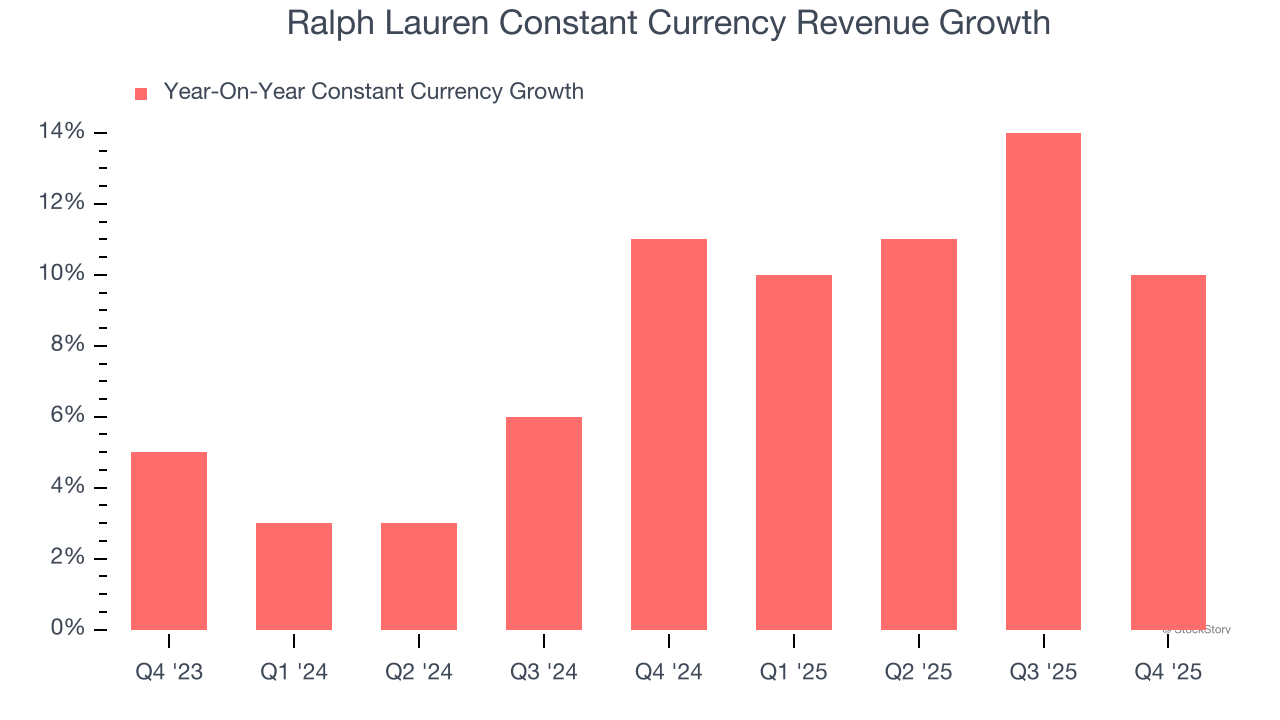
2. Weak Operating Margin Could Cause Trouble
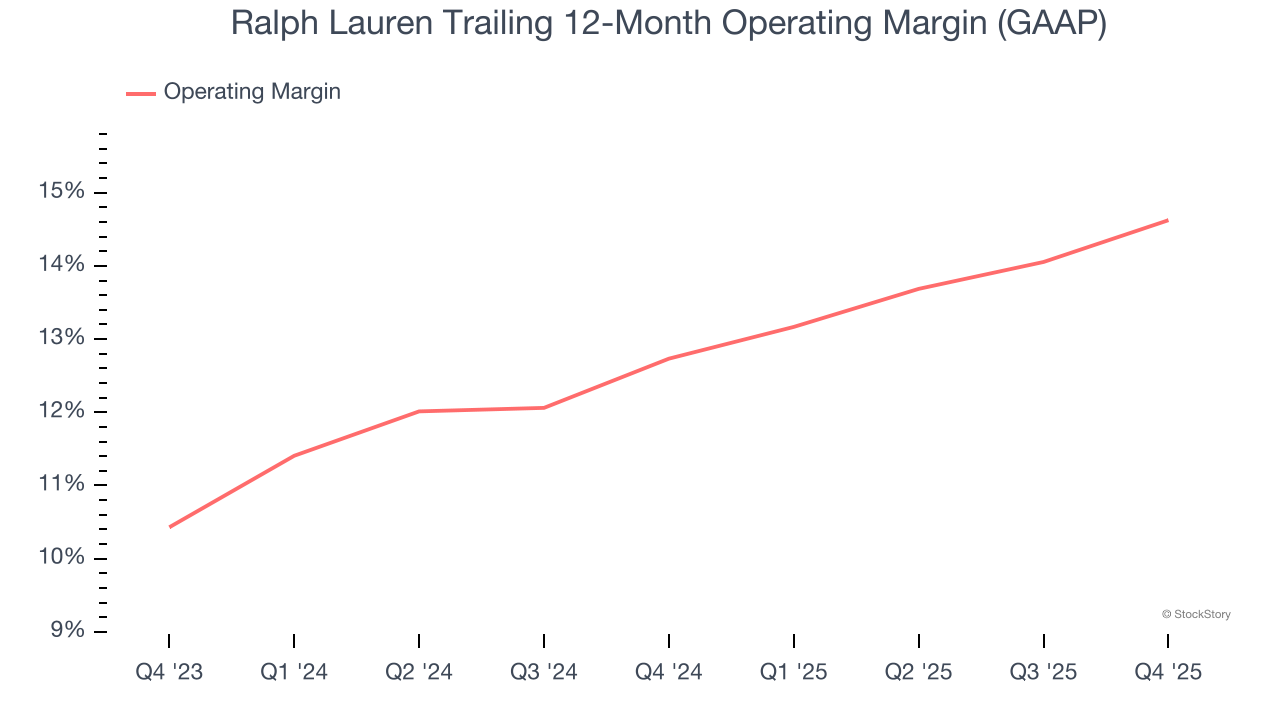
Operating margin is an important measure of profitability as it shows the portion of revenue left after accounting for all core expenses – everything from the cost of goods sold to advertising and wages. It’s also useful for comparing profitability across companies with different levels of debt and tax rates because it excludes interest and taxes.
Ralph Lauren’s operating margin has risen over the last 12 months and averaged 13.7% over the last two years. The company’s higher efficiency is a breath of fresh air, but its suboptimal cost structure means it still sports inadequate profitability for a consumer discretionary business.
3. Mediocre Free Cash Flow Margin Limits Reinvestment Potential
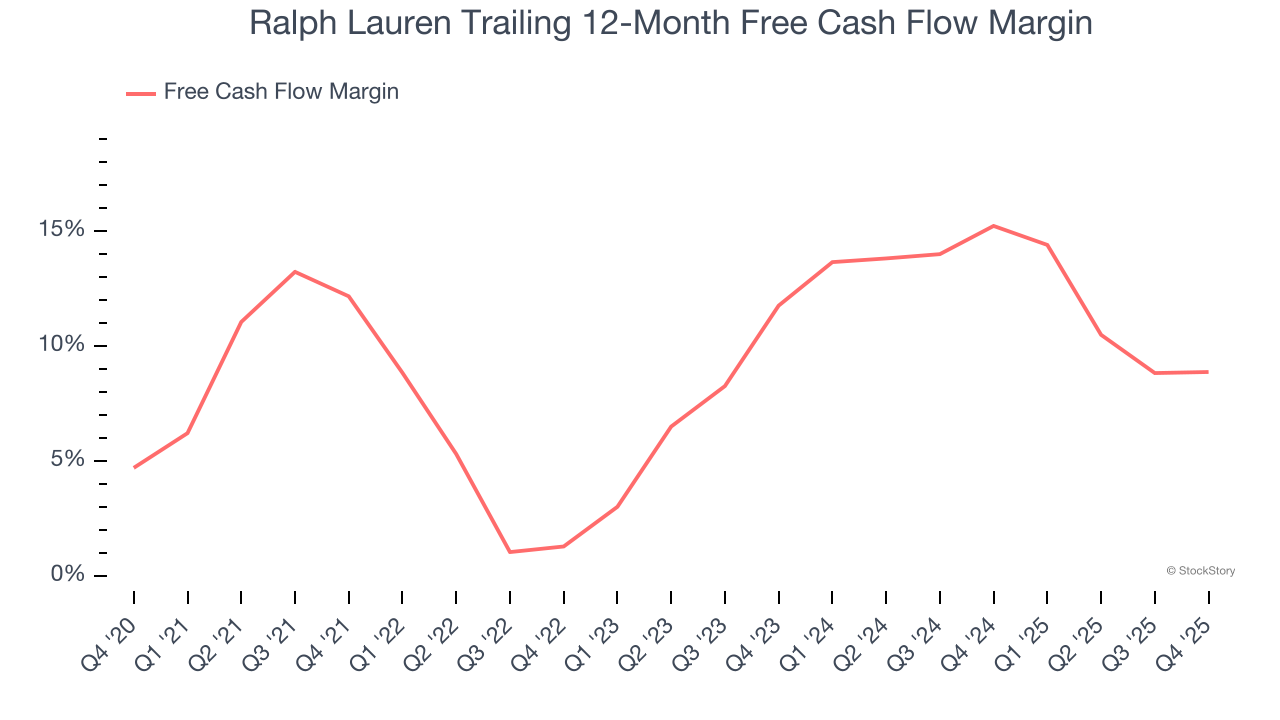
Free cash flow isn't a prominently featured metric in company financials and earnings releases, but we think it's telling because it accounts for all operating and capital expenses, making it tough to manipulate. Cash is king.
Ralph Lauren has shown poor cash profitability relative to peers over the last two years, giving the company fewer opportunities to return capital to shareholders. Its free cash flow margin averaged 11.9%, below what we’d expect for a consumer discretionary business.
Final Judgment
We cheer for all companies serving everyday consumers, but in the case of Ralph Lauren, we’ll be cheering from the sidelines. That said, the stock currently trades at 19.1× forward P/E (or $330.73 per share). This multiple tells us a lot of good news is priced in - we think other companies feature superior fundamentals at the moment. Let us point you toward the Amazon and PayPal of Latin America.
Stocks We Would Buy Instead of Ralph Lauren
ONE MORE THING: Top 6 Stocks for This Week. This market is separating quality stocks from expensive ones fast. AI taking down whole sectors with no warning. In a rotation this fast, you need more than a list of good companies.
Our AI system flagged Palantir before it ran 1,662%. AppLovin before it ran 753%. Nvidia before it ran 1,178%. Each week it produces 6 new names that pass the same tests. Get Our Top 6 Stocks for Free HERE.
Stocks that have made our list include now familiar names such as Nvidia (+1,326% between June 2020 and June 2025) as well as under-the-radar businesses like the once-micro-cap company Kadant (+351% five-year return). Find your next big winner with StockStory today.