Clothing and accessories retailer Gap (NYSE: GAP) missed Wall Street’s revenue expectations in Q1 CY2026, with sales flat year on year at $3.50 billion. Its GAAP profit of $0.90 per share was 87.6% above analysts’ consensus estimates.
Is now the time to buy Gap? Find out by accessing our full research report, it’s free.
Gap (GAP) Q1 CY2026 Highlights:
- Revenue: $3.50 billion vs analyst estimates of $3.53 billion (flat year on year, 0.8% miss)
- EPS (GAAP): $0.90 vs analyst estimates of $0.48 (87.6% beat)
- Operating Margin: 12.7%, up from 7.5% in the same quarter last year
- Free Cash Flow was $78 million, up from -$223 million in the same quarter last year
- Locations: 2,477 at quarter end, down from 3,505 in the same quarter last year
- Same-Store Sales rose 2% year on year, in line with the same quarter last year
- Market Capitalization: $8.79 billion
"In the first quarter, Gap Inc. delivered continued progress against our strategic priorities, including further market share gains and achieving our ninth consecutive quarter of positive comparable sales," said President and Chief Executive Officer, Richard Dickson.
Company Overview
Operating under the Gap, Old Navy, Banana Republic, and Athleta brands, Gap (NYSE: GAP) is an apparel and accessories retailer selling casual clothing to men, women, and children.
Revenue Growth
Reviewing a company’s long-term sales performance reveals insights into its quality. Any business can put up a good quarter or two, but the best consistently grow over the long haul.
With $15.4 billion in revenue over the past 12 months, Gap is one of the larger companies in the consumer retail industry and benefits from a well-known brand that influences purchasing decisions. However, its scale is a double-edged sword because there are only a finite number of places to build new stores, making it harder to find incremental growth. To accelerate sales, Gap likely needs to optimize its pricing or lean into international expansion.
As you can see below, Gap struggled to increase demand as its $15.4 billion of sales for the trailing 12 months was close to its revenue three years ago. This was mainly because it closed stores.
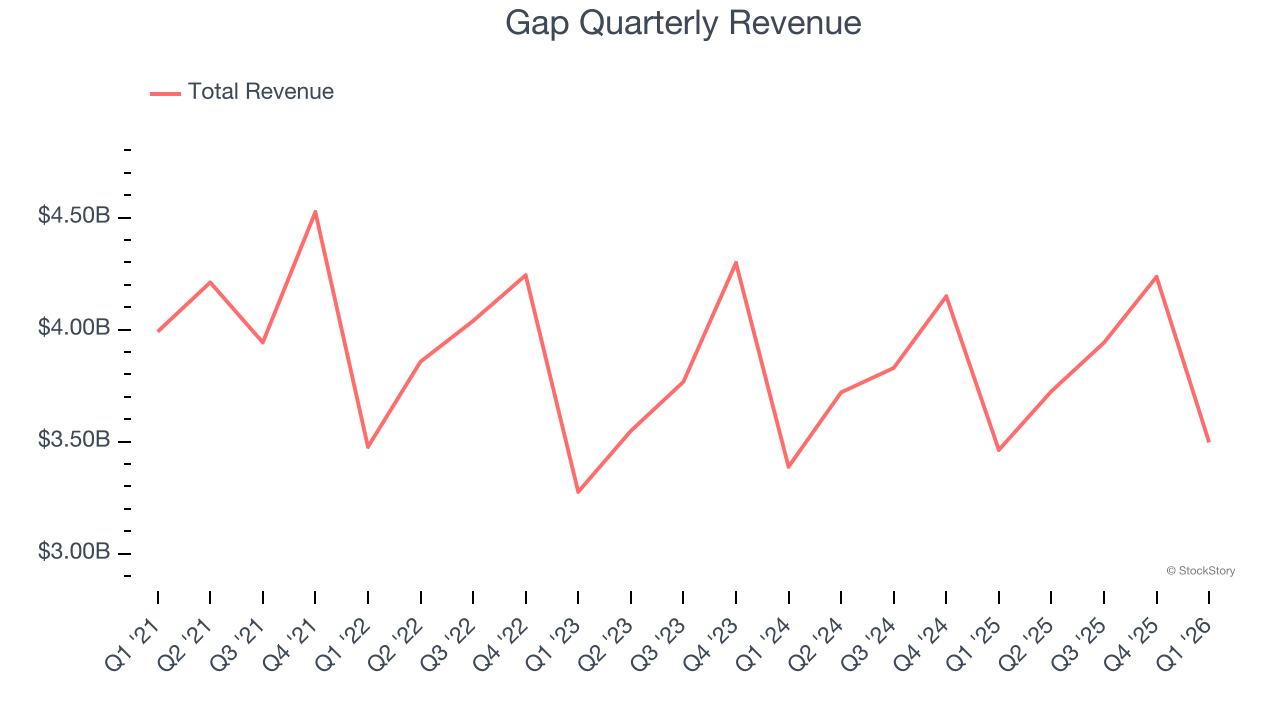
This quarter, Gap’s $3.50 billion of revenue was flat year on year, falling short of Wall Street’s estimates.
Looking ahead, sell-side analysts expect revenue to grow 2.8% over the next 12 months. Although this projection suggests its newer products will fuel better top-line performance, it is still below the sector average.
ONE MORE THING: The $21 AI Application Stock Wall Street Forgot. While Wall Street obsesses over who’s building AI, one company is already using it to print money. And nobody’s paying attention.
AI chip stocks trade at ridiculous valuations. This company processes a trillion consumer signals monthly using AI and trades at a third of the price. The gap won’t last. The institutions will figure it out. You need to see this first. Read the FREE Report Before They Notice.
Store Performance
Number of Stores
A retailer’s store count often determines how much revenue it can generate.
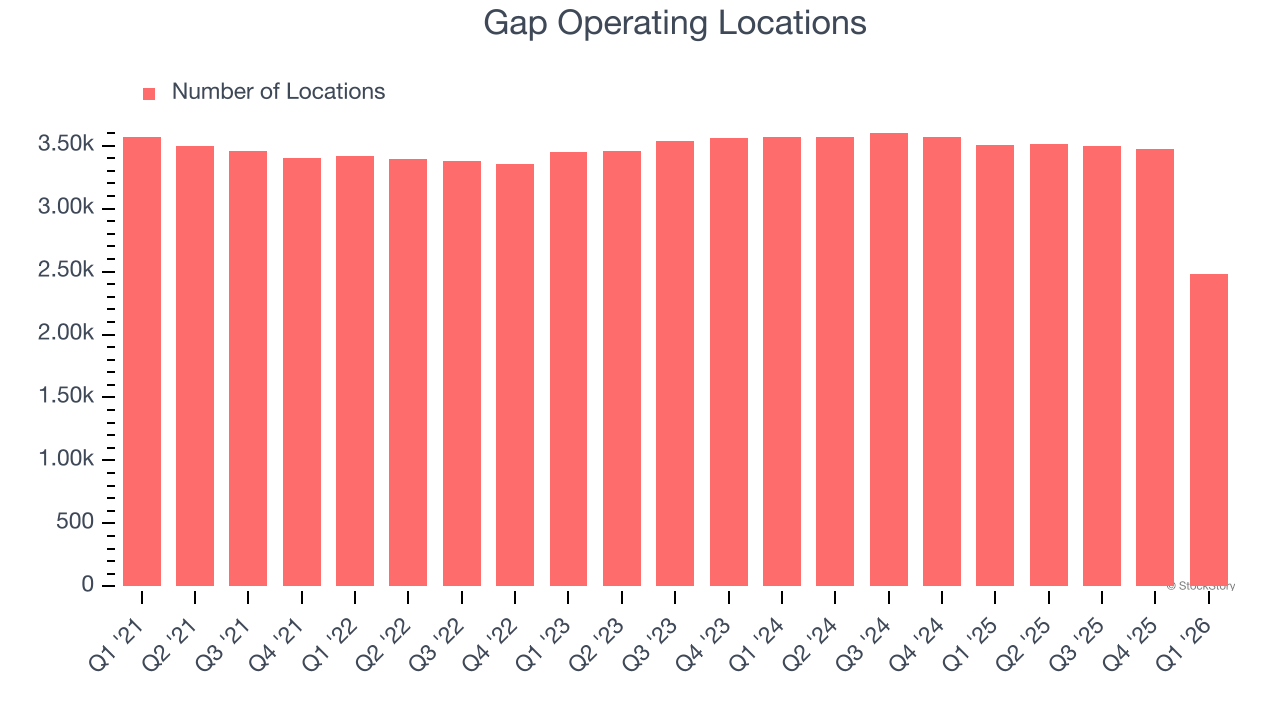
Gap listed 2,477 locations in the latest quarter and has generally closed its stores over the last two years, averaging 4.1% annual declines.
When a retailer shutters stores, it usually means that brick-and-mortar demand is less than supply, and it is responding by closing underperforming locations to improve profitability.
Same-Store Sales
The change in a company’s store base only tells one side of the story. The other is the performance of its existing locations and e-commerce sales, which informs management teams whether they should expand or downsize their physical footprints. Same-store sales provides a deeper understanding of this issue because it measures organic growth at brick-and-mortar shops for at least a year.
Gap’s demand rose over the last two years and slightly outpaced the industry. On average, the company’s same-store sales have grown by 2.5% per year. Given its declining store base over the same period, this performance stems from a mixture of higher e-commerce sales and increased foot traffic at existing locations (closing stores can sometimes boost same-store sales).
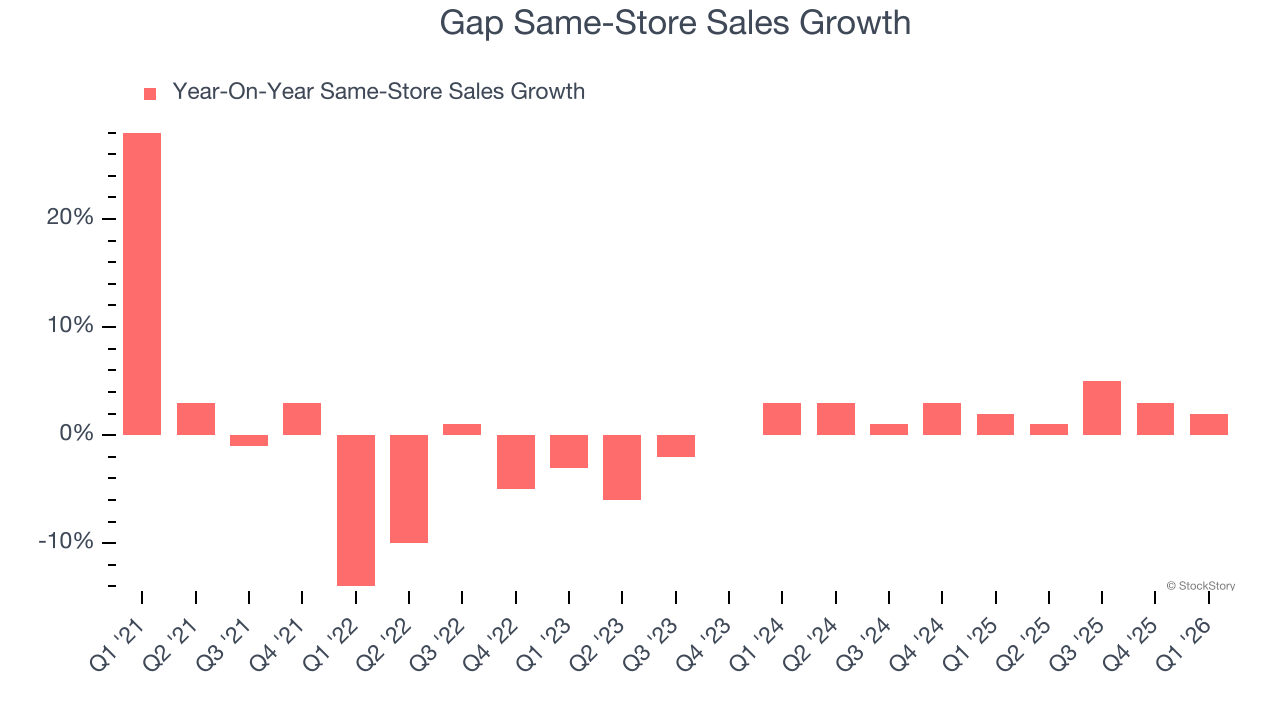
In the latest quarter, Gap’s same-store sales rose 2% year on year. This performance was more or less in line with its historical levels.
Key Takeaways from Gap’s Q1 Results
It was good to see Gap beat analysts’ EPS expectations this quarter. On the other hand, its revenue slightly missed. Overall, we think this was still a solid quarter with some key areas of upside. Investors were likely hoping for more, and shares traded down 14.4% to $21.40 immediately after reporting.
Should you buy the stock or not? If you’re making that decision, you should consider the bigger picture of valuation, business qualities, as well as the latest earnings. We cover that in our actionable full research report which you can read here (it’s free).