Global car rental company Hertz (NASDAQ: HTZ) reported revenue ahead of Wall Street’s expectations in Q1 CY2026, with sales up 10.5% year on year to $2.00 billion. Its non-GAAP loss of $0.72 per share was in line with analysts’ consensus estimates.
Is now the time to buy Hertz? Find out by accessing our full research report, it’s free.
Hertz (HTZ) Q1 CY2026 Highlights:
- Revenue: $2.00 billion vs analyst estimates of $1.89 billion (10.5% year-on-year growth, 5.9% beat)
- Adjusted EPS: -$0.72 vs analyst estimates of -$0.72 (in line)
- Adjusted EBITDA: -$161 million (-8% margin, 150% year-on-year decline)
- Adjusted EBITDA Margin: -8%, down from 17.7% in the same quarter last year
- Free Cash Flow was -$3.58 billion compared to -$578 million in the same quarter last year
- Market Capitalization: $2.04 billion
“The transformation of Hertz continues to build sustained momentum,” said Gil West, Chief Executive Officer of Hertz.
Company Overview
Started with a dozen Model T Fords, Hertz (NASDAQ: HTZ) is a global car rental company providing vehicle rental services to leisure and business travelers.
Revenue Growth
Reviewing a company’s long-term sales performance reveals insights into its quality. Any business can put up a good quarter or two, but many enduring ones grow for years. Luckily, Hertz’s sales grew at an excellent 13.5% compounded annual growth rate over the last five years. Its growth beat the average industrials company and shows its offerings resonate with customers.
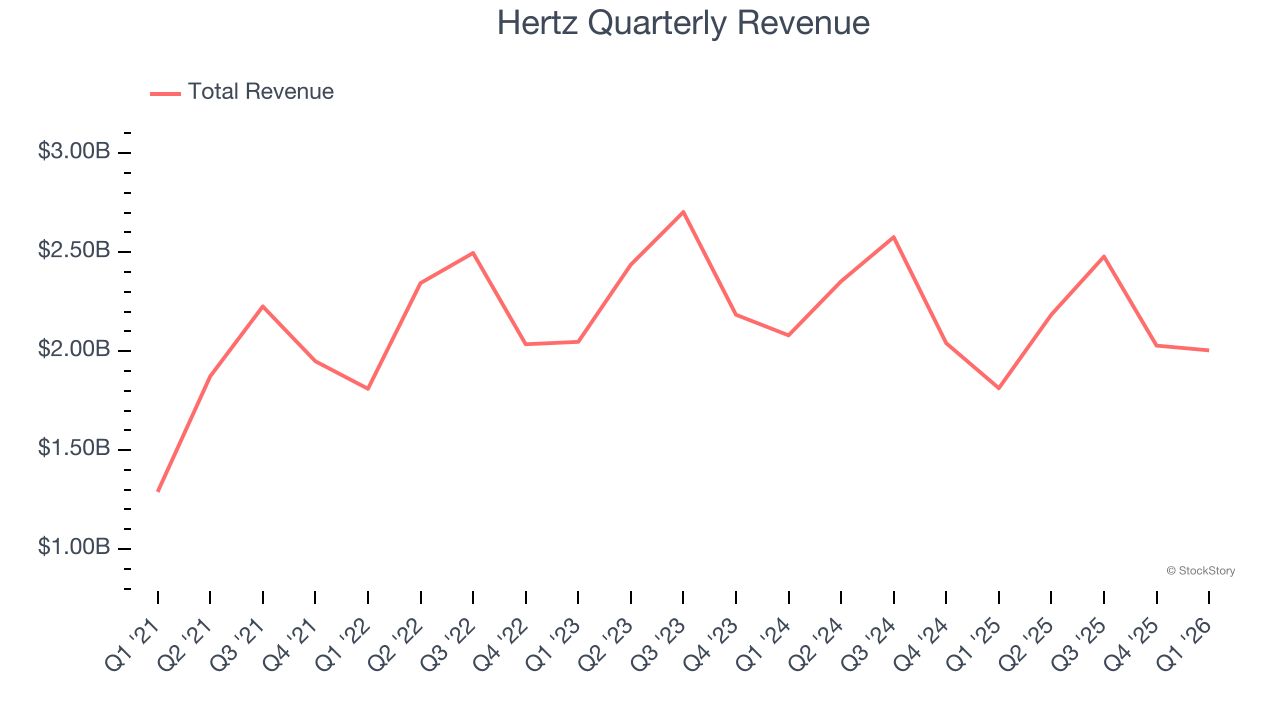
We at StockStory place the most emphasis on long-term growth, but within industrials, a half-decade historical view may miss cycles, industry trends, or a company capitalizing on catalysts such as a new contract win or a successful product line. Hertz’s recent performance marks a sharp pivot from its five-year trend as its revenue has shown annualized declines of 3.8% over the last two years. 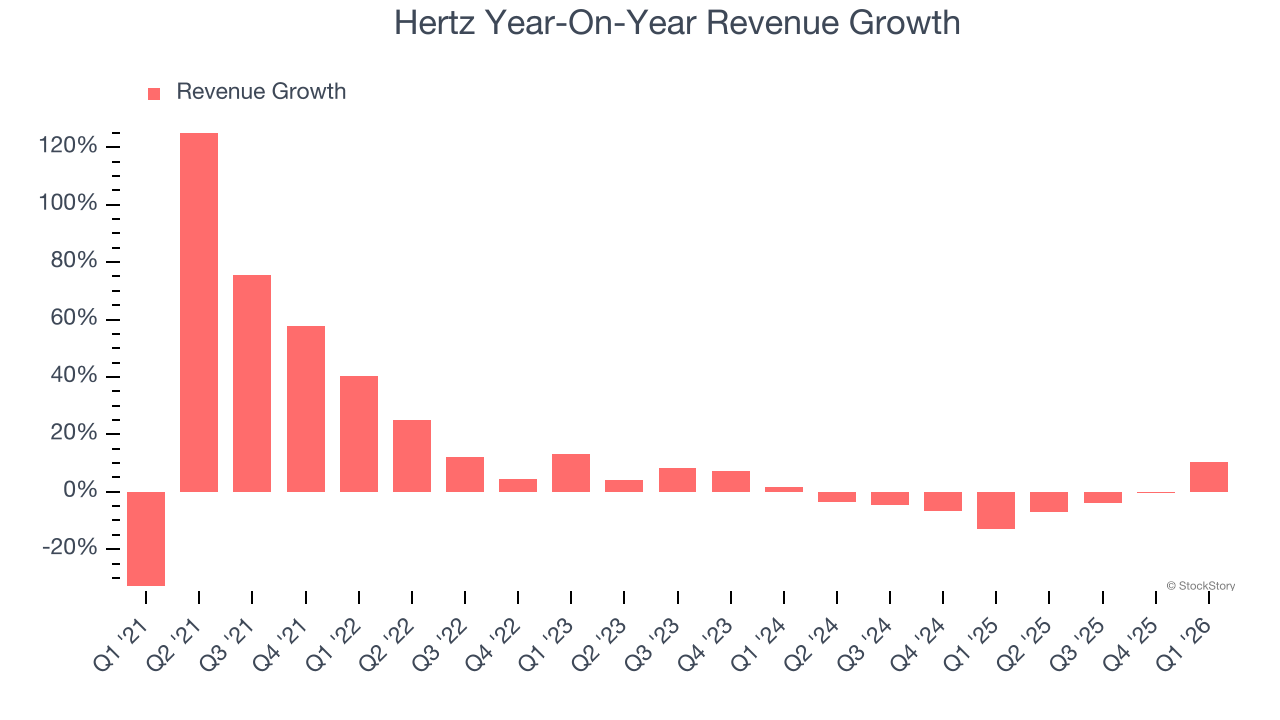
This quarter, Hertz reported year-on-year revenue growth of 10.5%, and its $2.00 billion of revenue exceeded Wall Street’s estimates by 5.9%.
Looking ahead, sell-side analysts expect revenue to grow 2% over the next 12 months. While this projection suggests its newer products and services will spur better top-line performance, it is still below average for the sector.
ALSO WORTH WATCHING: Nvidia’s Quiet Partner. Nvidia’s chips cost a hundred grand. The connectors that make them work cost even more. One company makes them all.
Every AI server needs specialized infrastructure the chip companies don’t make. High-speed cables. Power connectors. Thermal sensors. This 90-year-old company built a monopoly on it. The AI boom just started. This stock is still flying under the radar. Claim The Stock Ticker Here for FREE.
Operating Margin
Hertz was profitable over the last five years but held back by its large cost base. Its average operating margin of 7.8% was weak for an industrials business. This result isn’t too surprising given its low gross margin as a starting point.
Looking at the trend in its profitability, Hertz’s operating margin decreased by 33.8 percentage points over the last five years. This raises questions about the company’s expense base because its revenue growth should have given it leverage on its fixed costs, resulting in better economies of scale and profitability. Hertz’s performance was poor no matter how you look at it - it shows that costs were rising and it couldn’t pass them onto its customers.
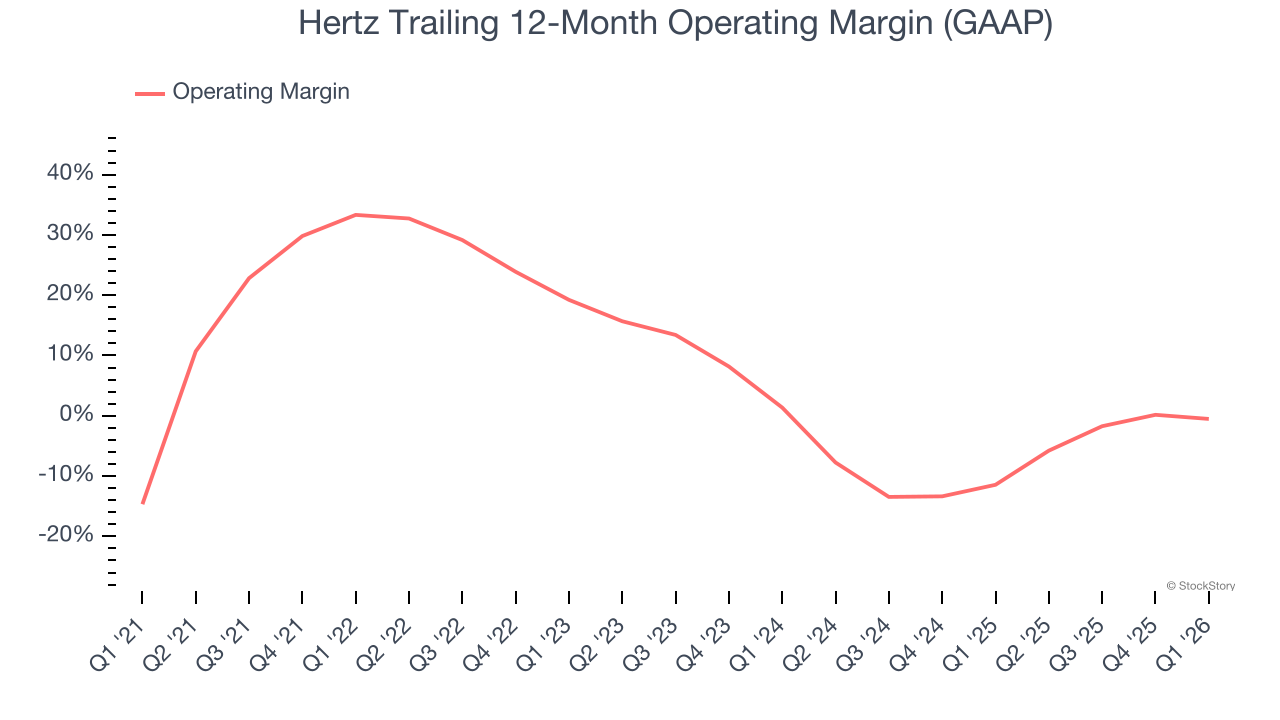
In Q1, Hertz generated an operating margin profit margin of negative 15.2%, down 1.7 percentage points year on year. Conversely, its revenue and gross margin actually rose, so we can assume it was less efficient because its operating expenses like marketing, R&D, and administrative overhead grew faster than its revenue.
Earnings Per Share
Revenue trends explain a company’s historical growth, but the long-term change in earnings per share (EPS) points to the profitability of that growth – for example, a company could inflate its sales through excessive spending on advertising and promotions.
Hertz’s full-year EPS turned negative over the last four years. We tend to steer our readers away from companies with falling revenue and EPS, where diminishing earnings could imply changing secular trends and preferences. If the tide turns unexpectedly, Hertz’s low margin of safety could leave its stock price susceptible to large downswings.
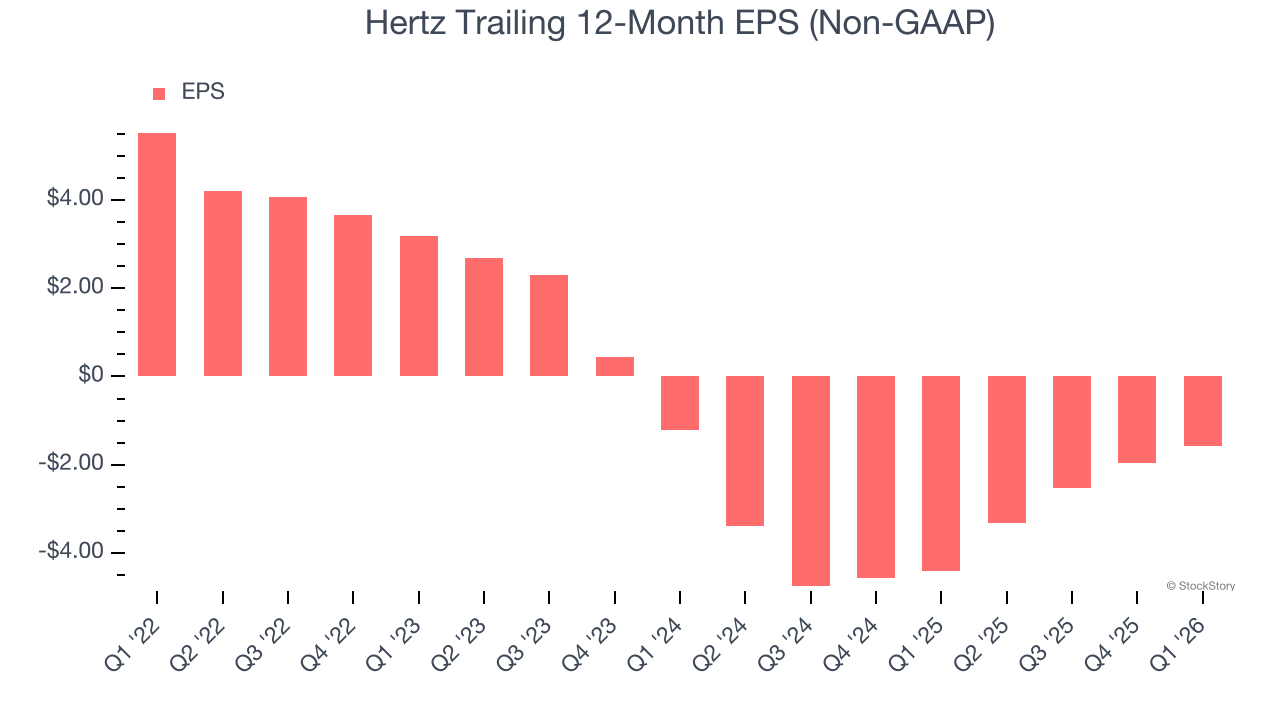
Like with revenue, we analyze EPS over a shorter period to see if we are missing a change in the business.
For Hertz, its two-year annual EPS declines of 13.4% show it’s still underperforming. These results were bad no matter how you slice the data.
In Q1, Hertz reported adjusted EPS of negative $0.72, up from negative $1.12 in the same quarter last year. This print was close to analysts’ estimates. We also like to analyze expected EPS growth based on Wall Street analysts’ consensus projections, but there is insufficient data.
Key Takeaways from Hertz’s Q1 Results
We were impressed by how significantly Hertz blew past analysts’ EBITDA expectations this quarter. We were also excited its revenue outperformed Wall Street’s estimates by a wide margin. On the other hand, its adjusted operating income missed. Overall, this print had some key positives. The stock remained flat at $6.45 immediately following the results.
Should you buy the stock or not? If you’re making that decision, you should consider the bigger picture of valuation, business qualities, as well as the latest earnings. We cover that in our actionable full research report which you can read here (it’s free).