Semiconductor maker Himax Technologies (NASDAQ: HIMX) reported Q1 CY2026 results exceeding the market’s revenue expectations, but sales fell by 7.5% year on year to $199 million. Its GAAP profit of $0.05 per share was in line with analysts’ consensus estimates.
Is now the time to buy Himax? Find out by accessing our full research report, it’s free.
Himax (HIMX) Q1 CY2026 Highlights:
- Revenue: $199 million vs analyst estimates of $195 million (7.5% year-on-year decline, 2.1% beat)
- EPS (GAAP): $0.05 vs analyst estimates of $0.05 (in line)
- Adjusted EBITDA: $16.2 million (8.1% margin, 35.4% year-on-year decline)
- Operating Margin: 5.1%, down from 9.2% in the same quarter last year
- Free Cash Flow Margin: 0.4%, down from 23.6% in the same quarter last year
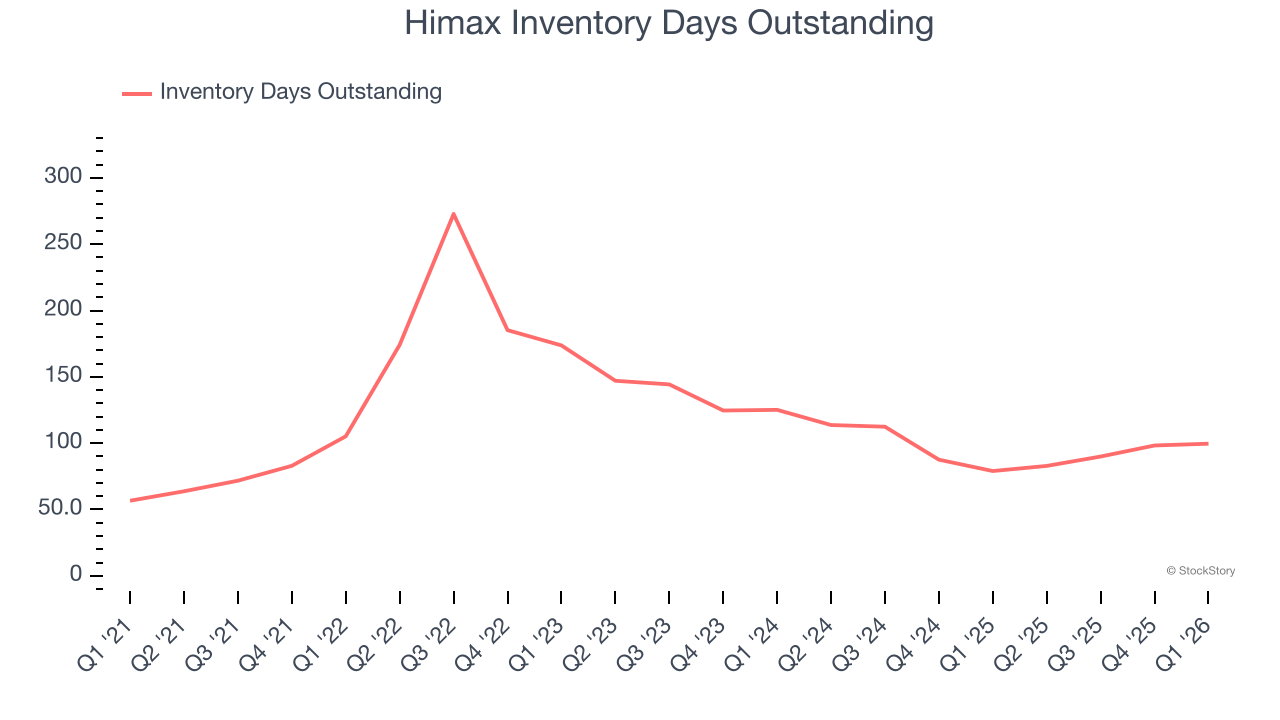
- Inventory Days Outstanding: 100, up from 98 in the previous quarter
- Market Capitalization: $2.15 billion
“We expect upward momentum through the remainder of 2026, supported by a meaningful number of new automotive projects scheduled to enter mass production in the second half, a view consistent with our outlook from last quarter’s call. The positive outlook is also supported by the anticipated growth in our non-driver IC businesses, particularly Tcon and WiseEye AI. Despite ongoing macro uncertainty, Himax continues to expand beyond its traditional display IC business, focusing on key growth areas including smart glasses, ultralow power AI and CPO. These emerging technologies present significant growth opportunities that help diversify our revenue base into areas with attractive gross margin profiles and profitability while also strengthening our overall competitiveness.” said Mr. Jordan Wu, President and Chief Executive Officer of Himax.
Company Overview
Taiwan-based Himax Technologies (NASDAQ: HIMX) is a leading manufacturer of display driver chips and timing controllers used in TVs, laptops, and mobile phones.
Revenue Growth
Examining a company’s long-term performance can provide clues about its quality. Even a bad business can shine for one or two quarters, but a top-tier one grows for years. Over the last five years, Himax’s demand was weak and its revenue declined by 4.2% per year. This was below our standards and is a sign of poor business quality. Semiconductors are a cyclical industry, and long-term investors should be prepared for periods of high growth followed by periods of revenue contractions.
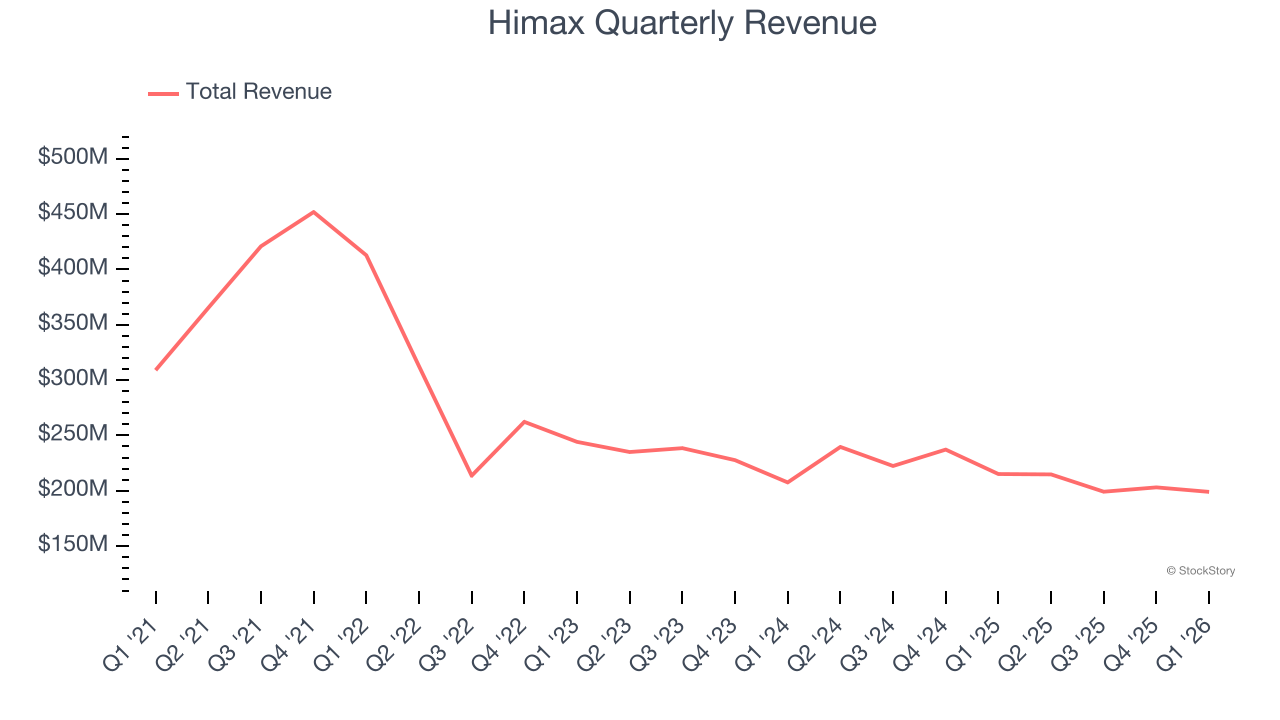
We at StockStory place the most emphasis on long-term growth, but within semiconductors, a half-decade historical view may miss new demand cycles or industry trends like AI. Himax’s recent performance shows its demand remained suppressed as its revenue has declined by 5.2% annually over the last two years. 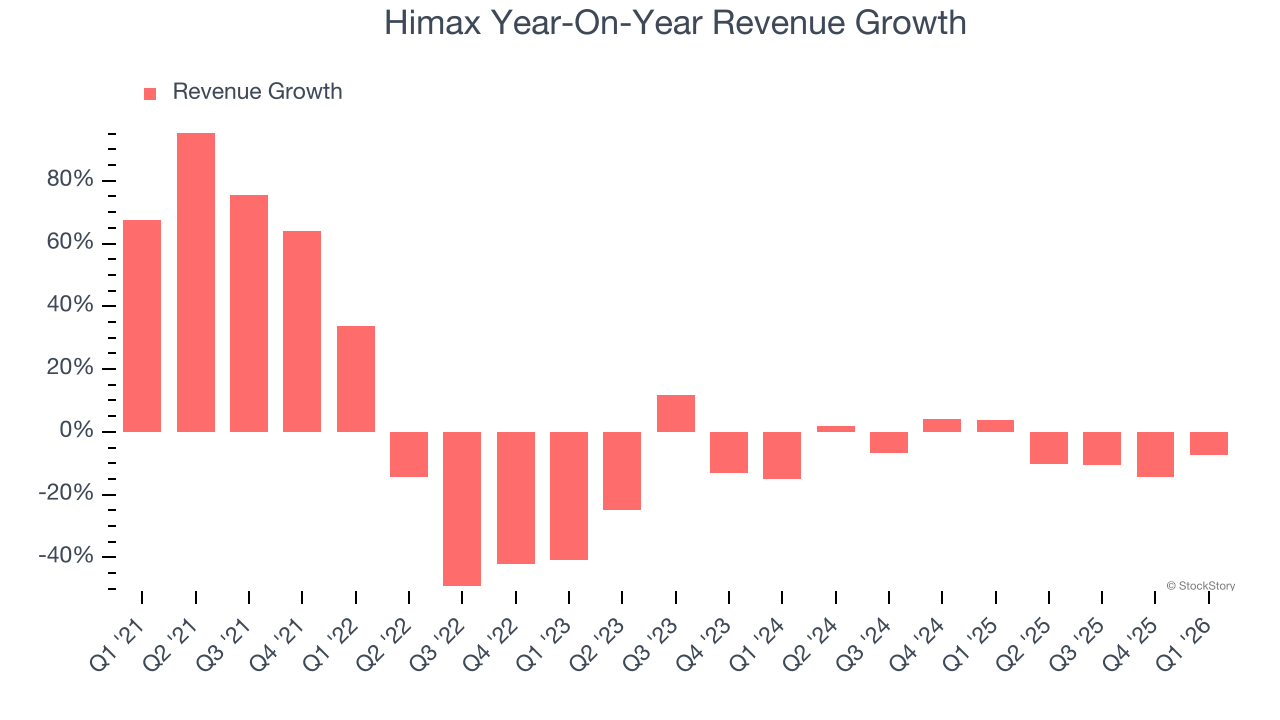
This quarter, Himax’s revenue fell by 7.5% year on year to $199 million but beat Wall Street’s estimates by 2.1%. Despite the beat, the drop in sales could mean that the current downcycle is deepening.
Looking ahead, sell-side analysts expect revenue to grow 14% over the next 12 months. Although this projection implies its newer products and services will fuel better top-line performance, it is still below the sector average.
ONE MORE THING: 3 Hidden Platforms Growing 3X Faster than Amazon, Google, and PayPal. Amazon, Google, and Meta all followed the same playbook: Dominate an ignored market. Build an unbeatable moat. Scale until you’re unstoppable.
These three platforms are running that exact playbook right now. The early investors in Amazon made fortunes. The early investors in these could do the same. Get All 3 Stocks Here for FREE.
Product Demand & Outstanding Inventory
Days Inventory Outstanding (DIO) is an important metric for chipmakers, as it reflects a business’ capital intensity and the cyclical nature of semiconductor supply and demand. In a tight supply environment, inventories tend to be stable, allowing chipmakers to exert pricing power. Steadily increasing DIO can be a warning sign that demand is weak, and if inventories continue to rise, the company may have to downsize production.
This quarter, Himax’s DIO came in at 100, which is 22 days below its five-year average. These numbers show that despite the recent increase, there’s no indication of an excessive inventory buildup.
Key Takeaways from Himax’s Q1 Results
It was encouraging to see Himax meet analysts’ EPS expectations this quarter. We were also happy its revenue outperformed Wall Street’s estimates. Overall, this print had some key positives. The stock traded up 30.5% to $16.07 immediately after reporting.
Himax may have had a good quarter, but does that mean you should invest right now? The latest quarter does matter, but not nearly as much as longer-term fundamentals and valuation, when deciding if the stock is a buy. We cover that in our actionable full research report which you can read here (it’s free).