Infrastructure and defense services provider Parsons (NYSE: PSN) missed Wall Street’s revenue expectations in Q2 CY2026, with sales flat year on year at $1.58 billion. The company’s full-year revenue guidance of $6.35 billion at the midpoint came in 4.6% below analysts’ estimates. Its non-GAAP profit of $0.06 per share was 92.1% below analysts’ consensus estimates.
Is now the time to buy Parsons? Find out by accessing our full research report, it’s free.
Parsons (PSN) Q2 CY2026 Highlights:
- Revenue: $1.58 billion vs analyst estimates of $1.61 billion (flat year on year, 1.9% miss)
- Adjusted EPS: $0.06 vs analyst expectations of $0.76 (92.1% miss due to $118 million in charges related to portfolio actions and a joint venture program charge)
- Adjusted EBITDA: $161 million vs analyst estimates of $154.1 million (10.2% margin, 4.5% beat; excludes $118 million in charges related to portfolio actions and a joint venture program charge)
- The company dropped its revenue guidance for the full year to $6.35 billion at the midpoint from $6.65 billion, a 4.5% decrease
- EBITDA guidance for the full year is $530 million at the midpoint, below analyst estimates of $653.2 million
- Operating Margin: 0.1%, down from 6% in the same quarter last year
- Free Cash Flow Margin: 0%, down from 9.5% in the same quarter last year
- Backlog: $9.26 billion at quarter end, up 4% year on year
- Market Capitalization: $6.64 billion
“Our second quarter results highlight the demand for our solutions and the effectiveness of our strategy in a dynamic macro environment,” said Carey Smith, chair, president, and chief executive officer.
Company Overview
Delivering aerospace technology during the Cold War-era, Parsons (NYSE: PSN) offers engineering, construction, and cybersecurity solutions for the infrastructure and defense sectors.
Revenue Growth
Reviewing a company’s long-term sales performance reveals insights into its quality. Any business can put up a good quarter or two, but many enduring ones grow for years. Over the last five years, Parsons grew its sales at an impressive 11.1% compounded annual growth rate. Its growth beat the average industrials company and shows its offerings resonate with customers.
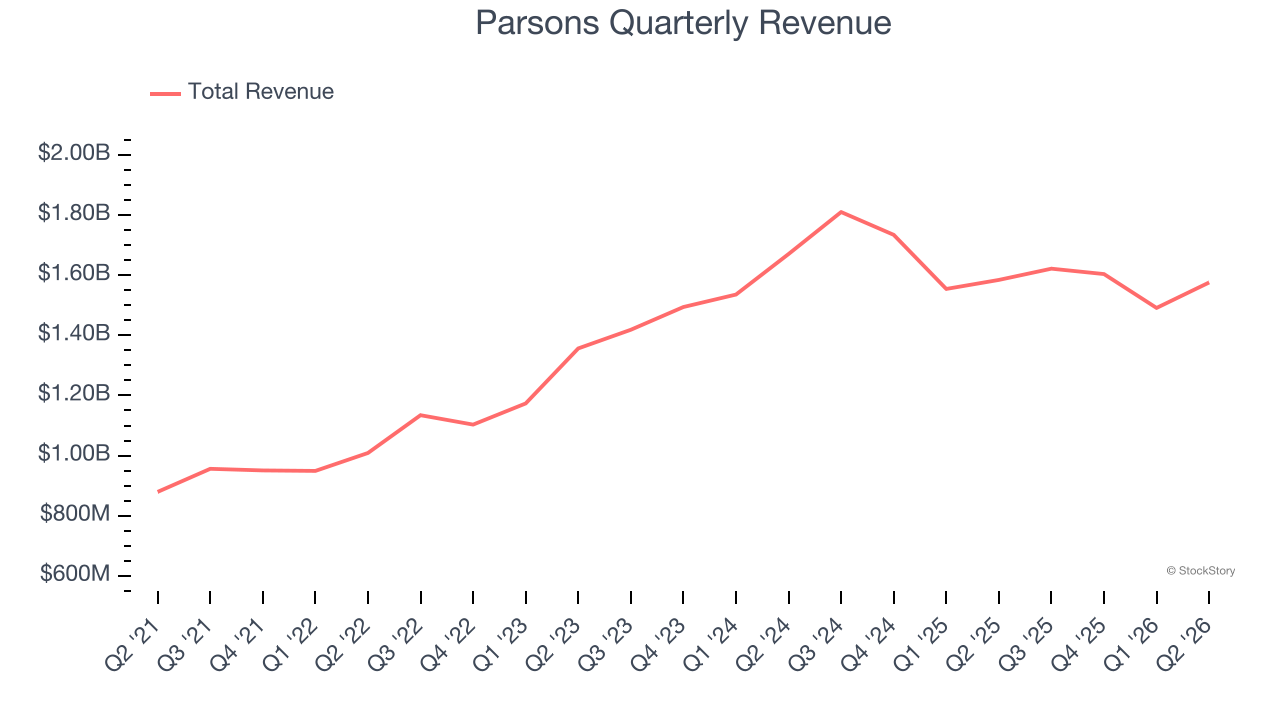
We at StockStory place the most emphasis on long-term growth, but within industrials, a half-decade historical view may miss cycles, industry trends, or a company capitalizing on catalysts such as a new contract win or a successful product line. Parsons’s recent performance shows its demand has slowed significantly as its annualized revenue growth of 1.4% over the last two years was well below its five-year trend. 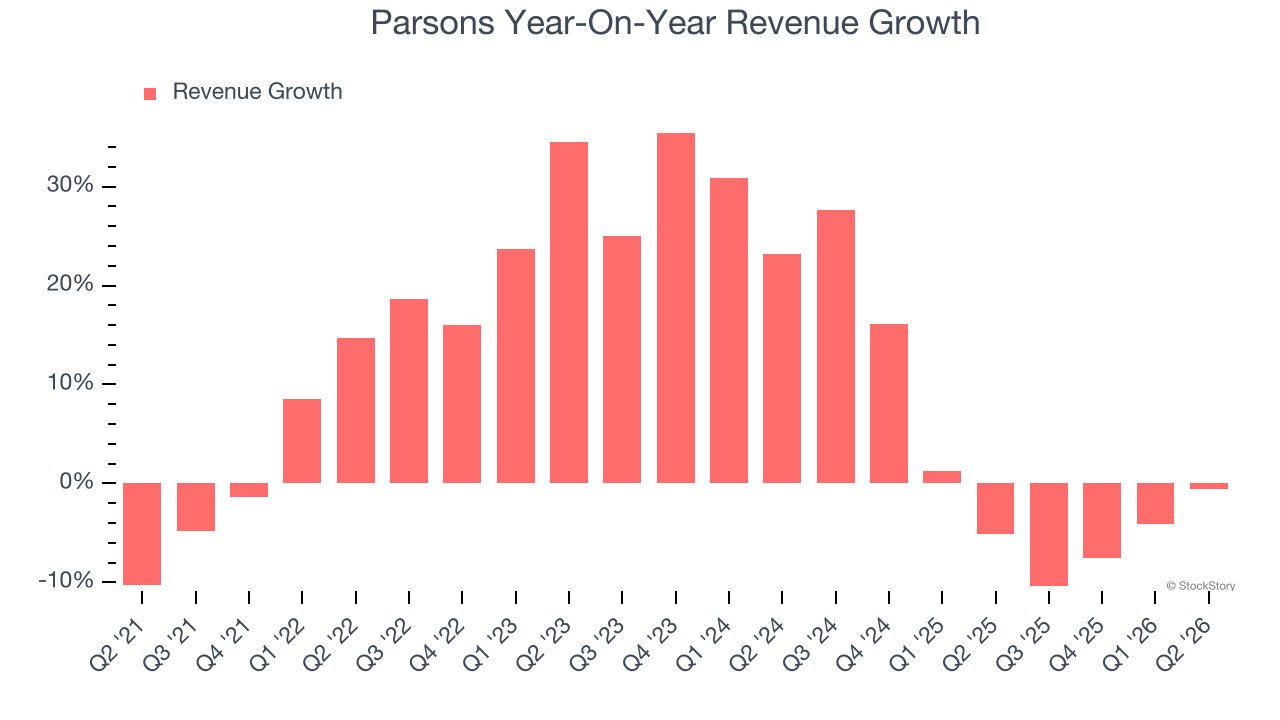
We can better understand the company’s revenue dynamics by analyzing its backlog, or the value of its outstanding orders that have not yet been executed or delivered. Parsons’s backlog reached $9.26 billion in the latest quarter and averaged 1.1% year-on-year growth over the last two years. Because this number is in line with its revenue growth, we can see the company effectively balanced its new order intake and fulfillment processes. 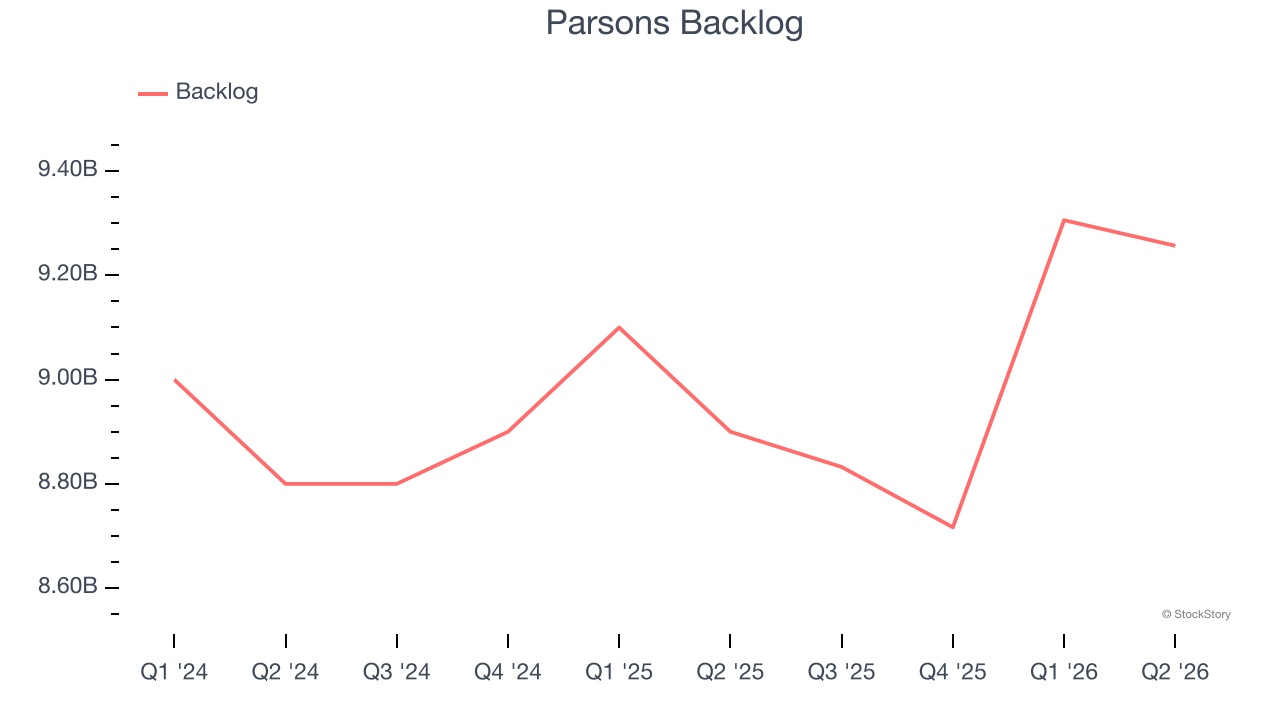
This quarter, Parsons missed Wall Street’s estimates and reported a rather uninspiring 0.5% year-on-year revenue decline, generating $1.58 billion of revenue.
Looking ahead, sell-side analysts expect revenue to grow 9.8% over the next 12 months, an improvement versus the last two years. This projection is noteworthy and implies its newer products and services will fuel better top-line performance.
ONE MORE THING: The $21 AI Application Stock Wall Street Forgot. While Wall Street obsesses over who’s building AI, one company is already using it to print money. And nobody’s paying attention.
AI chip stocks trade at ridiculous valuations. This company processes a trillion consumer signals monthly using AI and trades at a third of the price. The gap won’t last. The institutions will figure it out. You need to see this first. Read the FREE Report Before They Notice.
Operating Margin
Parsons’s operating margin has generally stayed the same over the last 12 months, averaging 5.4% over the last five years. This profitability was paltry for an industrials business and caused by its suboptimal cost structure.
Analyzing the trend in its profitability, Parsons’s operating margin might have fluctuated slightly but has generally stayed the same over the last five years. This raises questions about the company’s expense base because its revenue growth should have given it leverage on its fixed costs, resulting in better economies of scale and profitability.
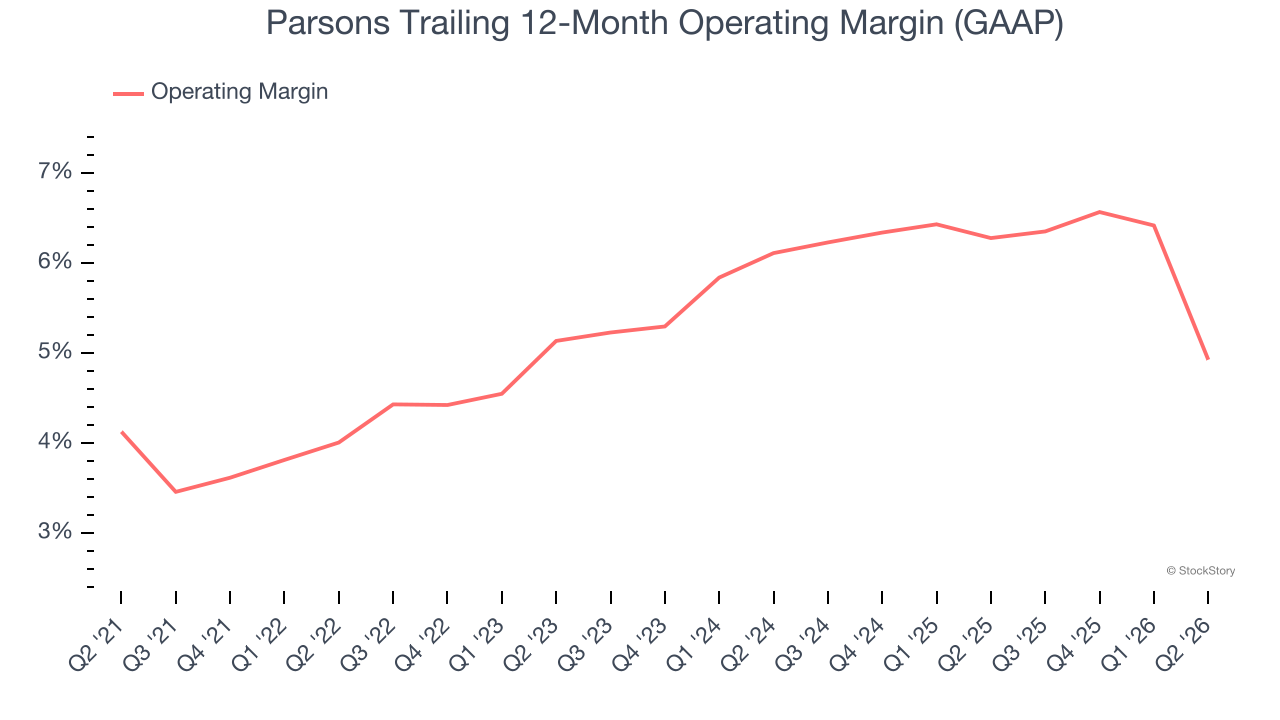
In Q2, Parsons’s breakeven margin was 0.1%, down 6 percentage points year on year. This contraction shows it was less efficient because its expenses increased relative to its revenue.
Earnings Per Share
We track the long-term change in earnings per share (EPS) for the same reason as long-term revenue growth. Compared to revenue, however, EPS highlights whether a company’s growth is profitable.
Parsons’s EPS grew at an unimpressive 7.2% compounded annual growth rate over the last five years, lower than its 11.1% annualized revenue growth. However, its operating margin didn’t change during this time, telling us that non-fundamental factors such as interest and taxes affected its ultimate earnings.
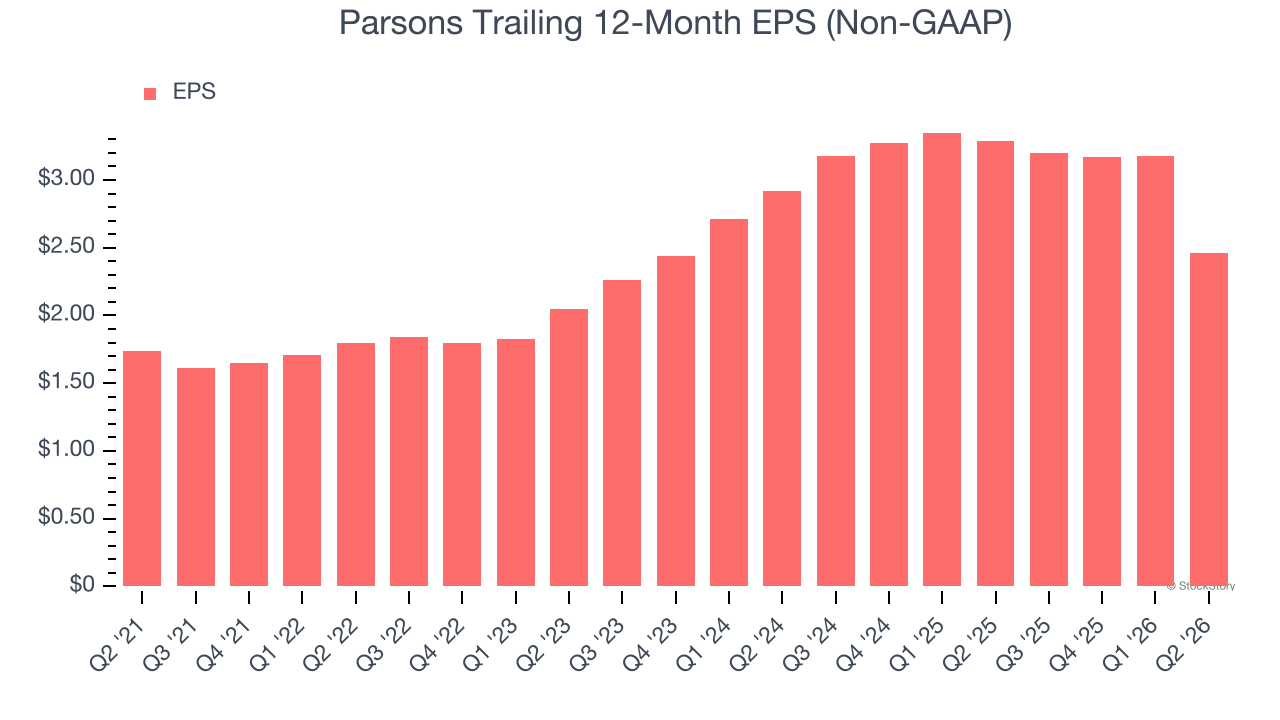
Like with revenue, we analyze EPS over a more recent period because it can provide insight into an emerging theme or development for the business.
For Parsons, its two-year annual EPS declines of 8.2% show it’s continued to underperform. These results were bad no matter how you slice the data.
In Q2, Parsons reported adjusted EPS of $0.06, down from $0.78 in the same quarter last year. This print missed analysts’ estimates. Over the next 12 months, Wall Street expects Parsons’s full-year EPS to grow 41.7% from $2.46 to $3.49.
Key Takeaways from Parsons’s Q2 Results
Revenue missed and both full-year revenue and EBITDA guidance were both lowered below Wall Street’s estimates. Overall, this quarter was bad. The stock traded down 21.8% to $48.50 immediately after reporting.
Parsons didn’t show its best hand this quarter, but does that create an opportunity to buy the stock right now? The latest quarter does matter, but not nearly as much as longer-term fundamentals and valuation, when deciding if the stock is a buy. We cover that in our actionable full research report which you can read here (it’s free).