In a definitive move to cement its leadership in the artificial intelligence hardware race, Micron Technology (NASDAQ: MU) announced on January 17, 2026, a $1.8 billion agreement to acquire the P5 manufacturing facility in Taiwan from Powerchip Semiconductor Manufacturing Corp (PSMC) (TWSE: 6770). This strategic acquisition, an all-cash transaction, marks a pivotal expansion of Micron’s manufacturing footprint in the Tongluo Science Park, Miaoli County. By securing this ready-to-use infrastructure, Micron is positioning itself to meet the insatiable global demand for High Bandwidth Memory (HBM) and next-generation Dynamic Random-Access Memory (DRAM).
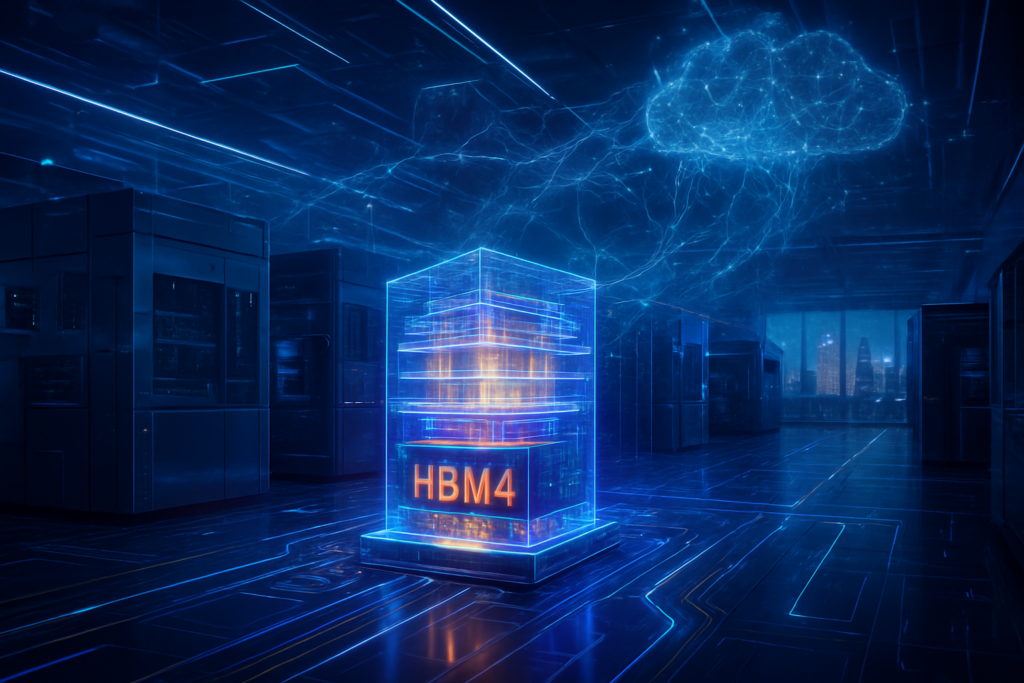
The significance of this deal cannot be overstated as the tech industry navigates the "AI Supercycle." With the transaction expected to close by the second quarter of 2026, Micron is bypassing the lengthy five-to-seven-year lead times typically required for "greenfield" semiconductor plant construction. The move ensures that the company can rapidly scale its output of HBM4—the upcoming industry standard for AI accelerators—at a time when capacity constraints have become the primary bottleneck for the world’s leading AI chip designers.
Technical Specifications and the Shift to HBM4
The P5 facility is a state-of-the-art 300mm wafer fab that includes a massive 300,000-square-foot cleanroom, providing the physical "white space" necessary for advanced lithography and packaging equipment. Micron plans to utilize this space to deploy its cutting-edge 1-gamma (1γ) and 1-delta (1δ) DRAM process nodes. Unlike standard DDR5 memory used in consumer PCs, HBM4 requires a significantly more complex manufacturing process, involving 3D stacking of memory dies and Through-Silicon Via (TSV) technology. This complexity introduces a "wafer penalty," where producing one HBM4 stack requires roughly three times the wafer capacity of standard DRAM, making large-scale facilities like P5 essential for maintaining volume.
Initial reactions from the semiconductor research community have highlighted the facility's proximity to Micron's existing "megafab" in Taichung. This geographic synergy allows for a streamlined logistics chain, where front-end wafer fabrication can transition seamlessly to back-end assembly and testing. Industry experts note that the acquisition price of $1.8 billion is a "bargain" compared to the estimated $9.5 billion PSMC originally invested in the site. By retooling an existing plant rather than building from scratch, Micron is effectively "speedrunning" its capacity expansion to keep pace with the rapid evolution of AI models that require ever-increasing memory bandwidth.
Market Positioning and the Competitive Landscape
This acquisition places Micron in a formidable position against its primary rivals, SK Hynix (KRX: 000660) and Samsung Electronics (KRX: 005930). While SK Hynix currently holds a significant lead in the HBM3E market, Micron’s aggressive expansion in Taiwan signals a bid to capture at least 25% of the global HBM market share by 2027. Major AI players like Nvidia (NASDAQ: NVDA) and Advanced Micro Devices (NASDAQ: AMD) stand to benefit directly from this deal, as it provides a more diversified and resilient supply chain for the high-speed memory required by their flagship H100, B200, and future-generation AI GPUs.
For PSMC, the sale represents a strategic retreat from the mature-node logic market (28nm and 40nm), which has faced intense pricing pressure from state-subsidized foundries in mainland China. By offloading the P5 fab, PSMC is transitioning to an "asset-light" model, focusing on high-value specialty services such as Wafer-on-Wafer (WoW) stacking and silicon interposers. This realignment allows both companies to specialize: Micron focuses on the high-volume memory chips that power AI training, while PSMC provides the niche integration services required for advanced chiplet architectures.
The Geopolitical and Industrial Significance
The acquisition reinforces the critical importance of Taiwan as the epicenter of the global AI supply chain. By doubling down on its Taiwanese operations, Micron is strengthening the "US-Taiwan manufacturing axis," a move that carries significant geopolitical weight in an era of semiconductor sovereignty. This development fits into a broader trend of global capacity expansion, where memory manufacturers are racing to build "AI-ready" fabs to avoid the shortages that plagued the industry in late 2024.
Comparatively, this milestone is being viewed by analysts as the "hardware equivalent" of the GPT-4 release. Just as software breakthroughs expanded the possibilities of AI, Micron’s acquisition of the P5 fab represents the physical infrastructure necessary to realize those possibilities. The "wafer penalty" associated with HBM has created a new reality where memory capacity, not just compute power, is the true currency of the AI era. Concerns regarding oversupply, which haunted the industry in previous cycles, have been largely overshadowed by the sheer scale of demand from hyperscale data center operators like Microsoft (NASDAQ: MSFT) and Google (NASDAQ: GOOGL).
Future Developments and the HBM4 Roadmap
Looking ahead, the P5 facility is expected to begin "meaningful DRAM wafer output" in the second half of 2027. This timeline aligns perfectly with the projected mass adoption of HBM4, which will feature 12-layer and 16-layer stacks to provide the massive throughput required for next-generation Large Language Models (LLMs) and autonomous systems. Experts predict that the next two years will see a flurry of equipment installations at the Miaoli site, including advanced Extreme Ultraviolet (EUV) lithography tools that are essential for the 1-gamma node.
However, challenges remain. Integrating a logic-centric fab into a memory-centric production line requires significant retooling, and the global shortage of skilled semiconductor engineers could impact the ramp-up speed. Furthermore, the industry will be watching closely to see if Micron’s expansion in Taiwan is balanced by similar investments in the United States, potentially leveraging the CHIPS and Science Act to build domestic HBM capacity in states like Idaho or New York.
Wrap-up: A New Chapter in the Memory Wars
Micron’s $1.8 billion acquisition of the PSMC P5 facility is a clear signal that the company is playing for keeps in the AI era. By securing a massive, modern facility at a fraction of its replacement cost, Micron has effectively leapfrogged years of development time. This move not only stabilizes its long-term supply of HBM and DRAM but also provides the necessary room to innovate on HBM4 and beyond.
In the history of AI, this acquisition may be remembered as the moment the memory industry shifted from being a cyclical commodity business to a strategic, high-tech cornerstone of global infrastructure. In the coming months, investors and industry watchers should keep a close eye on regulatory approvals and the first phase of equipment moving into the Miaoli site. As the AI memory boom continues, the P5 fab is set to become one of the most important nodes in the global technology ecosystem.
This content is intended for informational purposes only and represents analysis of current AI developments.
TokenRing AI delivers enterprise-grade solutions for multi-agent AI workflow orchestration, AI-powered development tools, and seamless remote collaboration platforms.
For more information, visit https://www.tokenring.ai/.