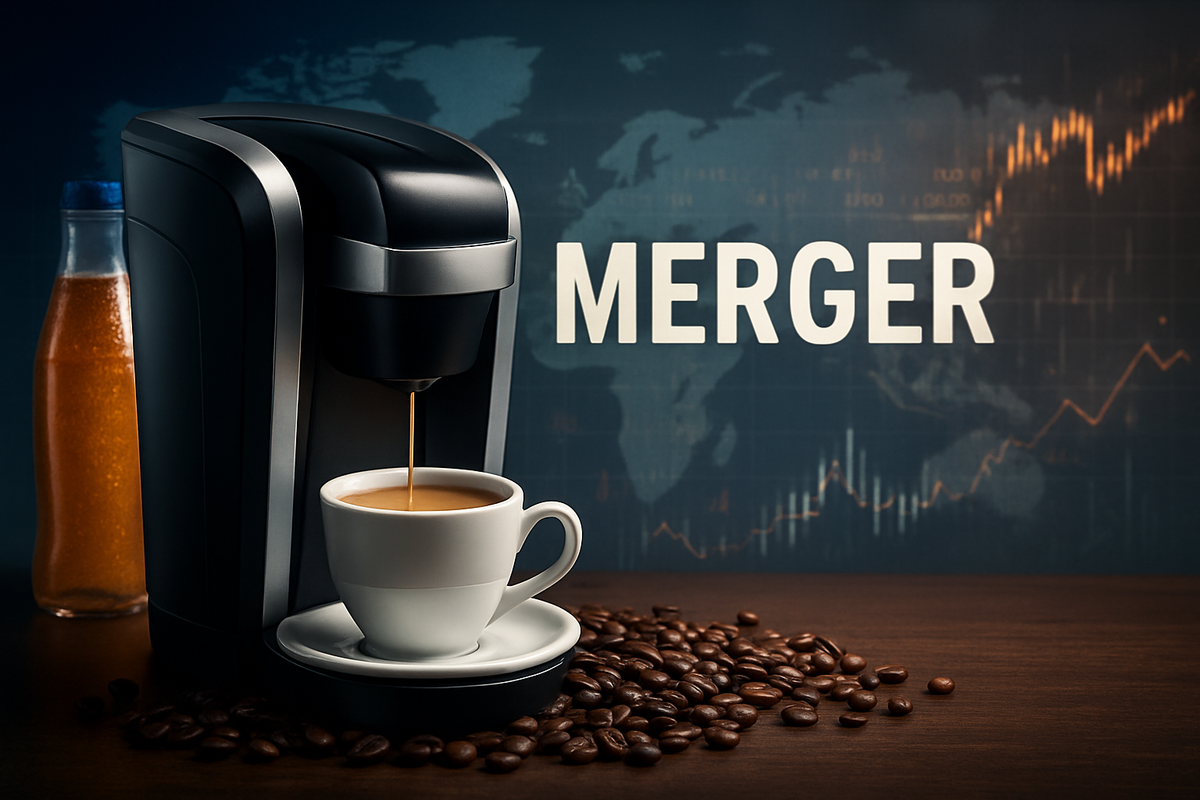
The coffee industry has witnessed a tectonic shift as Keurig Dr Pepper (NASDAQ: KDP) officially closed its landmark acquisition of JDE Peet's (formerly AMS:JDEP), finalizing a deal valued at approximately $18.4 billion (€15.7 billion). The merger, completed on April 1, 2026, marks the end of JDE Peet’s tenure as a publicly traded entity in Amsterdam and sets the stage for the creation of a global coffee powerhouse. With the deal now finalized, KDP has announced its intent to split into two independent, U.S.-listed companies by the end of the year: a dedicated North American refreshment beverage business and a pure-play global coffee giant.
The appointment of Rafael Oliveira as the CEO of the combined global coffee business—and the future CEO of the spinoff "Global Coffee Co."—signals a strategic pivot toward aggressive international expansion. Oliveira, a seasoned veteran from The Kraft Heinz Company (NASDAQ: KHC), replaces earlier internal leadership plans, reflecting KDP’s commitment to recruiting "best-in-class" expertise to manage a portfolio that now spans more than 100 markets and includes iconic brands like Peet’s, Jacobs, L’OR, and Keurig.
The Road to Integration: A Multi-Year Strategic Gambit
The acquisition of JDE Peet's was the culmination of a sophisticated, multi-stage strategy orchestrated largely by JAB Holding Company, the anchor shareholder for both firms. The timeline began in earnest in October 2024, when JAB sold roughly $2.3 billion in KDP shares to buy out the remaining stake held by Mondelez International (NASDAQ: MDLZ) in JDE Peet's. This move consolidated JAB's control and paved the way for KDP to launch a definitive all-cash tender offer in August 2025. The offer price of €31.85 per share represented a 33% premium, a bold statement of intent that successfully secured 96.22% of JDE Peet's shares by the closing date.
To finance this massive $18.4 billion undertaking, KDP utilized a complex architecture of strategic equity and debt. The company secured $7 billion in equity investments co-led by private equity titans Apollo Global Management (NYSE: APO) and KKR & Co. Inc. (NYSE: KKR). This included a $4 billion investment into a new joint venture for K-Cup pod manufacturing, where KDP retains a 51% controlling interest. The remainder of the deal was funded by $9 billion in new long-term debt and the assumption of $5 billion in existing JDE Peet's liabilities, pushing the company’s pro-forma net leverage to a significant 4.5x.
The initial market reaction has been one of cautious optimism tempered by the realities of the balance sheet. On the day the deal closed, KDP shares saw a modest decline of 1.48% as investors weighed the long-term benefits of global scale against the immediate pressure of high leverage and the logistical hurdles of a two-way corporate split. However, the involvement of high-profile institutional backers like Apollo and KKR has provided a stabilizing "vote of confidence" for the company’s ambitious 2026 roadmap.
Winners and Losers in the New Coffee Landscape
The clear winner in this transaction is JAB Holding Company, which has successfully streamlined its portfolio and positioned its core coffee assets for a premium valuation through the upcoming spinoff. By merging the North American dominance of Keurig with the international reach of JDE Peet's, JAB has created a vehicle capable of challenging the industry's largest incumbents on every continent. Furthermore, the private equity partners Apollo and KKR have secured a strategic entry into a high-margin, recession-resistant manufacturing JV that promises consistent cash flows.
On the other hand, traditional competitors like Nestle S.A. (OTC:NSRGY) and Starbucks Corporation (NASDAQ: SBUX) now face a more unified and formidable rival. While Nestle remains the global leader, the new "Global Coffee Co." under Rafael Oliveira will have a unique advantage: a portfolio that spans all formats—from premium whole beans and pods to international instant coffee—across both developed and emerging markets. Smaller regional players may also find themselves "losers" as the scale of the combined KDP-JDE entity allows for more aggressive pricing and marketing spend, potentially squeezing the margins of those without similar global infrastructure.
For KDP's existing shareholders, the results are mixed in the short term. While the prospect of owning shares in a pure-play coffee company and a separate high-growth beverage company is attractive, the current "conglomerate discount" and high debt levels remain concerns. Investors will need to endure several months of volatility as the company works toward its deleveraging targets and executes the complex legal and operational separation of the two business units.
A Broader Shift Toward Pure-Play Powerhouses
This merger fits into a broader trend of corporate "un-conglomeration" in the consumer staples sector. Over the last decade, large FMCG (Fast-Moving Consumer Goods) companies have realized that managing diverse portfolios—like soda and coffee—often leads to operational inefficiencies and lower market valuations. By choosing to split into a "Beverage Co." and a "Global Coffee Co.," KDP is following the lead of other industry giants who have spun off slower-growing or disparate divisions to unlock value.
The significance of Rafael Oliveira’s appointment cannot be overstated. By selecting an executive with deep international experience and a background in both investment banking and global operations, KDP is signaling that it intends to compete on a global stage, not just a North American one. This moves the "coffee wars" beyond the U.S. pod market and into the "away-from-home" and "at-home" segments of Europe, Asia, and Latin America.
Regulatory scrutiny was surprisingly minimal, largely because the geographic footprints of Keurig (primarily North America) and JDE Peet's (primarily Europe and international) were highly complementary with little direct overlap. This lack of antitrust friction allowed the deal to proceed relatively quickly, providing a blueprint for other trans-Atlantic consolidations in the food and beverage space.
What Lies Ahead: The 2026 Spinoff and Beyond
The next eight months will be critical for the newly enlarged Keurig Dr Pepper. The primary focus will be the successful integration of JDE Peet’s operations and the beginning of the deleveraging process. The company has stated its goal to reduce pro-forma net leverage from 4.5x to a range of 3.5x–4.0x by the time the spinoff occurs in late 2026. This will require disciplined capital allocation and potentially further non-core asset sales.
For Rafael Oliveira, the challenge will be to harmonize two very different corporate cultures while maintaining the momentum of the Peet’s and Jacobs brands. The strategic pivot will likely involve a heavier push into the "premiumization" of coffee—leveraging JDE’s expertise in high-end espresso and L'OR pods to reinvigorate the Keurig ecosystem in the U.S. Simultaneously, the company will need to defend its market share against a rejuvenated Starbucks and a highly innovative Nestle.
In the short term, market participants should watch for KDP's quarterly earnings reports to see if the projected "synergies" are beginning to materialize. The true test of the acquisition’s success will be the valuation the market assigns to the two new companies once they begin trading independently. If the "Global Coffee Co." can achieve a valuation multiple similar to its peers, the $18.4 billion gamble will have paid off handsomely.
Final Assessment: A Juggernaut in the Making
The acquisition of JDE Peet's is more than just a merger of two coffee companies; it is the birth of a new era in global beverage competition. By consolidating these assets and then immediately planning a spinoff, Keurig Dr Pepper is attempting a "double-play": achieving the scale necessary to compete globally while maintaining the agility of a pure-play operator. The leadership of Rafael Oliveira brings the necessary international "gravitas" to ensure this isn't just a financial exercise, but a functional transformation.
Investors should maintain a watchful eye on the debt-reduction progress over the coming months. The success of this deal hinges on the company's ability to navigate high interest rates and a shifting consumer environment where brand loyalty is increasingly hard-won. If KDP can execute the spinoff smoothly, it may well set a new standard for how consumer staples companies restructure for the 21st century. For now, the "Global Coffee Co." stands as a potential titan, waiting to be fully unleashed on the world market.
This content is intended for informational purposes only and is not financial advice.